Colorfastness Testing for Bag Components: Define the Brief
A shell swatch report may leave the lining, webbing and printed panels unresolved. Build a component-and-contact brief before agreeing color testing for a bag order.
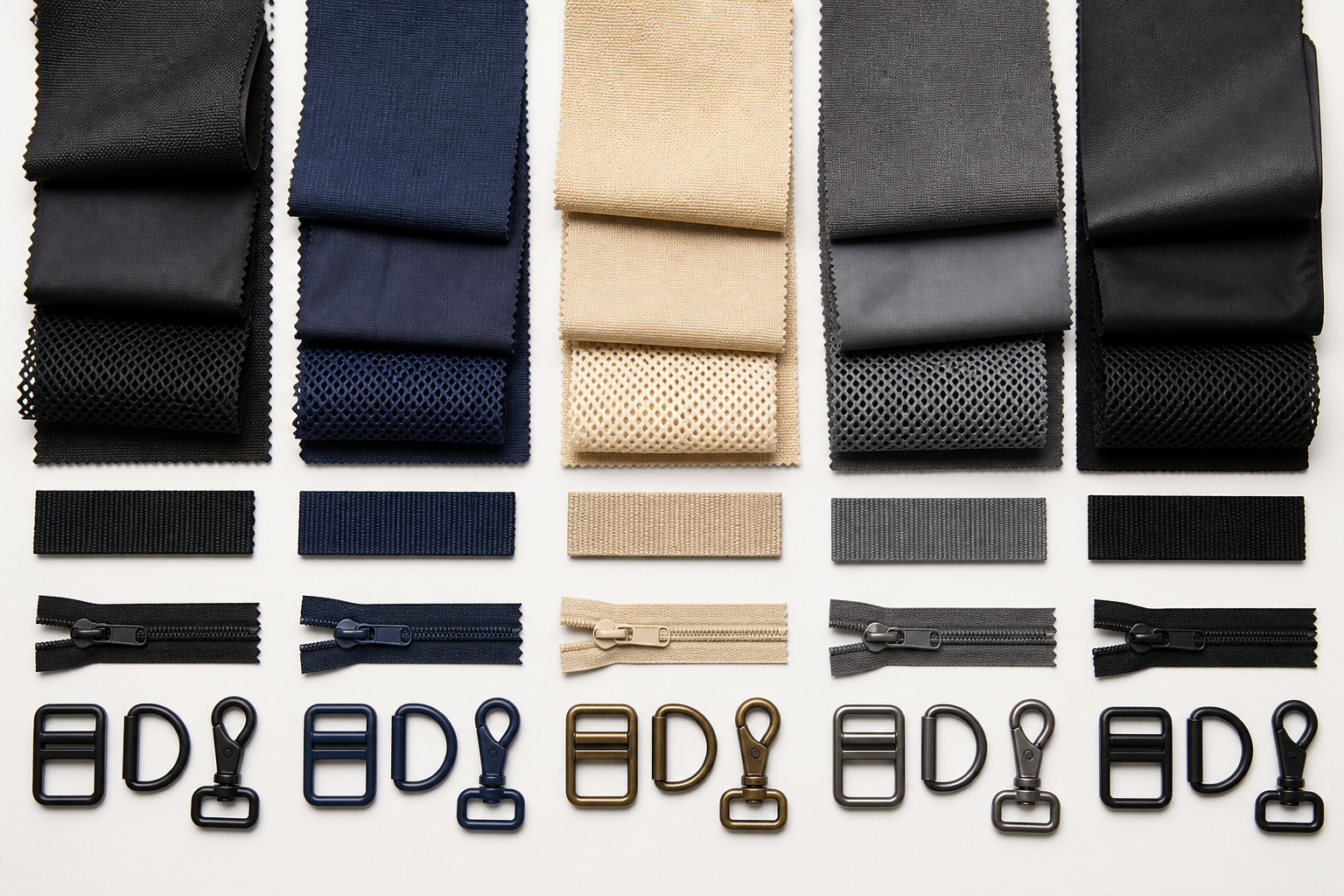
A report covers the dark outer fabric, but the bag also has a pale lining, colored webbing and a printed panel that folds against the body during packing. Which of those contacts did the report address? Before requesting colorfastness testing, map the actual components and the surfaces they may touch. Use that map to agree what the laboratory should evaluate and what will remain for sample review.
For a brand or importer developing textile bags, the useful outcome is a testing brief tied to the production specification. A general request to check whether the color is “good” leaves the exposure, specimen and decision open. An approved shade and a color-transfer result also answer different questions: the first establishes the intended appearance; the second records behavior under a defined test.
Start with the contacts that matter to the bag
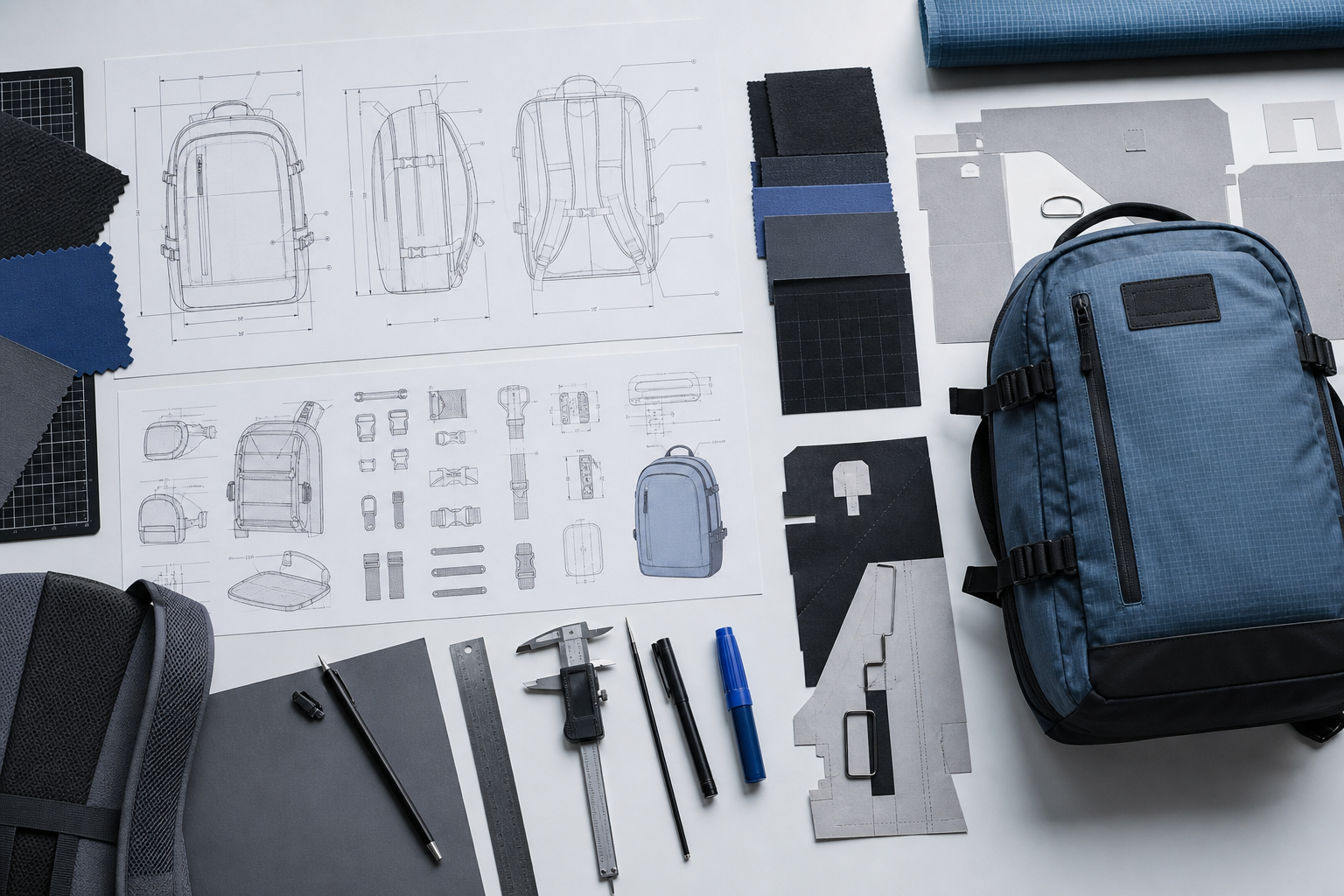
Mark the colored components on a drawing or component list. Include the lining, binding, webbing, zipper tape, labels and decoration where relevant. Identify colors and finishes individually; a report for one dark fabric should not silently stand in for a different dark fabric.
Next, describe the likely contacts in the intended use and packing arrangement. The following table proposes questions for the buyer and laboratory. It is not a prescribed test matrix.
| Component or contact | Information to include in the brief | Decision to resolve |
|---|---|---|
| Outer fabric against clothing or adjacent panels | Fabric reference, color, finish and contact face | Which rubbing or other exposure question is relevant? |
| Lining against intended contents | Lining reference, color and the proposed contacting surface | What evidence is needed for transfer to that surface? |
| Webbing or binding against a lighter body panel | Both component references and their assembled positions | Should the components be considered separately or as a relevant pairing? |
| Printed area against a folded panel | Base fabric, artwork revision, application and packing orientation | Does the submitted specimen represent the final decorated construction? |
| Contrasting internal sleeves | Sleeve and body colors, intended items and contact locations | Which contacts require review before approving the combination? |
For a foldover jewelry pouch, for example, identify the internal sleeves and the body separately. Agree how their colors and intended contacts should be assessed. A pleasing material board cannot establish how the finished combination behaves, and a textile color result does not establish protection of the contents.
Ask for color change and staining as separate outcomes
Color change concerns a difference in the tested material's appearance. Staining concerns color transferred to a contacting material. A project may need both questions answered, but they should remain separate in the request and report.
AATCC publishes separate references for the Gray Scale for Color Change and Gray Scale for Staining. Their public descriptions associate the assessments with EP1 and EP2 respectively. That distinction helps the buyer ask which outcome was evaluated; it does not supply a passing grade for a particular bag order.
Agree the required outcomes and acceptance criteria with the responsible buyer and laboratory before testing. Avoid replacing the actual report with an email saying “color passed.” Keep the method, result, qualifications and specimen description available to the person making the approval decision.
Set the colorfastness testing scope around exposure
Choose a method because it answers a use question. Do not request every available color test simply because several methods appear in a supplier's quotation.
The public summary for AATCC TM8, Colorfastness to Crocking, describes rubbing a colored textile surface with dry and water-wetted white cloth and assessing transferred color. This is relevant to a rubbing-transfer question. Wet rubbing is not the same exposure as leaving textile components in contact with water.
AATCC TM107 addresses colorfastness to water and considers color change and staining under its specified conditions. It does not answer whether water penetrates a finished bag. Keep any water-entry requirement in a separate brief so a color report is not used to support an unrelated claim.
AATCC TM61 concerns accelerated laundering colorfastness for textiles intended to undergo laundering. Discuss it when the proposed care and use make laundering relevant. A collection sack's name alone does not establish that the sack will be washed with its contents. For a drawcord laundry sack, settle the intended care instructions and actual material combination before deciding whether a laundering method belongs in the scope.
These public method summaries help frame the question. The laboratory should confirm the applicable method, edition, specimen preparation and conditions using the actual procedure. Record any agreed deviation explicitly. Do not infer a wash-life promise or a universal acceptance limit from a method name.
Submit the version you intend to approve
A loose shell swatch, a printed panel and a finished bag may represent different stages of development. Ask which form the laboratory needs and whether the specimen includes the final finish or decoration. Record any difference between the submitted material and the proposed production specification before the work begins.
Give each submission an identifier linked to its component reference, color, supplier reference where available and specification revision. Add photographs for identification, while retaining the physical reference where appropriate. Ask the laboratory how much material it requires and whether the proposed contact question calls for additional specimens. Let the laboratory resolve preparation requirements rather than cutting an arbitrary sample first.
If sampling uses a substitute lining or unfinished print, mark that limitation. The report can still describe the submitted specimen, but the missing final component remains an approval action. Use the material selection guide for the broader material choice; this brief should identify the exact combination selected for evaluation.
Turn the report into a recorded decision
Read the sample description first. If it cannot be matched to the component map, ask for clarification before interpreting the result. Then compare the reported methods and outcomes with the agreed brief, including any omitted exposure or preparation qualification.
For each unresolved item, record the affected component, missing evidence, proposed action and reviewer. The decision might be to request clarification, review a different combination or agree further work. A satisfactory appearance review should not close a laboratory question that was never covered. Equally, do not repeat unrelated work without identifying what evidence is missing.
Carry changes back to the record. If the lining color, print process, finish or material source changes, identify the affected evidence and ask whether it remains applicable. The sample approval record should show which revision was accepted and which conditions remain open. Chemical requirements belong in a separate RSL testing brief; a colorfastness result does not replace it.
When sending a bag development brief, include the component map, intended contacts, care expectations, current specification and requested evidence. State quantities by style and color; Truedrape's MOQ is 300 pieces per style per color. The project review should agree final materials, testing scope, responsibility and timing before those requirements become part of the order.