Made-to-order B2B development. Item fit, materials and construction are agreed through sampling.
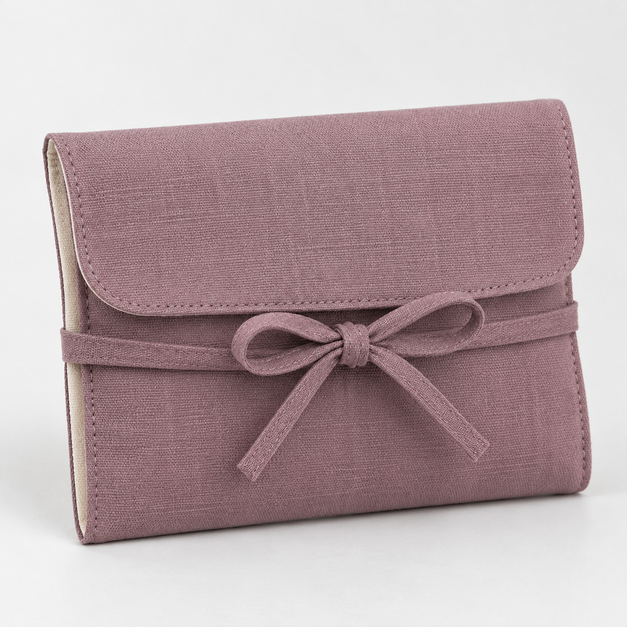
For a jewelry pouch manufacturer brief, define the intended item arrangement before choosing the pouch outline. This flat landscape envelope is a sewn packaging design direction with a dusty-mauve foldover flap, cream lining and two shallow internal sleeves. Soft ties emerge from the side seams and wrap to a small front bow; sleeve fit, contact materials and closure are confirmed through sampling.
Set the sleeve layout and foldover closure
The flat envelope format separates two placement areas with a stitched center line. Review item entry, flap overlap and the route of the fabric ties as one packaging assembly.
Two shallow open-top sleeves
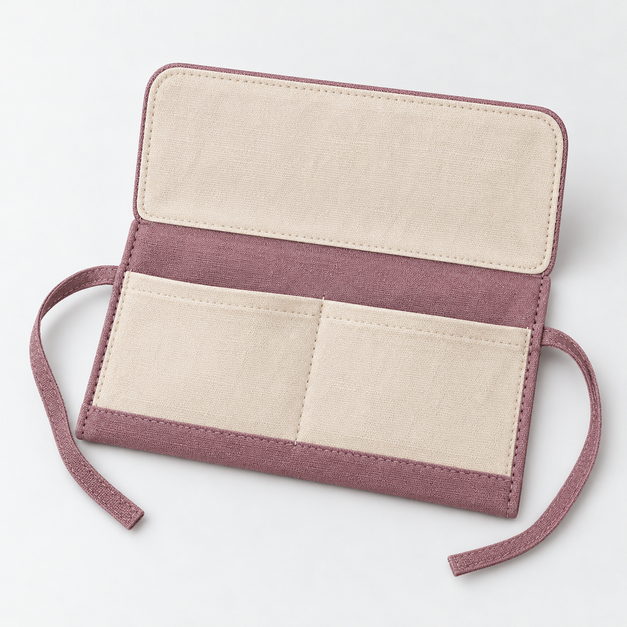
The cream interior has two sleeves side by side, divided by center stitching. Specify sleeve width, depth and entry allowance around the intended item arrangement. Check insertion and removal with agreed representative items rather than assuming one layout fits every jewelry format.
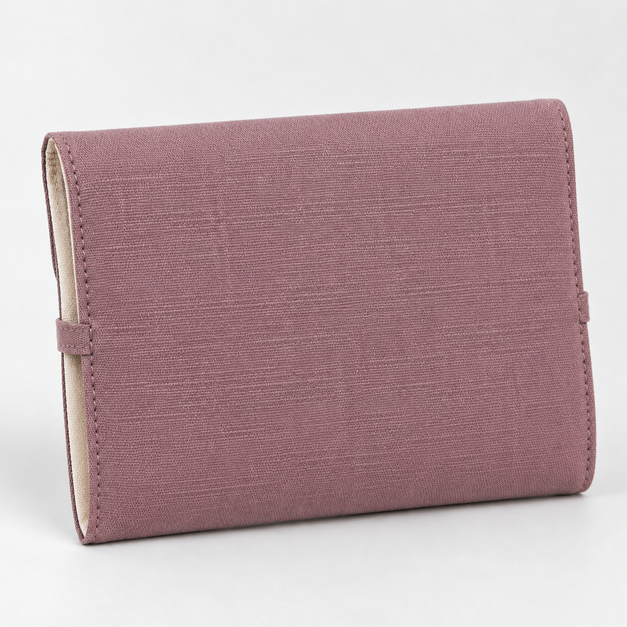
Flat landscape envelope format
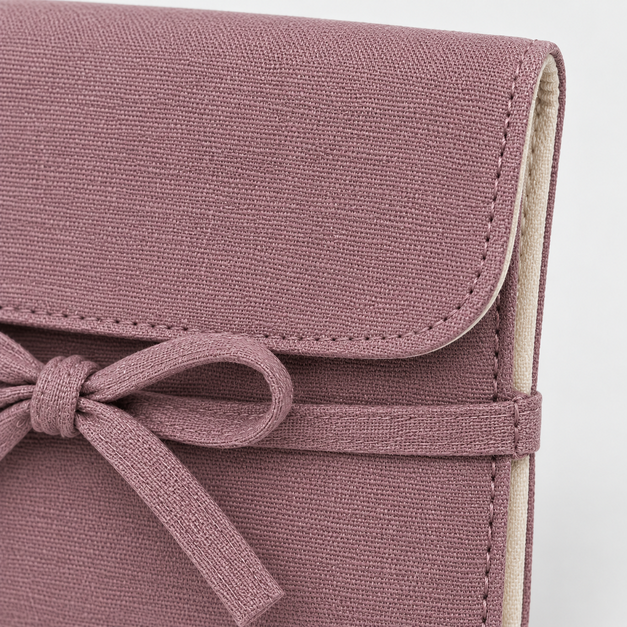
Rounded rectangular foldover flap
Two shallow internal sleeves separated by center stitching
Two side-seam fabric ties wrapping into a front bow
Rounded flap and soft fabric ties
Review the mauve outer textile, rounded flap edge and tie attachment at the side seam. The two matching fabric ties wrap across the closed front and form a small bow. Confirm edge finish, tie length and flap overlap on the physical sample.
Dusty-mauve finely woven textile direction
Cream textile lining and internal sleeve direction
Matching mauve soft fabric tie direction
Reference visuals, not production approval. Features, construction and any performance requirement must be confirmed on your sample.
MATERIAL BUILD
Approve outer, lining and ties as a contact assembly
Dusty mauve and cream describe the visual direction for Foldover Jewelry Pouch. Confirm fiber composition, weave, hand feel and finish from physical swatches; the images do not establish a treatment or a protection result.
Outer textile
Reference directionDusty-mauve finely woven textile direction
Review the chosen textile across the body and rounded flap, including how it folds and takes the proposed branding. Approve color and surface against the agreed swatch and sewn sample, then record any testing requirements for the actual selected material.
Lining and internal sleeves
Reference directionCream textile lining and sleeve direction
Choose the lining and sleeve material around the intended item contacts. Review sleeve edges, center stitching and exposed seam areas with representative items; any required material compatibility or surface-performance evidence must be agreed for the project.
Wrap ties and contacting colors
Reference directionTwo soft matching mauve fabric ties
Specify tie fabric, cut width, finished edges and side-seam attachment. Identify where the mauve ties, outer textile and cream lining touch when folded so the color-transfer approval brief covers the chosen contact pairings.
This is a textile packaging design reference. Material composition, finishes and any performance requirements need separate agreement and evidence; they cannot be verified from visual appearance.
Develop the pouch around the intended item arrangement
Keep the packaging brief specific to the items, how they are inserted and the folded presentation. These are editable development choices, with the final construction confirmed by the approved sample.
Customization options
Body proportion, flap overlap and sleeve widths
Outer and lining textile selection
Fabric tie length, width and attachment
Branding placement and packing presentation
Envelope and sleeve fit
Provide item drawings or agreed representative items. Set body proportion, the two sleeve widths and depths, center-stitch position and flap overlap together; check whether the intended items can be inserted and removed without forcing the opening.
Tie and edge construction
Define the two side-seam attachment points, tie length and width, finished ends and front bow position. Review the tie route with the flap closed and confirm the outer, lining and sleeve edge finishes on the sample.
Branding and presentation
Send the logo artwork and preferred application. Identify a readable position clear of the fold and bow, then approve application appearance, label wording, folded dimensions and packing arrangement with the physical sample.
FUNCTIONAL DETAILS
Questions for a jewelry pouch manufacturer
Use these answers to define the item layout, closure and sample evidence before settling the packaging specification.
01
Which jewelry arrangement does this layout fit?
The reference has two shallow cream open-top sleeves separated by center stitching. Its final fit depends on the intended item shapes, dimensions and arrangement. Supply representative items or drawings so sleeve entry, depth and removal can be reviewed during sampling.
Buyer questionWhat item will sit in each sleeve, and how will the packing team insert it?
02
How is the foldover flap secured?
Two soft mauve fabric ties emerge from the left and right side seams, wrap across the front and tie into a small bow. Confirm the required overlap, tie route and finished length with the intended contents inside the sample.
Buyer questionWhere should the bow sit in relation to the flap edge and artwork?
03
What material evidence should be agreed?
Approve the selected outer, lining, sleeve and tie swatches as well as the sewn edges that contact the intended items. Define any color-transfer or material-compatibility questions and the evidence needed before approval; appearance alone does not establish protective performance.
Buyer questionWhich actual contact surfaces and use conditions should the material approval brief cover?
Sleeve layout, closure and textiles remain design directions until the project specification and sample are agreed. No protective treatment or test outcome is implied by the reference images.
OEM / ODM development process
From an approved direction to a packed custom bag order
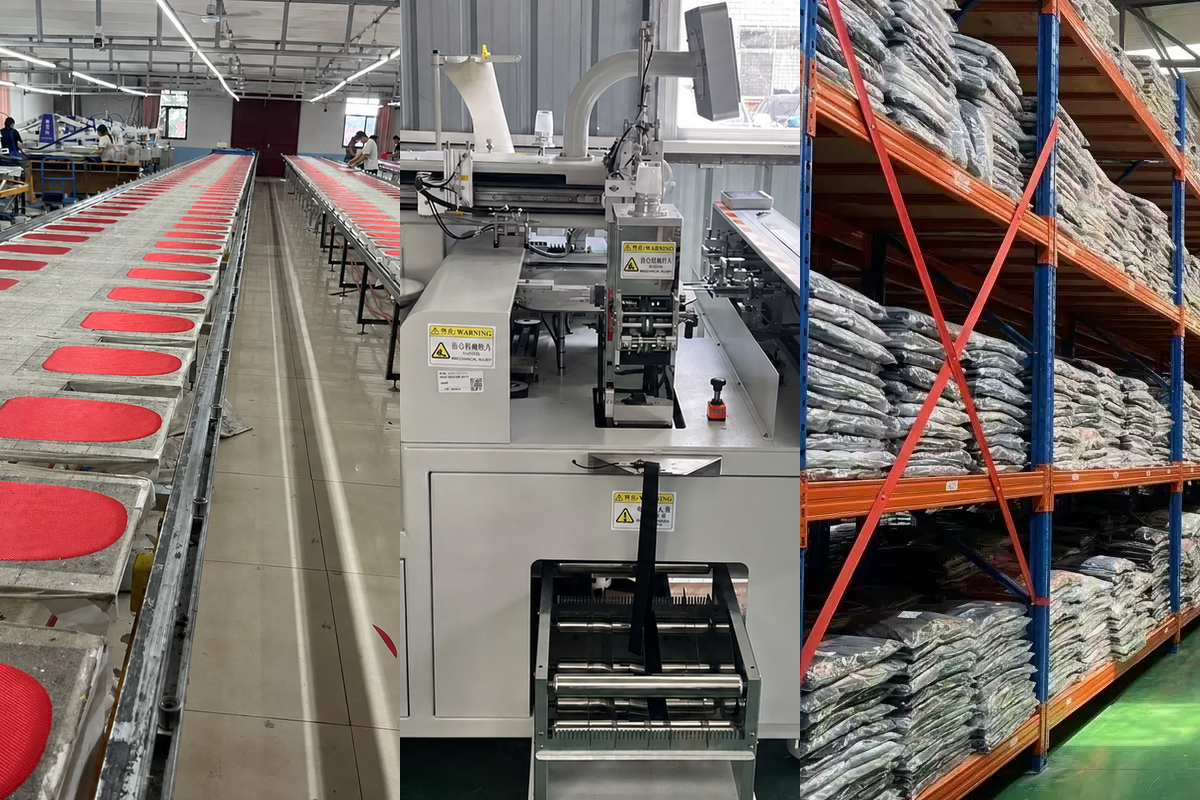
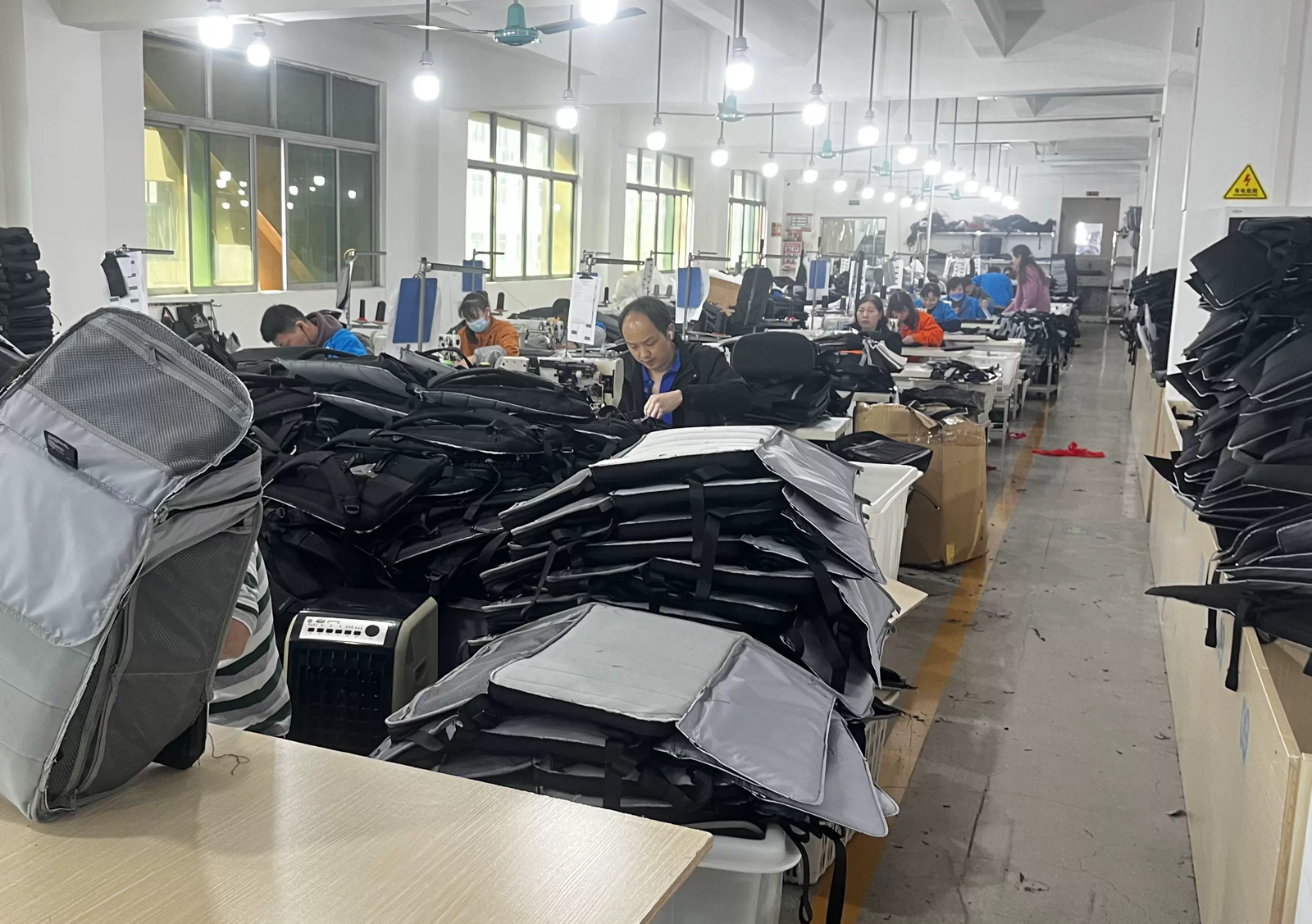
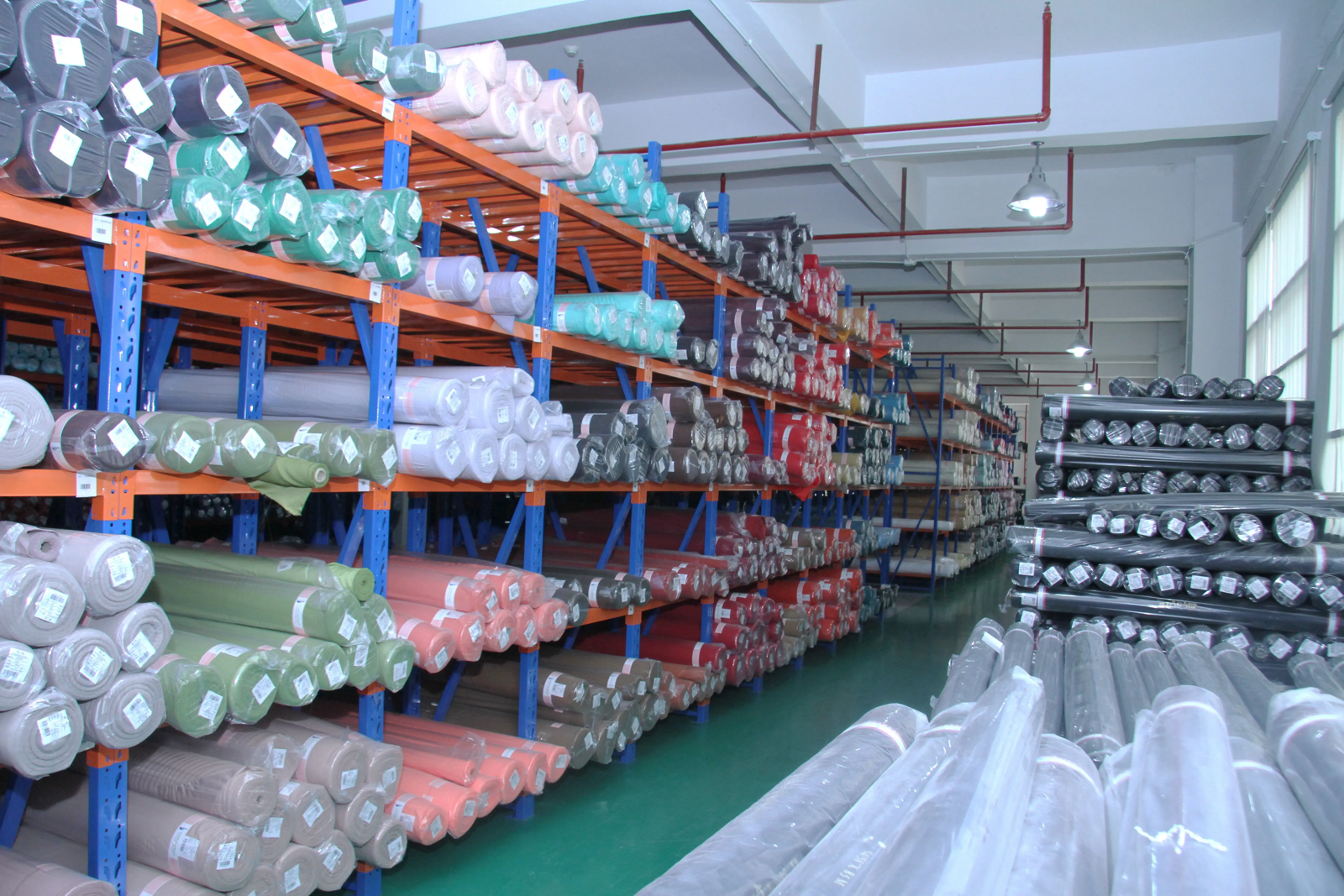
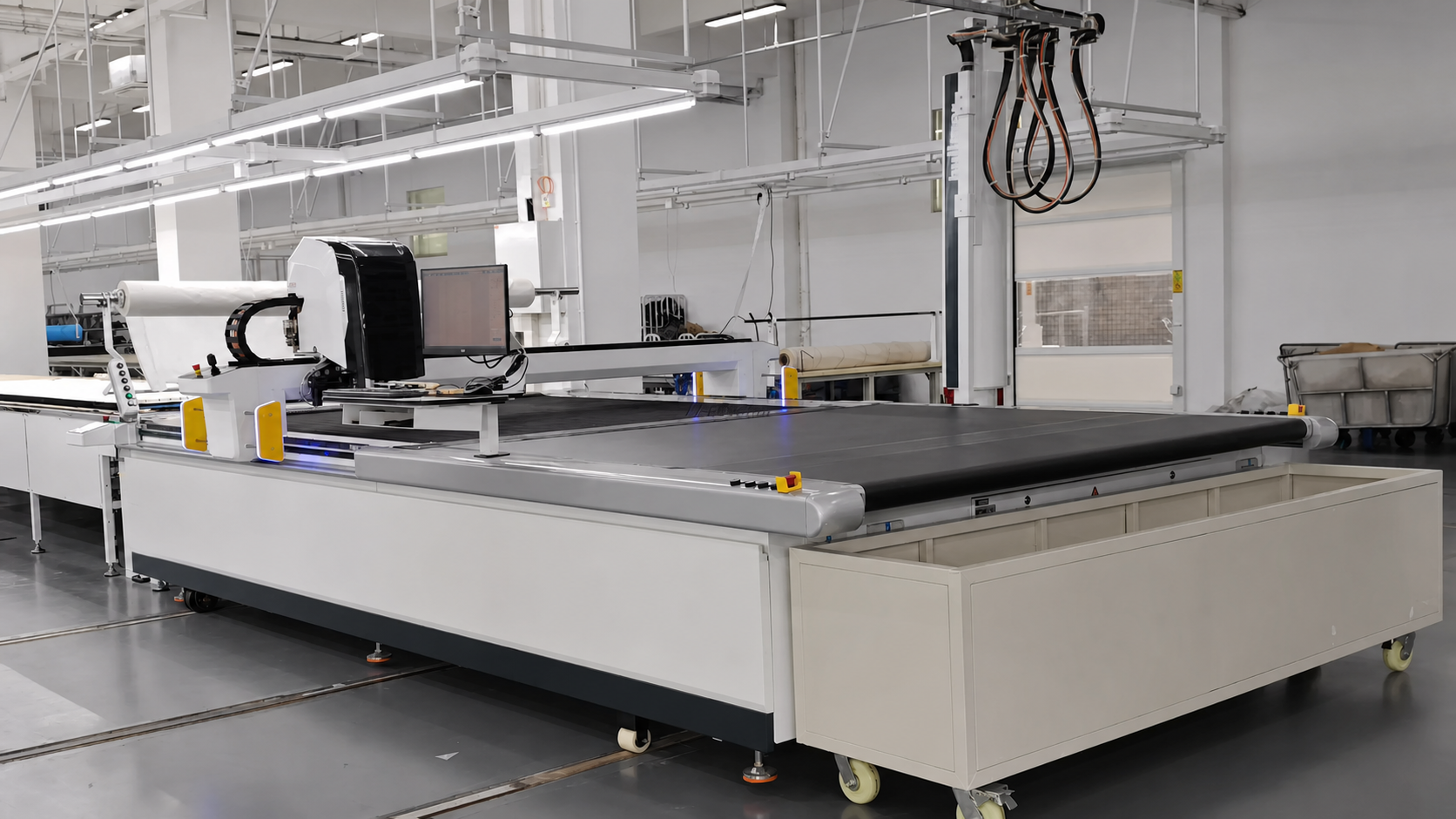
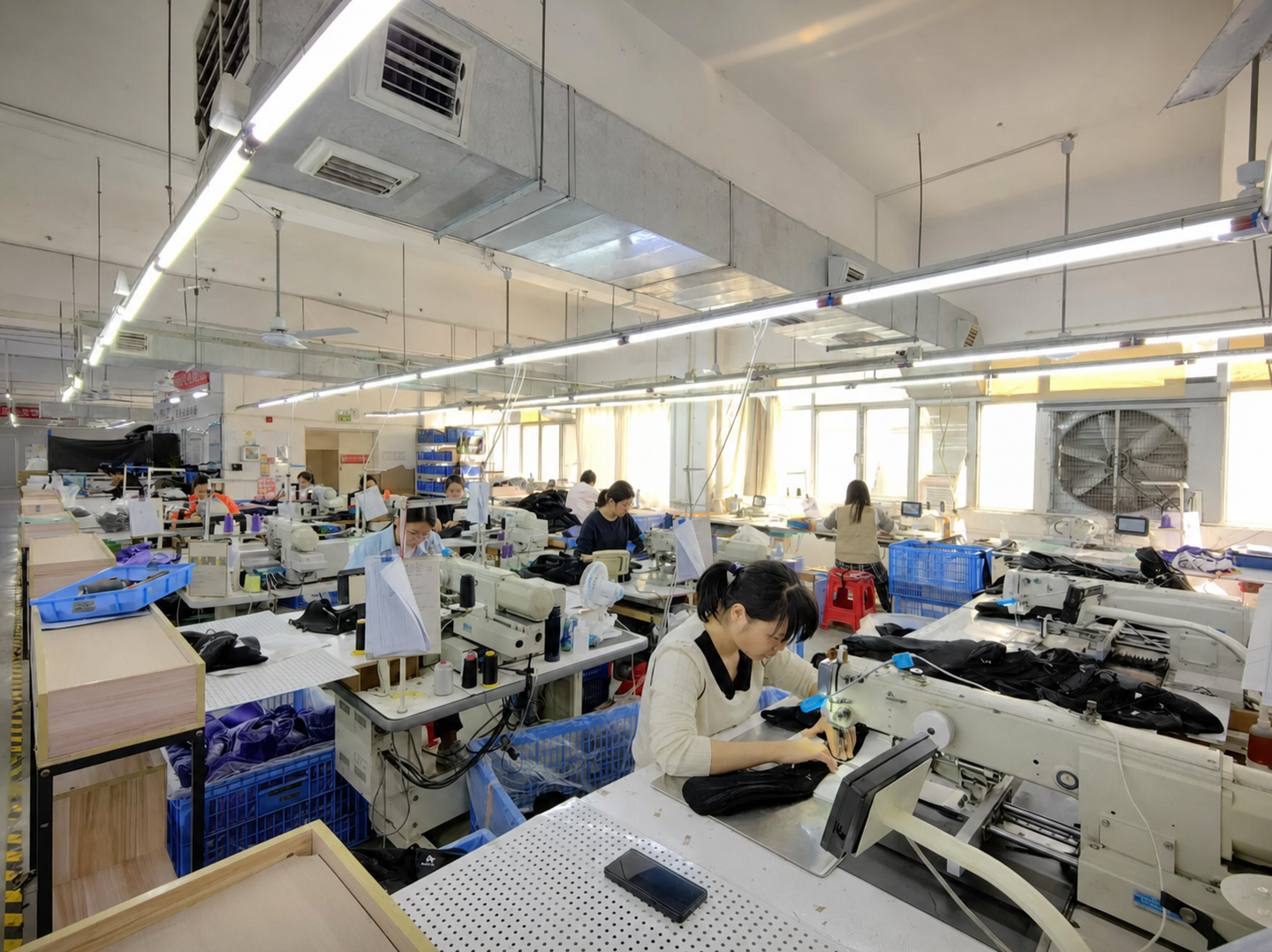
This shared OEM and ODM bag development route shows how a buyer brief moves through sampling, material preparation, sewing, agreed production checkpoints and packing.
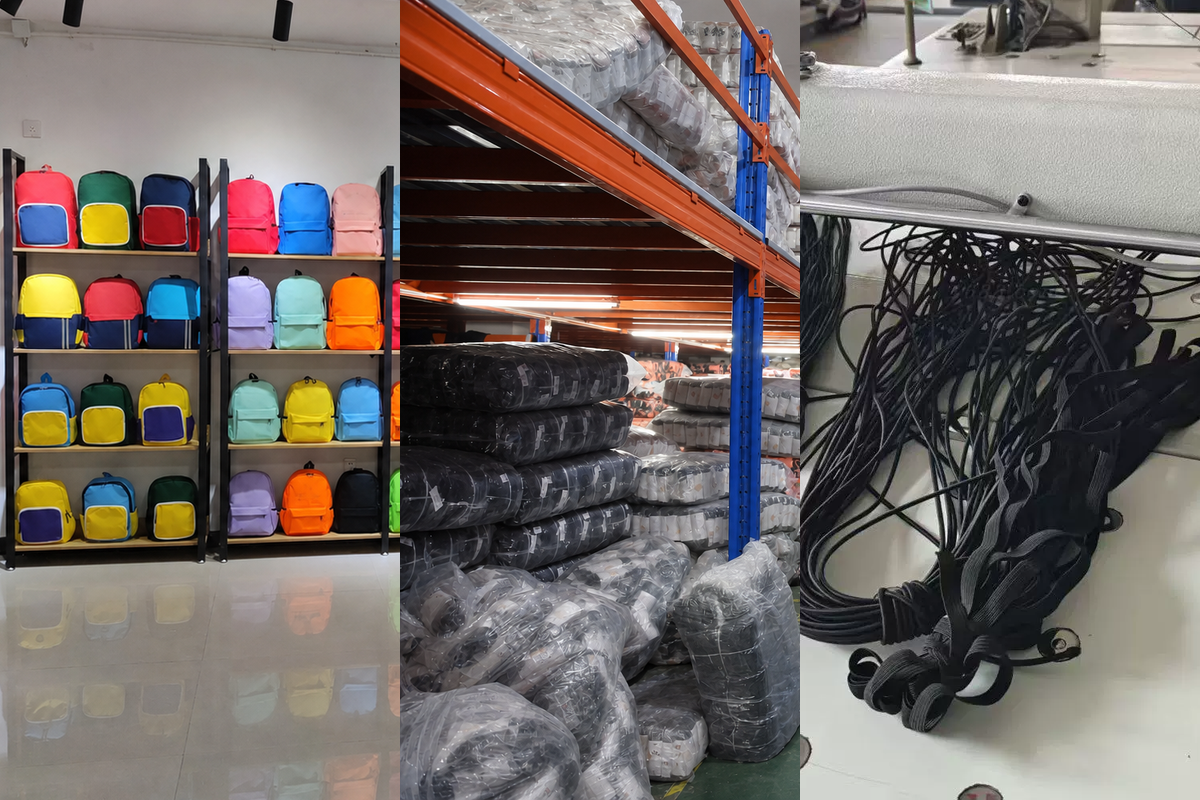
Brief input reference
01
Confirm the brief
Define intended use, dimensions, organization, material direction, branding and packing requirements.
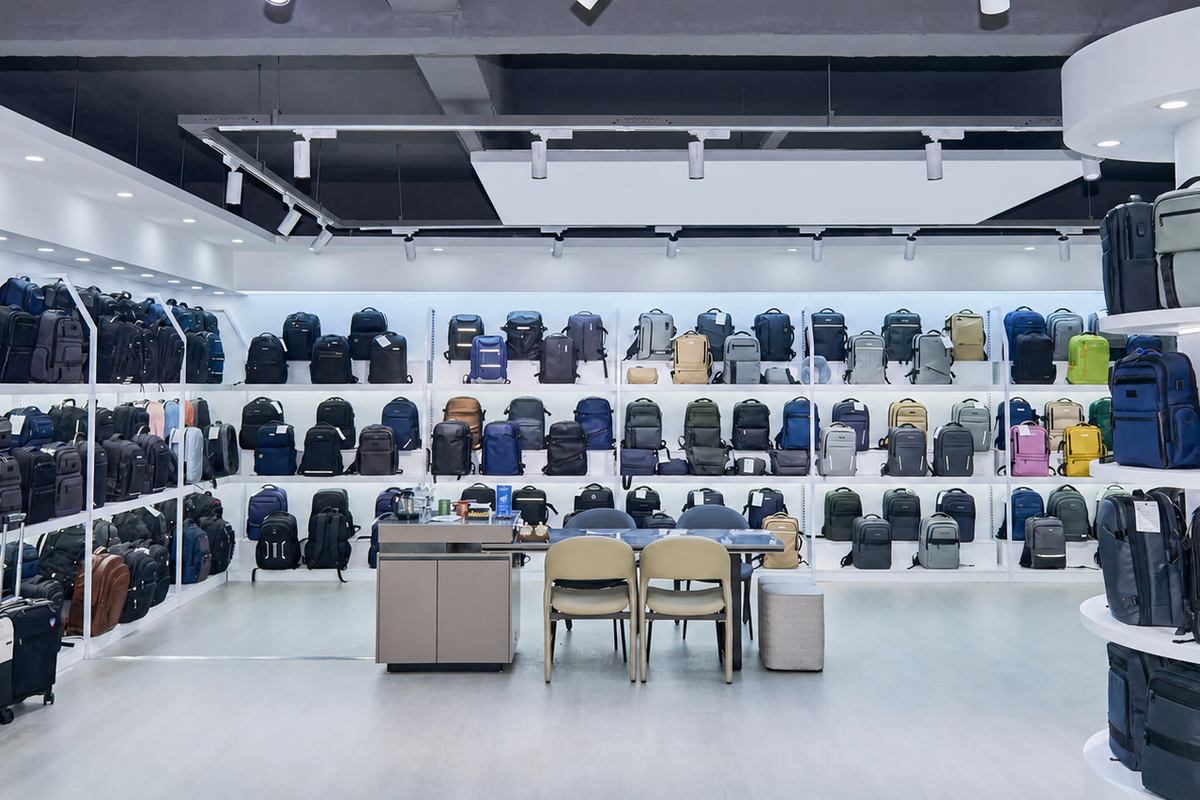
Sample review environment
02
Develop and review the sample
Turn the approved direction into a physical reference and record the revisions needed before production decisions close.
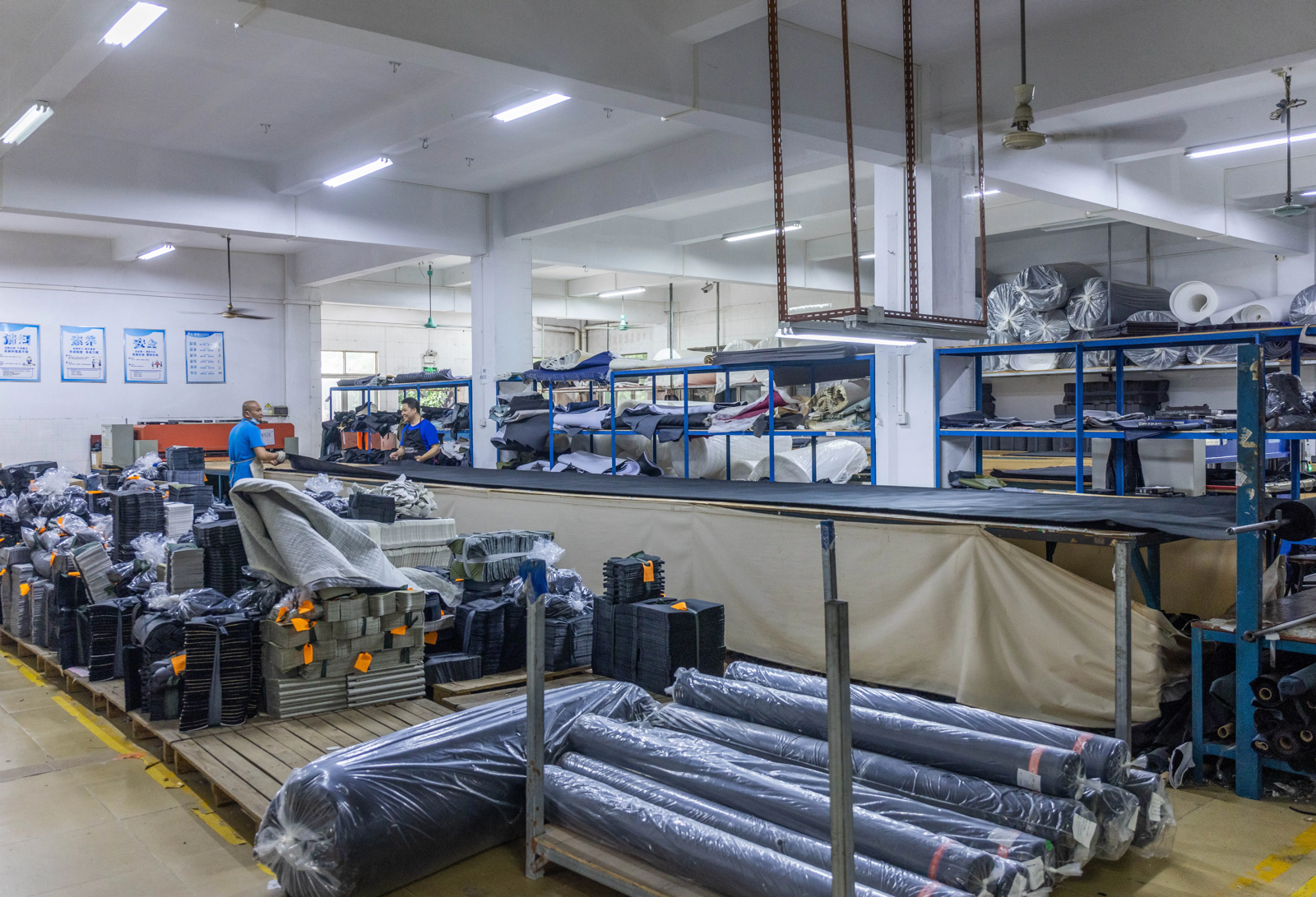
Material and panel preparation
03
Prepare materials and panels
Connect approved construction, components and color direction with material and panel preparation.
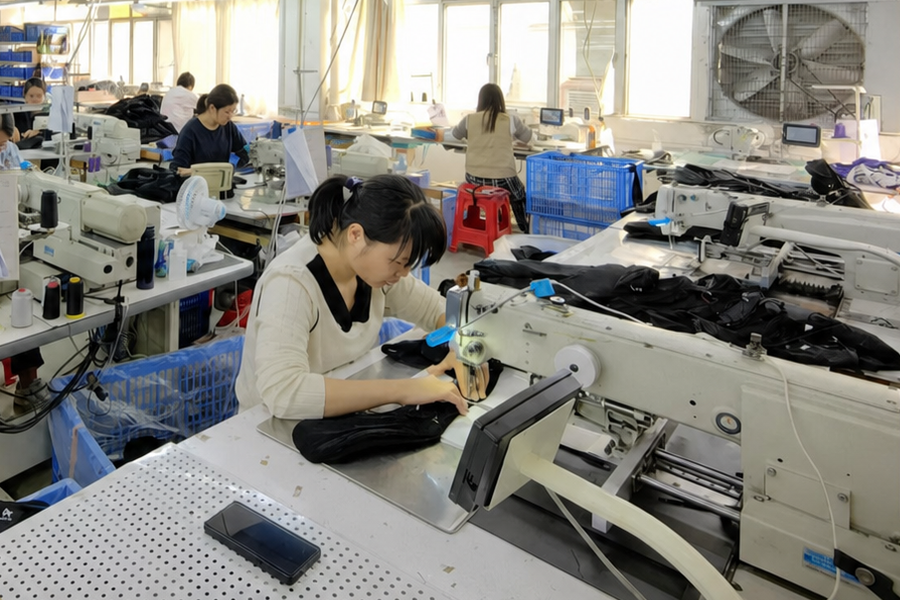
Bag sewing and assembly
04
Sew and assemble
Build the shell, lining, pockets, closures, handles and reinforcement in an agreed sequence.
Checkpoint reference
05
Follow agreed checkpoints
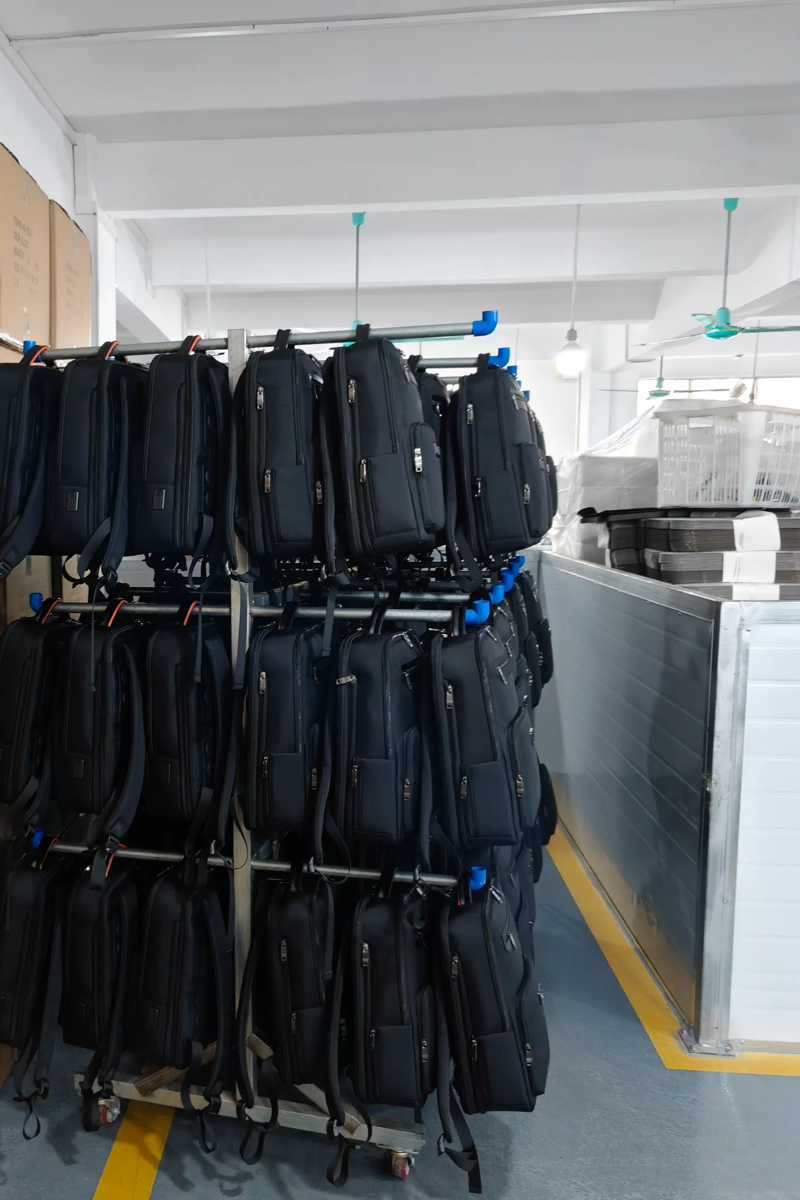
Review workmanship, dimensions, function, branding and order identity against the approved references for the programme.
Confirmed carton packing
06
Pack and coordinate dispatch
Apply the confirmed packing, labeling, carton and shipment instructions for the completed order.
The exact development, inspection and production plan is confirmed for each product, specification and buyer requirement, and no image proves every check used for every order.
Made-to-order bag production through an affiliated China factory
Forthright coordinates Truedrape bag projects with an affiliated textile bag factory in China under common ownership. Production follows the agreed project specification and approved sample.
Forthright handles commercial and development coordination. The trading company and affiliated factory are separate legal entities.
Use the agreed representative items to check both sleeve entries, the center division, insertion and removal. Record the item arrangement, sleeve dimensions and flap overlap against the same sample revision.
02
Edges and closure
Review the rounded flap, lining and sleeve edges, center stitching, tie attachments and finished tie ends. Fold the pouch around the agreed arrangement and check the front bow, tie route and any interference with the flap or contents.
03
Contact materials and branding
Match outer, cream lining, sleeves and ties to approved swatches. Review artwork and label placement with the pouch tied, retain the agreed material evidence and confirm packing presentation before approving the sample for bulk production.
The design name is included below. Share item drawings or dimensions, the intended sleeve arrangement, textile and color direction, flap and tie requirements, artwork, quantity per color and target timing. The MOQ is 300 pieces per style per color; sampling and bulk timing are confirmed after review.