RSL Testing for Custom Bags: Define the Sample First
A test quote for one fabric does not necessarily cover the lining, print and trims in a finished bag. Map the components before agreeing the laboratory scope.
Your bag supplier has quoted chemical testing for the body fabric. The approved design also uses a printed panel, a contrasting lining, coated webbing and metal zipper pulls. Before treating that quote as coverage for the bag, ask which components will be submitted, what requirements will be checked and how the results will be reported.
RSL testing checks materials against a restricted substances list. For an OEM bag order, the practical starting point is a component map linked to the final specification. Use it to agree the laboratory scope before samples are cut or combined. This guide helps procurement teams prepare that brief; it does not set chemical limits or promise that a particular bag meets a destination's requirements.
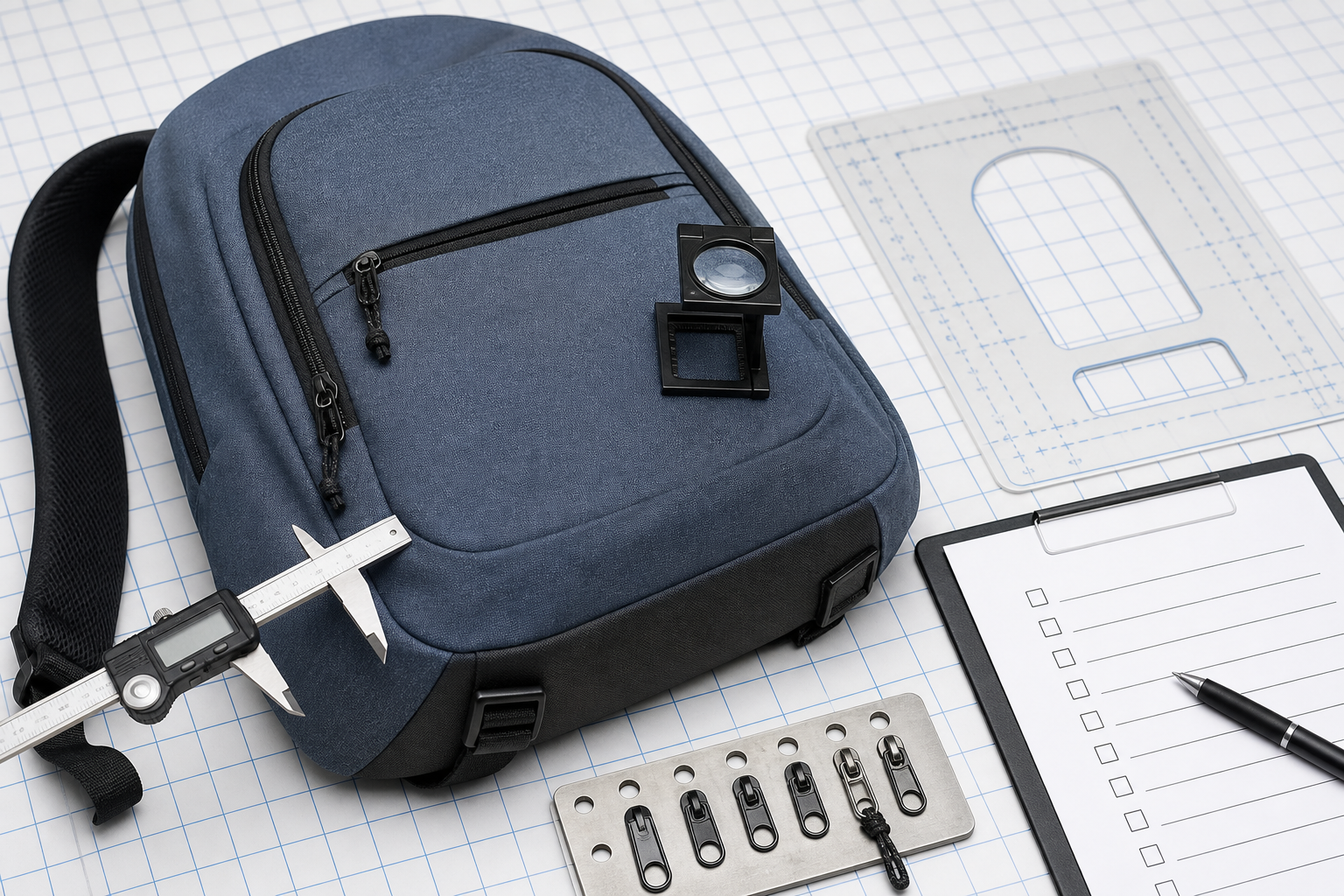
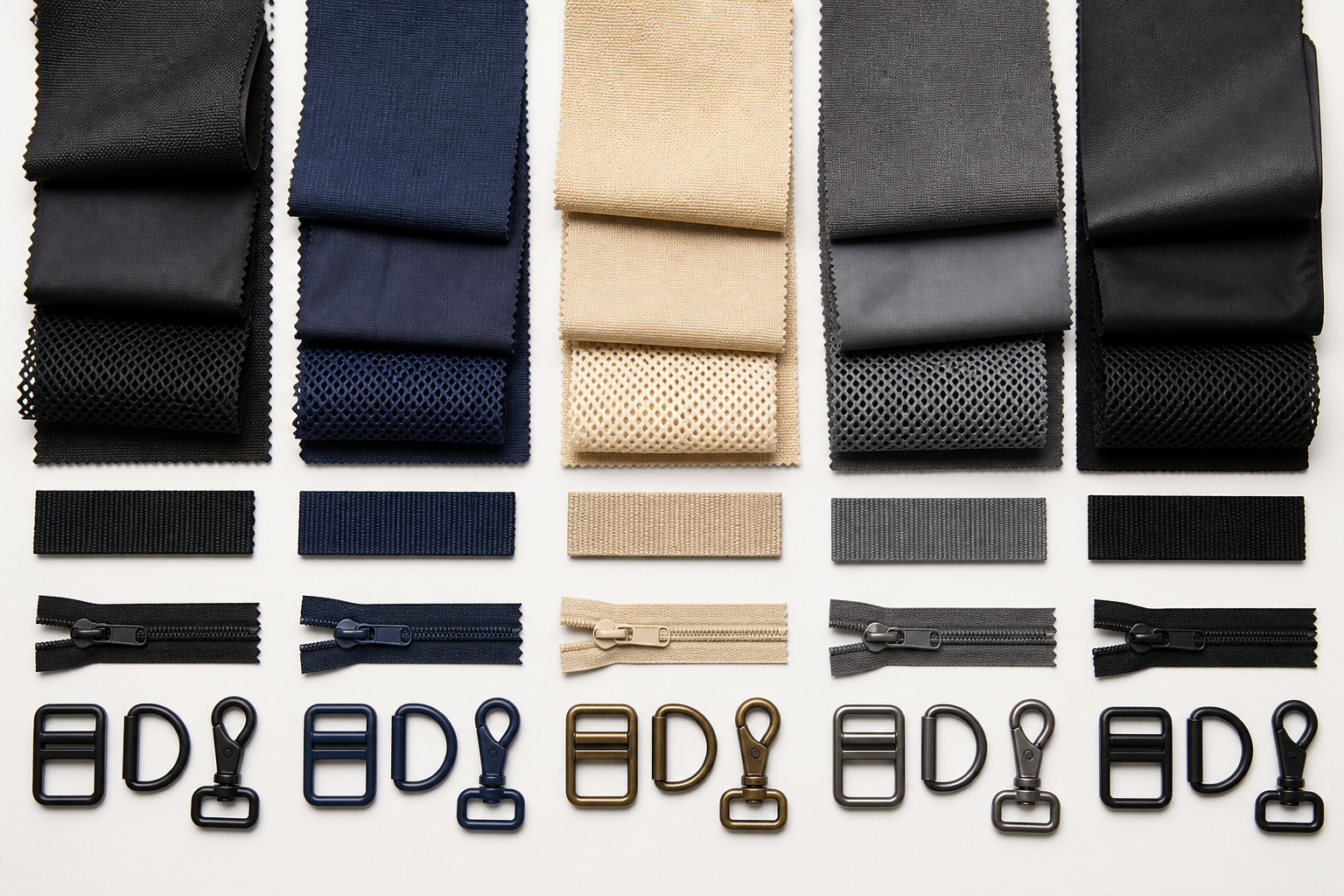
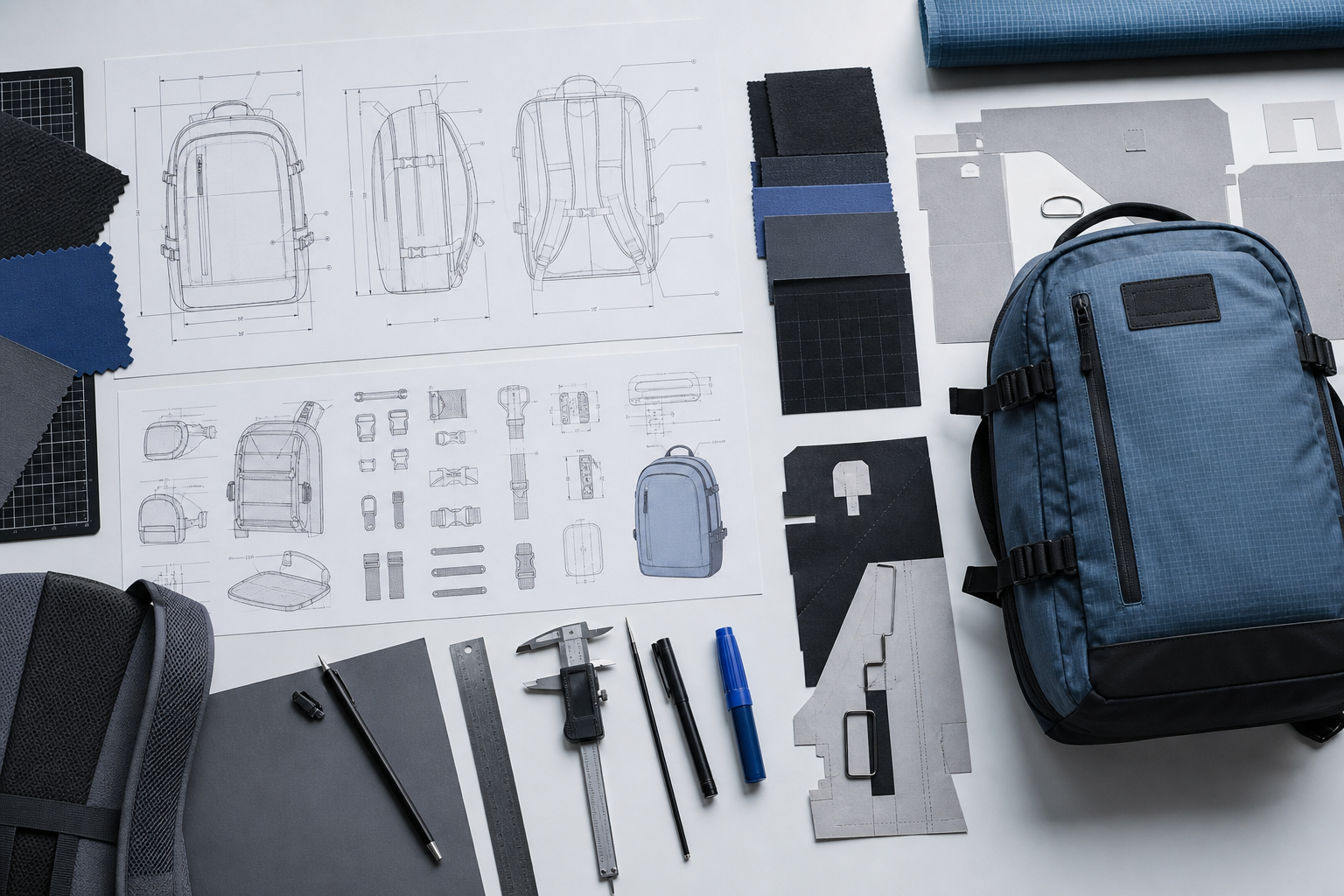
Cover illustration: bag drawings, fabric references and construction components used to prepare a specification brief.
Attach the requirement that the laboratory should use
Identify the destination market, intended product use, age group where relevant, and the brand's current requirements. Supply the actual list or specification with its version and date. “Standard chemical test” leaves too much room for different interpretations.
AFIRM's 2026 RSL, Version 11, includes changes to substance requirements and adds definitions for samples and composite samples. Its change log makes a practical point for current orders: an older test request may not describe the same scope or sample preparation. SGS also discussed the release in its February 17, 2026 industry update.
Ask the responsible compliance specialist and laboratory to confirm which requirements apply. An industry list can support that discussion, but it should not be treated as a universal legal clearance. If the brand has additional requirements, include them explicitly instead of expecting the supplier to infer them from the destination.
Map the finished configuration
Work from the version intended for production. Assign a component code to the exterior, lining, mesh, webbing, print, coating and relevant trims. Describe colors and finishes as well as the underlying material. Link each entry to its source reference where available.
For a shoe-compartment gym bag, the body fabric, shoe-section lining and proposed wet-pocket finish deserve separate identification. That does not mean every component requires every test. It gives the laboratory enough information to propose a reasoned scope and explain any exclusions.
The table below is a brief structure, not a prescribed test matrix.
| Component record | Information to supply | Question for the laboratory |
|---|---|---|
| Body and lining | Material reference, color, source and finish | Which requirements apply to each identified material? |
| Printed panel | Base fabric, artwork version and decoration process | Should the submitted specimen include the final print? |
| Webbing and labels | Composition description, color and applied finishes | Can existing evidence be used for this exact reference? |
| Zipper, pulls and other trims | Component reference, material and surface finish | What preparation and test scope are appropriate? |
| Coated or laminated section | Layer description and available technical information | How should the layers be identified or separated? |
| Proposed substitutes | Difference from the approved component | Does the change require additional review or testing? |
Keep unanswered cells visible. A component with an unknown finish should remain an information gap, rather than inherit the description of a similar-looking part. Add the agreed map to the bag tech pack so purchasing, sampling and the laboratory work from the same revision.
Agree sampling before comparing laboratory prices
Ask how much material is needed, who selects it and whether the laboratory requires loose components, decorated panels or finished bags. Record sample identifiers and photographs that connect each submitted item to the component map. Keep a record of any preparation performed before dispatch.
If the proposal combines materials into a composite sample, ask the laboratory to explain the effect on reporting and interpretation. AFIRM's 2026 definitions distinguish a component sample from a combination of samples and note the higher quantification and reporting limits associated with composite testing. Do not authorize combining several components simply because the quoted total is lower.
Compare quotations using the same submitted components, requirement version, test methods and reporting scope. If one quote excludes decoration and another includes it, they cover different work. Resolve the difference using the quotation comparison guide before judging the price.
Read a report against the submitted items
When the report arrives, check the laboratory reference, sample description, receipt or test dates, listed methods, results and stated requirements. Make sure the identifiers still lead back to the approved component map. Request clarification if the description is too general to distinguish one material from another.
A report on a plain swatch should not automatically close the question for a later decorated panel. Likewise, evidence for one finish should not silently cover a changed finish. Ask the laboratory or responsible specialist whether existing evidence remains relevant; do not assume either that all evidence transfers or that every change requires repeating every test.
Retain the reported values and qualifications, not only a copied “pass” statement in an email. Where coverage is incomplete, record the affected component, missing evidence and the action needed. This is separate from the production inspection checklist, which addresses physical construction, quantities and release records.
Carry the agreed scope into the order
Name the person responsible for arranging samples, approving the scope, reviewing the report and deciding whether an unresolved result affects production or shipment. Agree the commercial responsibility for the requested work and possible follow-up before it is needed. Ask the laboratory to quote the agreed scope and required timing, including any follow-up work.
If a material, color, finish or source changes, return to the component record and identify the affected evidence. Update the specification only after the relevant review. Keep this process separate from recycled-content documentation: a GRS certificate review and an RSL test report answer different questions.
For Truedrape development, send the bag reference and your current chemical requirements with the proposed component list. Include the destination, intended use, quantities by style and color, and required timing. MOQ is 300 pieces per style per color. The project review should confirm the requested evidence and testing scope before any compliance statement is approved.