Made-to-order B2B sampling development. Actual materials, construction and order requirements are confirmed for the project.
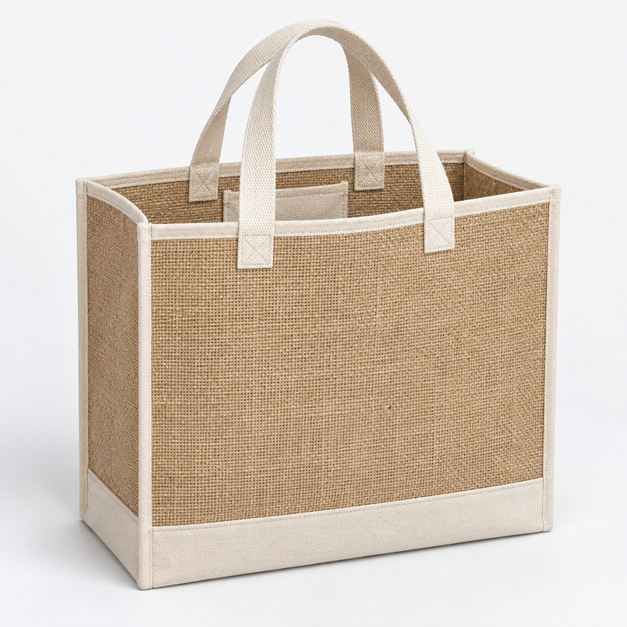
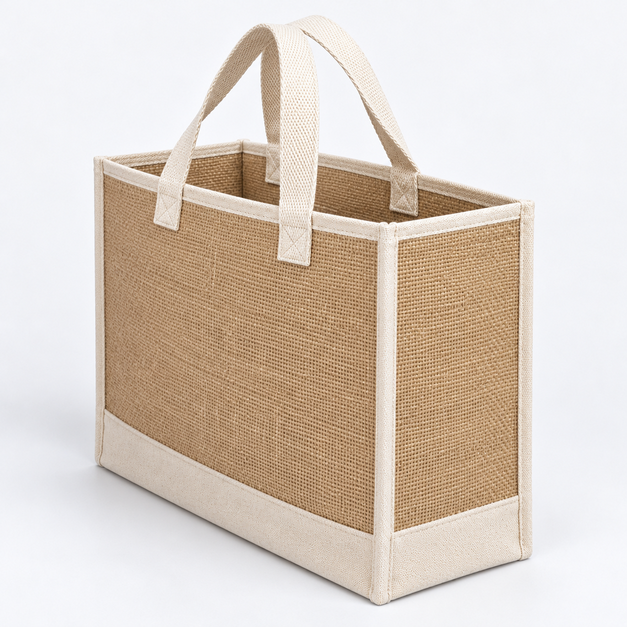
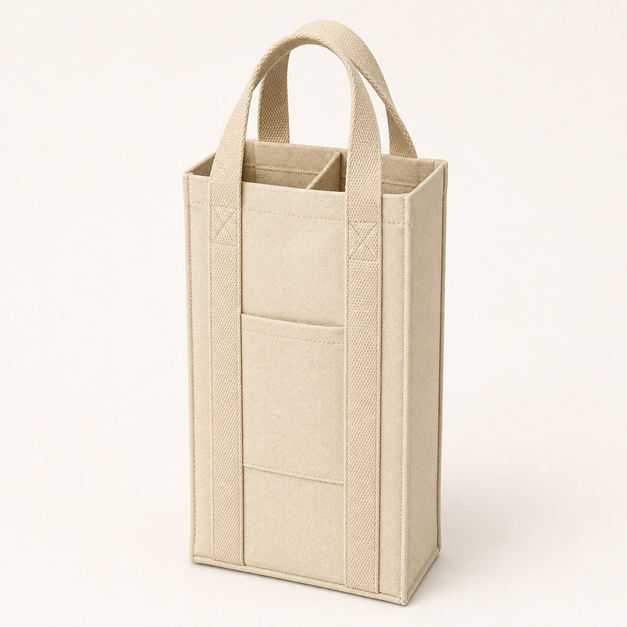
A jute bag manufacturer brief should identify the actual textile and the way its panels are joined. This natural tan coarse woven direction has separate front, back and side gusset panels, cream binding at the vertical joints and top edge, and a separate cream canvas bottom whose narrow upturned edge shows around the lower exterior. Short doubled cream handles attach at the top with rectangular stitch patches. Develop the material and seam assembly through OEM/ODM sampling before finalizing the order specification.
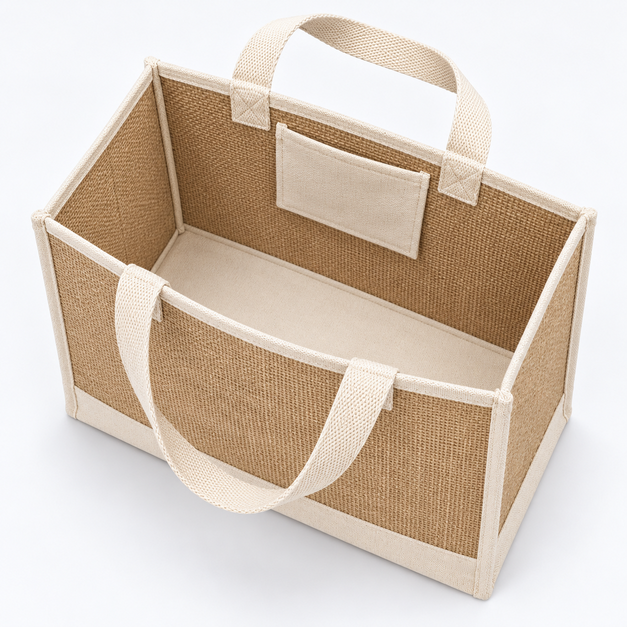
Review separate panels and the rear interior pocket
This reference uses bound vertical panel joints and a separate rectangular canvas bottom with a narrow cream edge turned up around the lower exterior. The handle attachments sit at the top of the front and back panels, with one small cream pocket inside the rear wall.
Unlined body with one small rear pocket
The natural tan interior remains unlined, with bound seams and a cream canvas floor. One small flat cream slip pocket sits against the rear interior wall without spanning the compartment. Confirm its size, opening, position and attachment construction on the physical sample against the intended small contents.
Separate side gusset panels and a rectangular canvas bottom
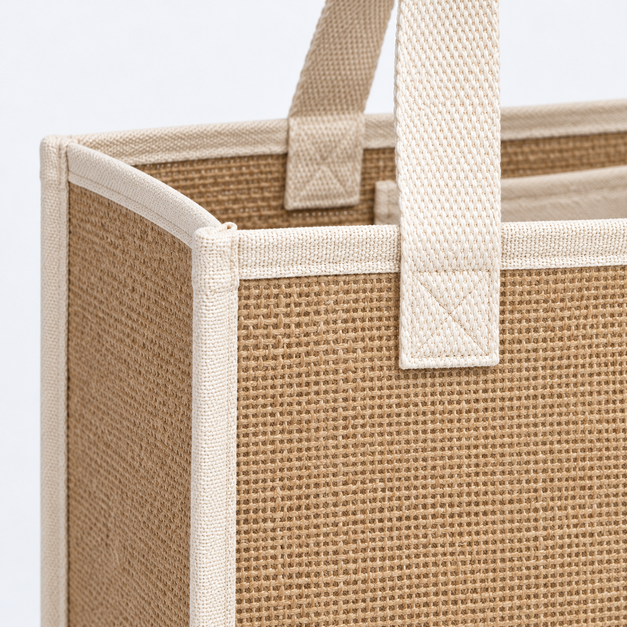
Short doubled handles with rectangular top attachment patches
One small rear interior slip pocket
Cream binding and short top attachments
Cream cotton binding outlines the vertical joints between the woven body and side gussets and finishes the top edge. Each short doubled cream handle ends in plain rectangular stitch patches at the upper front or back. Review the binding turns, panel-edge capture and handle stitching on the sample.
Natural tan coarse woven jute direction
Cream cotton binding and handles with a cream canvas bottom direction
Reference visuals, not production approval. Features, construction and any performance requirement must be confirmed on your sample.
MATERIAL BUILD
Confirm the jute direction before approving the assembly
The tan coarse weave and cream cotton components define the visual direction. Confirm actual fiber composition, weave, weight, finish and any backing from supplier material information and approved swatches; the reference image cannot establish those specifications.
Front, back and side gussets
Reference directionNatural tan coarse woven jute direction
Identify whether the selected body textile is jute or an agreed blend and record its weave and finish. Compare cut edges and sewn swatches for how they sit inside the binding, including yarn movement or edge exposure at the panel joints.
Binding, bottom and pocket
Reference directionCream cotton binding, canvas bottom and flat pocket direction
Specify the binding textile and finished width, the separate canvas bottom with its narrow upturned exterior edge, and the small rear pocket material. Review binding coverage at the vertical joints and base corners. Check the cream components against the tan body under the agreed color approval conditions.
Short doubled handles
Reference directionCream cotton handles attached at the upper panels
Set the handle textile, doubled construction, grip length and rectangular attachment areas. Agree stitch placement and any required local support inside the top attachment. Confirm the finished handle and body assembly against the intended use and agreed checks.
Material names describe the development direction. Confirm actual fiber and finish before approval; the images establish no certification, environmental benefit, care suitability or strength result.
Specify the panel assembly for the intended contents
Use the development brief to connect the woven body, cream canvas floor, bound panel joints and top handle attachments. Dimensions and acceptance requirements are set for the project rather than inferred from the reference.
Customization options
Fiber, weave and finish specification
Panel proportions and bound seams
Handle attachment and pocket placement
Artwork and packing instructions
Panel and bottom proportions
Provide representative contents or drawings and the required handling method. Set front and back width, side gusset depth, body height and the separate bottom-panel dimensions together. Show the narrow upturned cream base edge, binding at each vertical panel joint and binding around the open top.
Handles and rear interior pocket
Define the short doubled handle length, top attachment positions and rectangular stitch areas. Specify one small cream slip pocket at the rear interior wall, its finished dimensions, opening and attachment method. Check that the pocket remains clear of the main contents and approve its seams on the sample.
Surface, artwork and packing
Submit the proposed artwork and location on the coarse woven surface. Agree an application method with a physical approval sample, including its position relative to binding and handle patches. Record label wording, folded presentation and packing requirements.
FUNCTIONAL DETAILS
Questions for a jute bag manufacturer brief
Use these questions when discussing material and sampling requirements with a jute bag supplier. The approved fiber, finish and assembly must be documented together.
01
What does the coarse woven appearance establish?
It establishes a visual direction, not a fiber or treatment specification. Confirm the actual composition, weave and finish of the body textile, then agree any required care or material evidence for the intended use. The cream binding and bottom need their own material references.
Buyer questionWhich actual body, binding and bottom materials should the sampling brief name?
02
How should the bound joints be approved?
Check how the cut edges of the front, back and separate gussets are enclosed. Review binding continuity, seam allowance and corner build-up where the vertical joins meet the cream bottom. Agree the workmanship criteria and retain a reference for acceptable edge coverage.
Buyer questionWhat must the sample show at a vertical panel joint and a bottom corner?
03
What should the handles and pocket carry?
Describe the intended main contents and the small items assigned to the rear interior pocket. Agree the short handle attachment construction and verification scope for that use. Confirm the pocket position and attachment on the sample; this small pocket is neither a lining nor a full-width organizer.
Buyer questionWhat contents, handle checks and pocket attachment criteria belong in the approval plan?
OEM/ODM sampling development is available for this direction. Final materials, dimensions, construction, testing requirements and order timing are agreed for the project; no past production or test outcome is implied.
OEM / ODM development process
From an approved direction to a packed custom bag order
This shared OEM and ODM bag development route shows how a buyer brief moves through sampling, material preparation, sewing, agreed production checkpoints and packing.
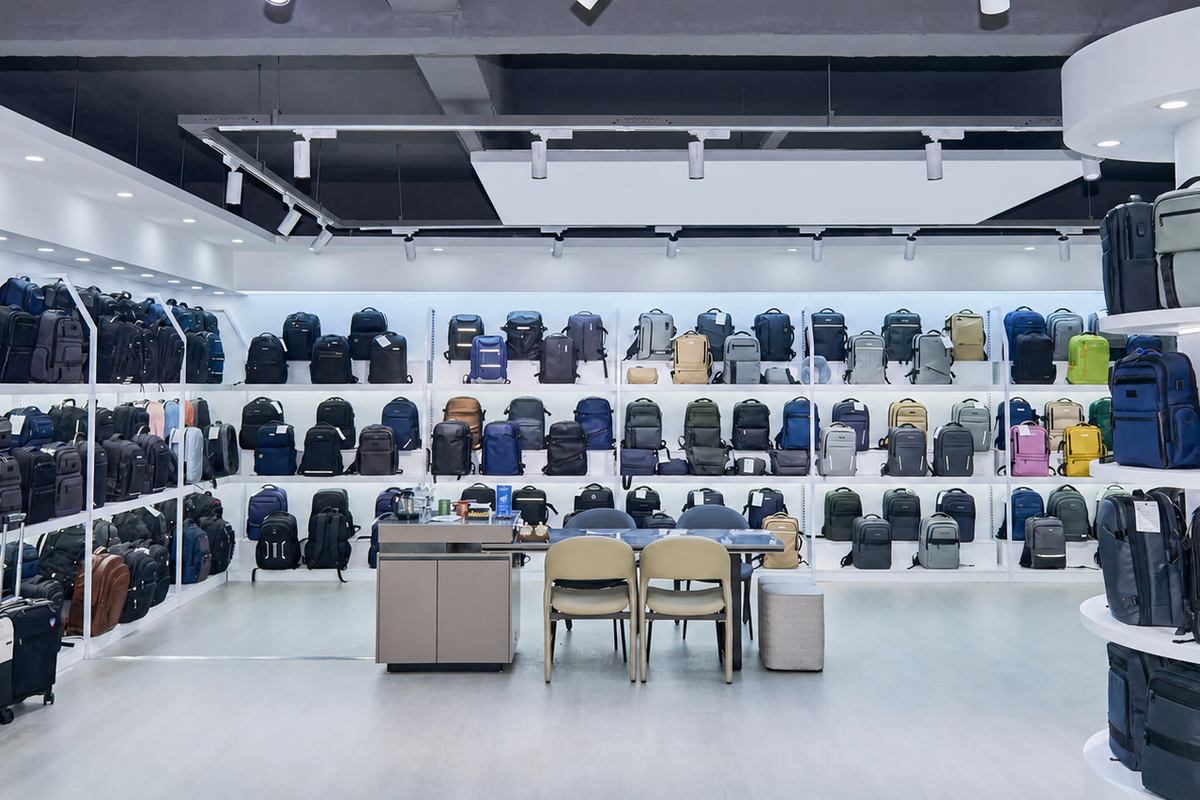
Brief input reference
01
Confirm the brief
Define intended use, dimensions, organization, material direction, branding and packing requirements.
Sample review environment
02
Develop and review the sample
Turn the approved direction into a physical reference and record the revisions needed before production decisions close.
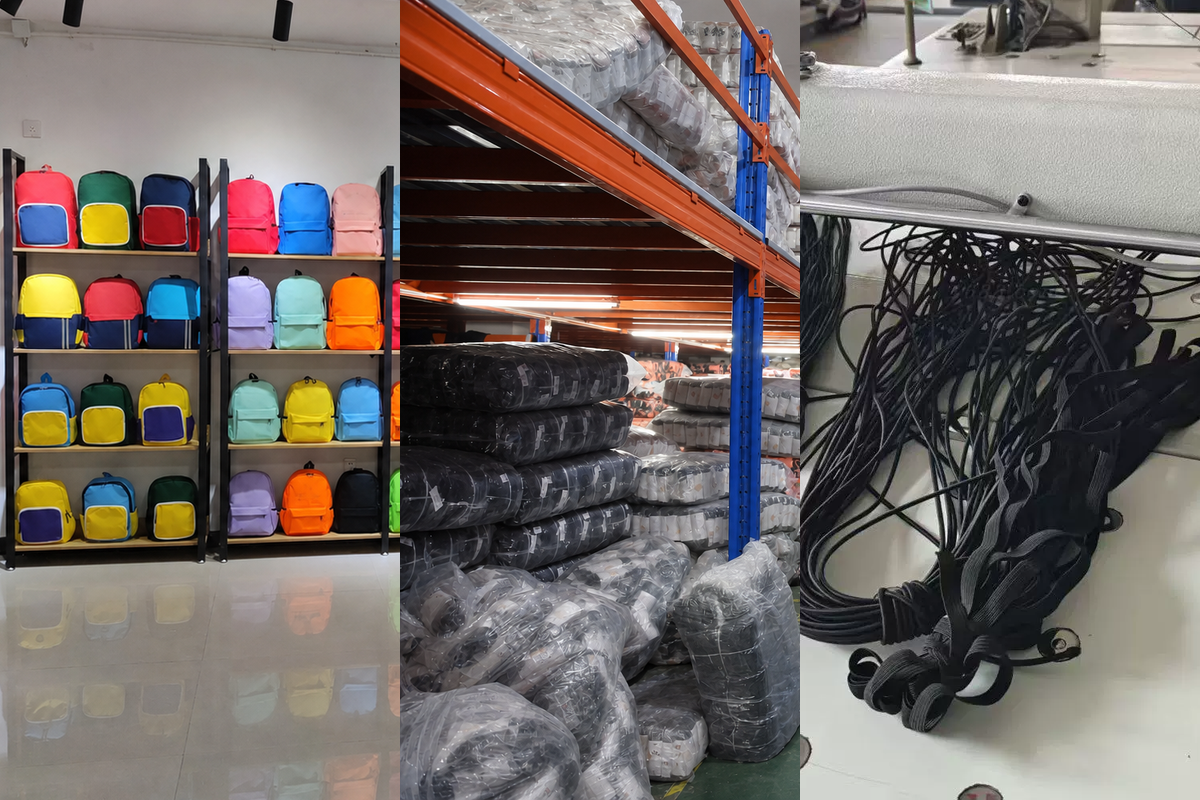
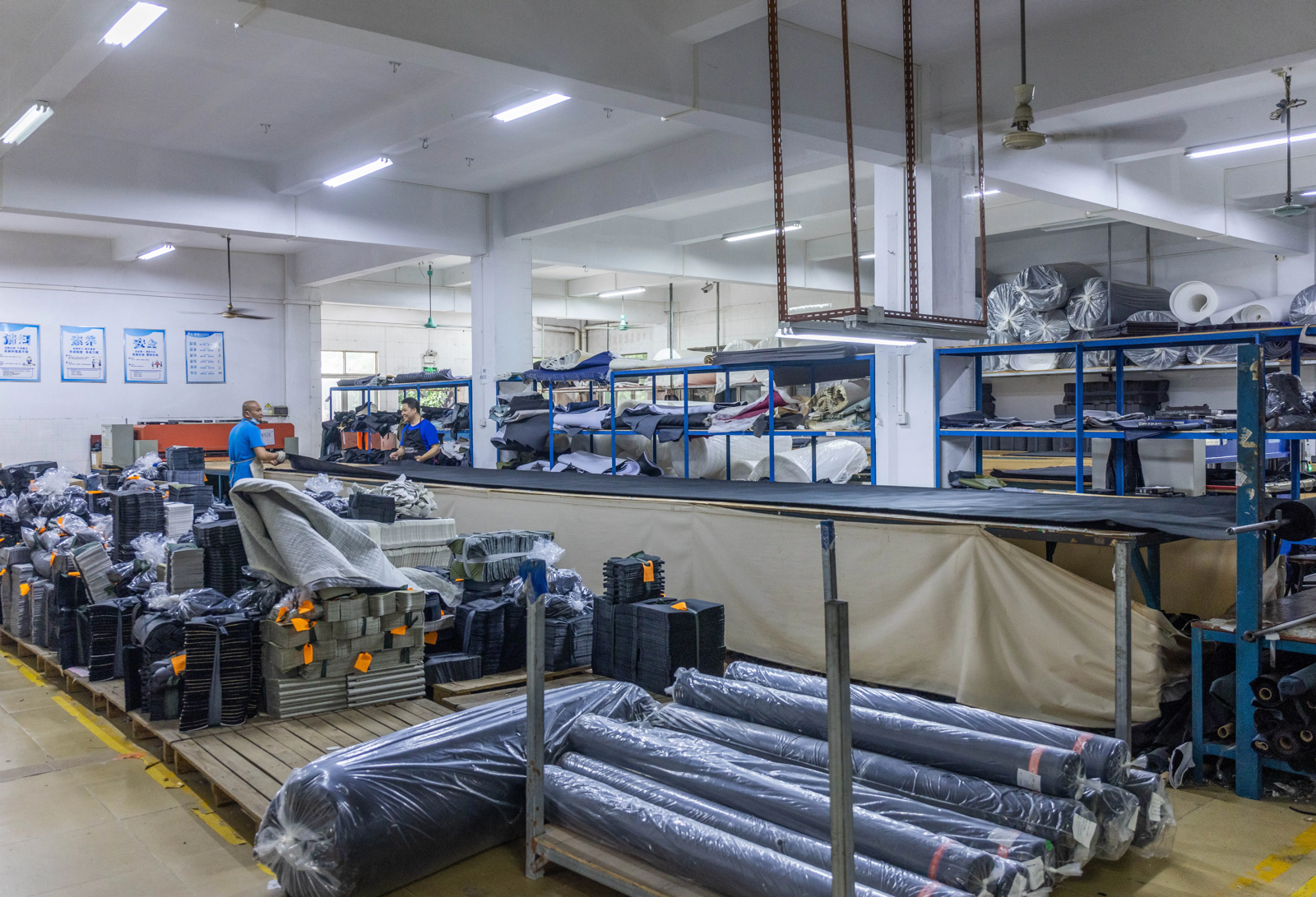
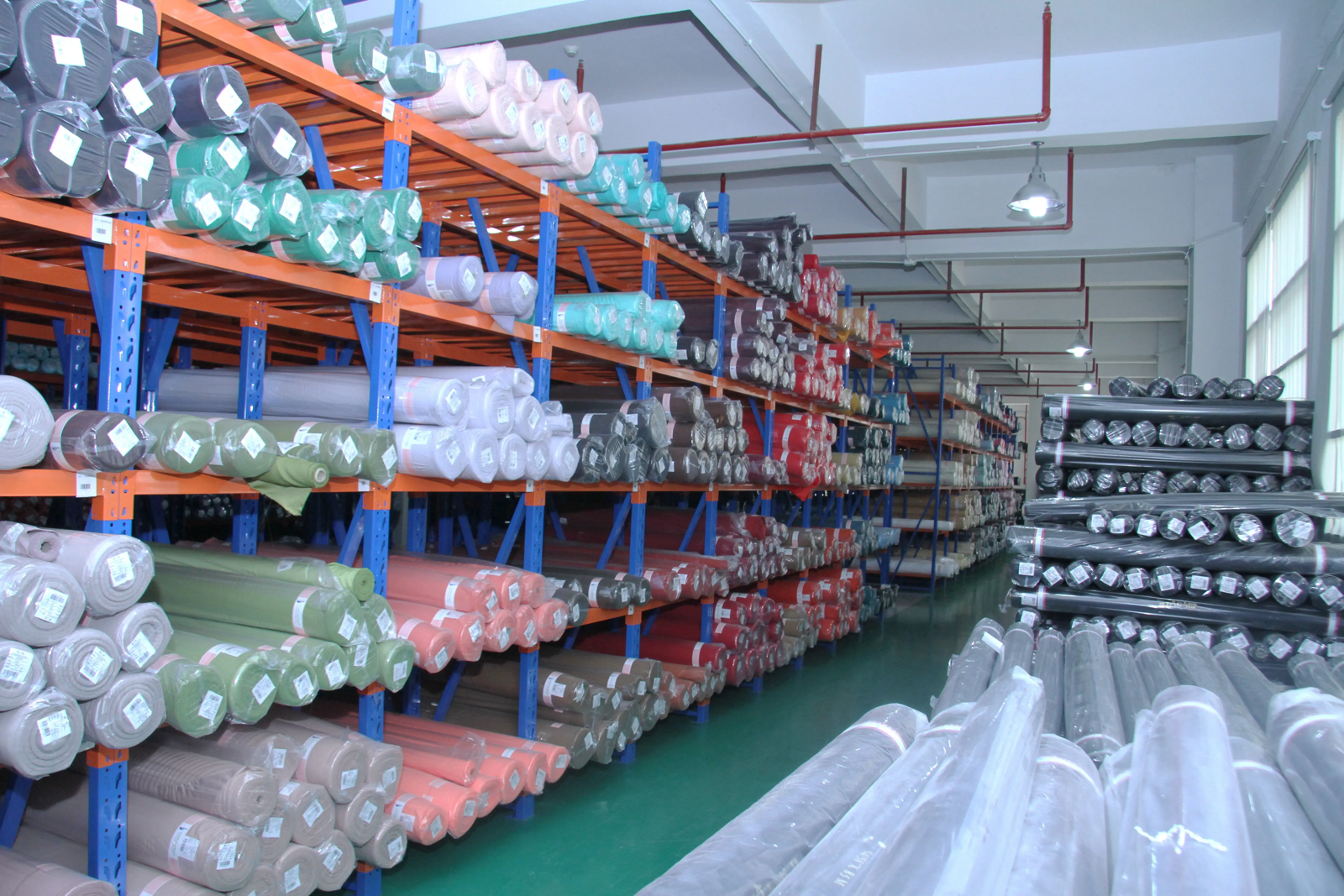
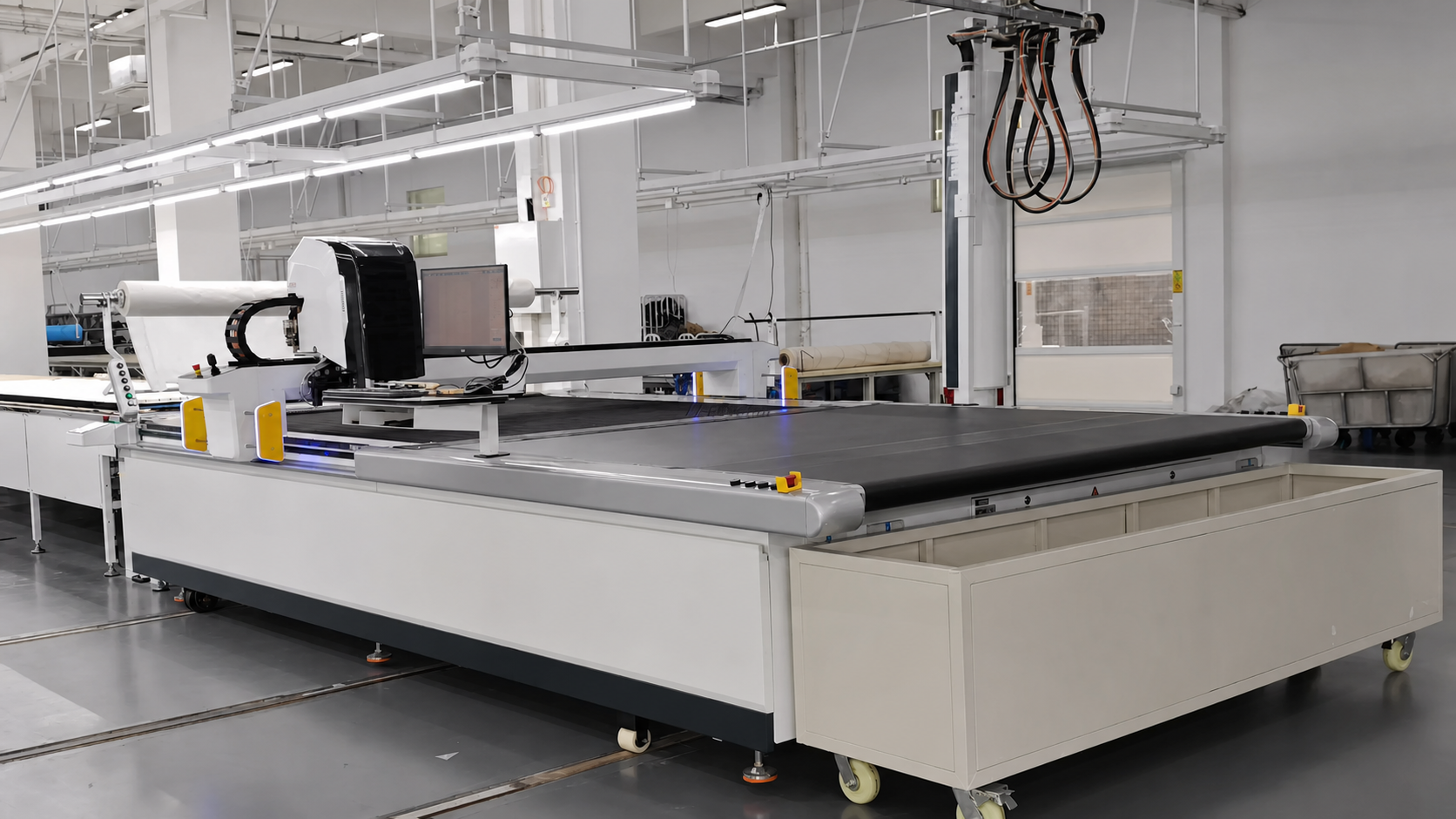
Material and panel preparation
03
Prepare materials and panels
Connect approved construction, components and color direction with material and panel preparation.
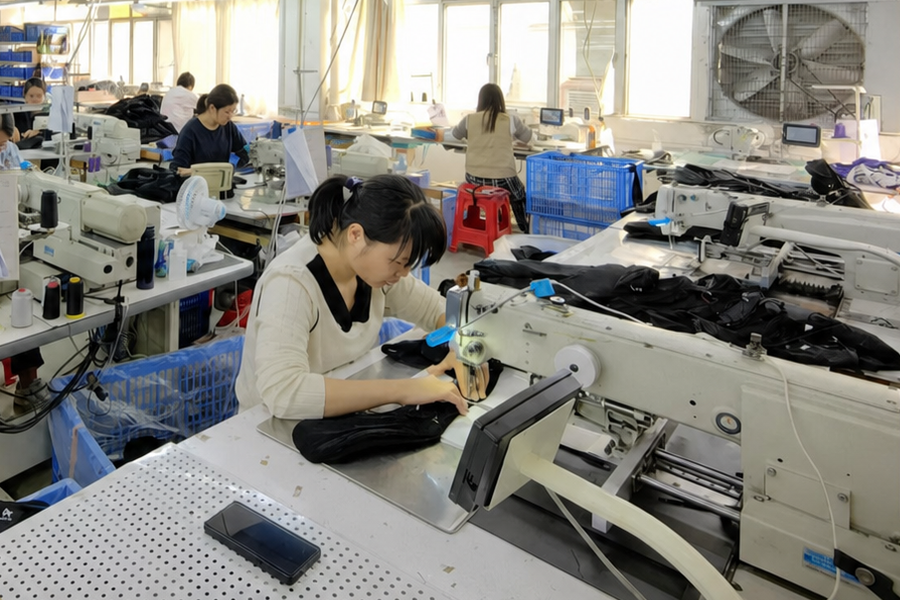
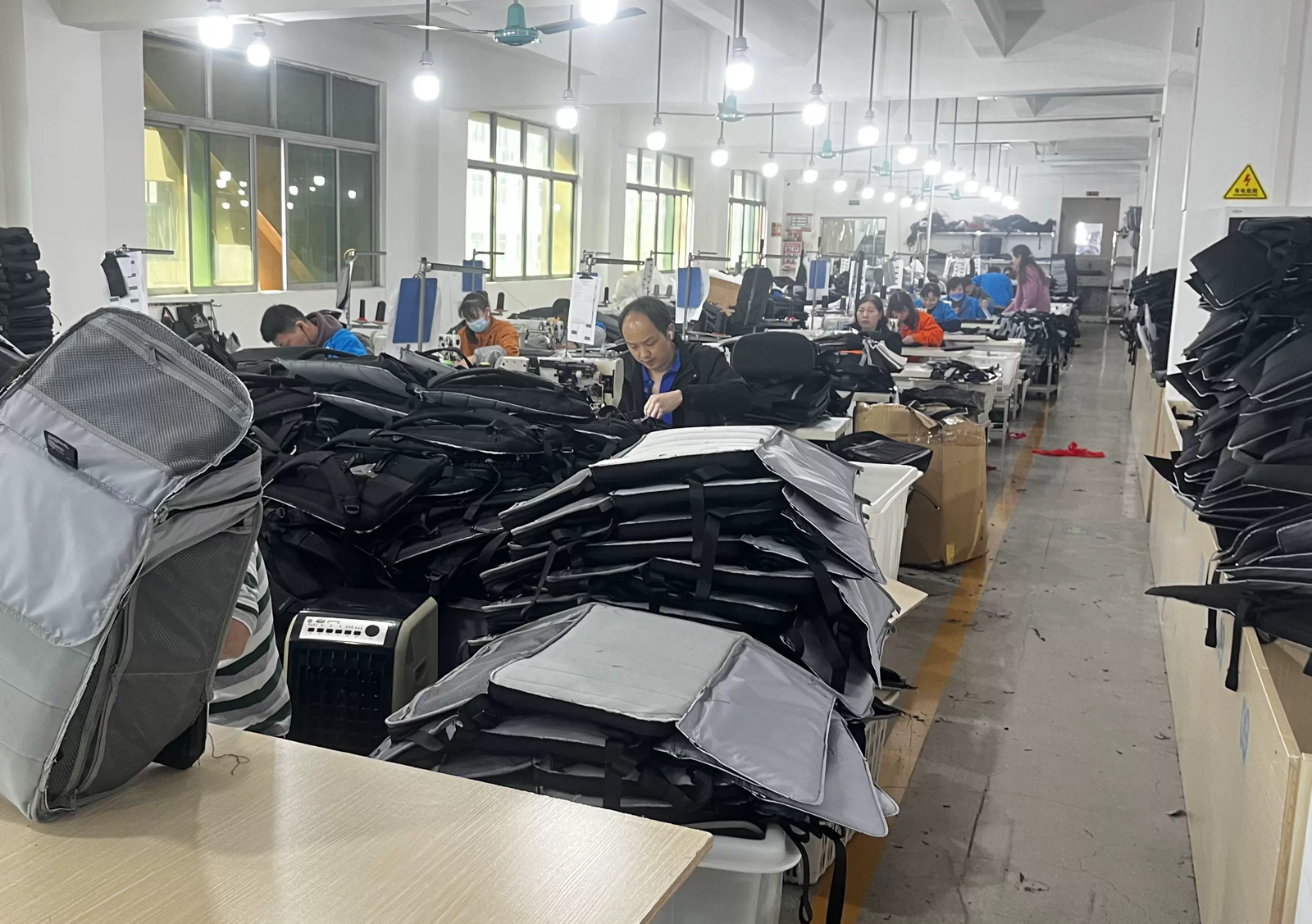
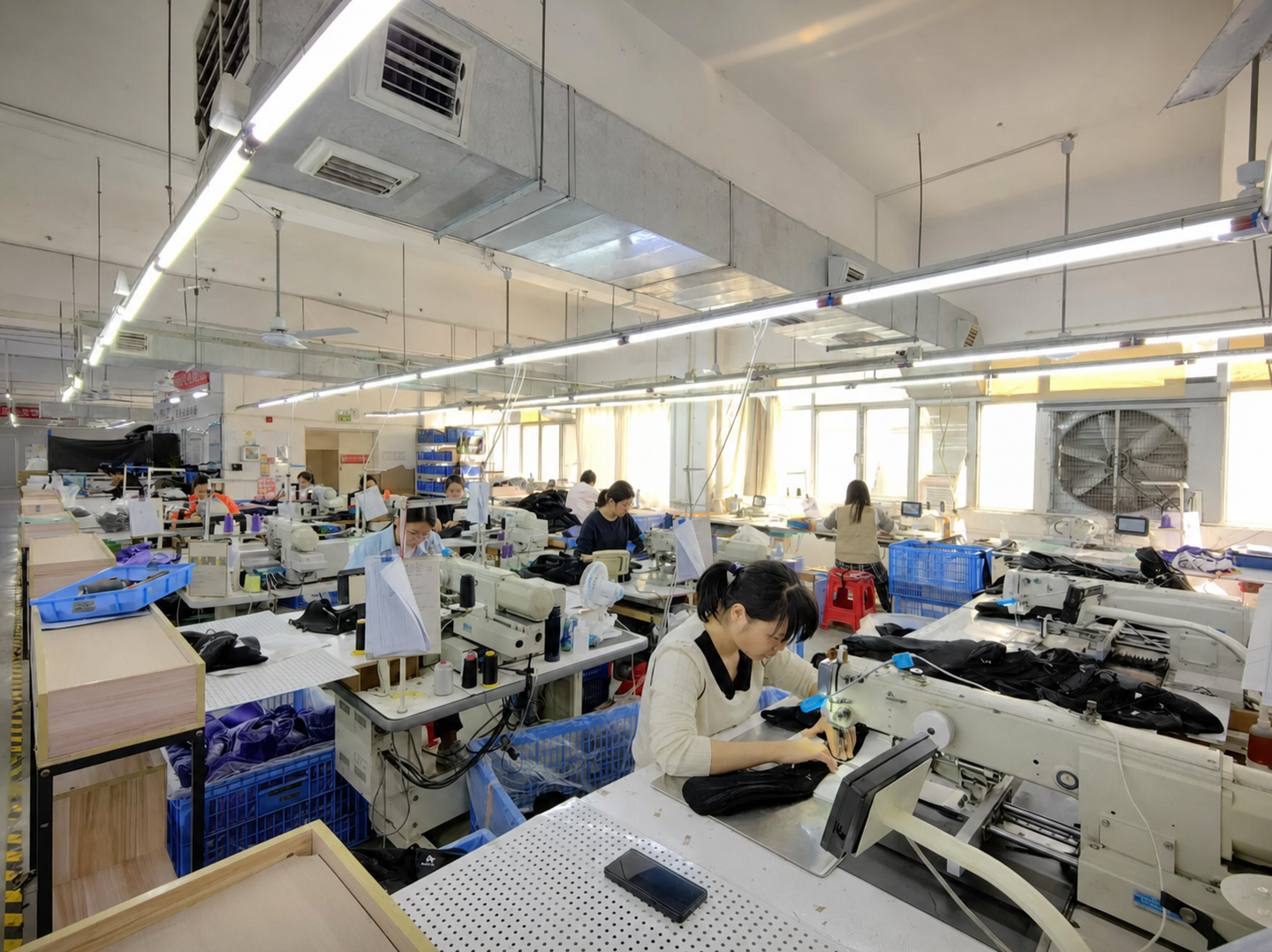
Bag sewing and assembly
04
Sew and assemble
Build the shell, lining, pockets, closures, handles and reinforcement in an agreed sequence.
Checkpoint reference
05
Follow agreed checkpoints
Review workmanship, dimensions, function, branding and order identity against the approved references for the programme.
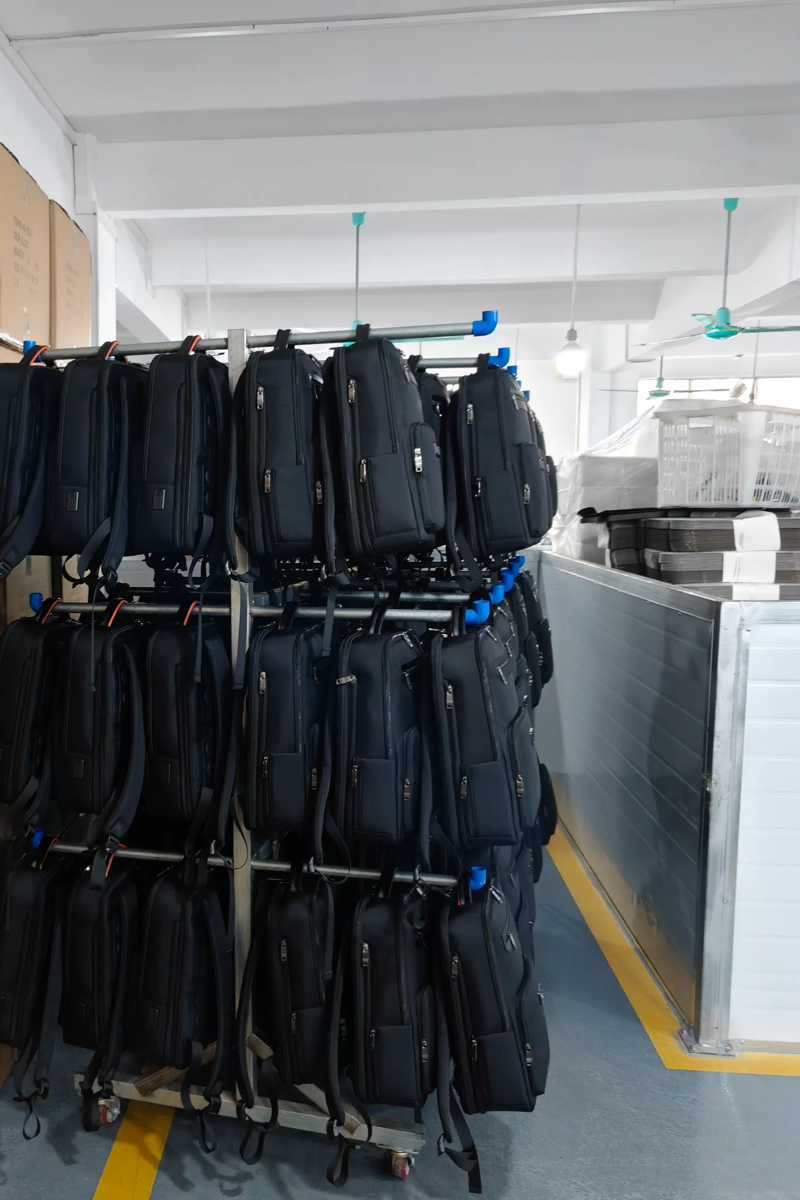
Confirmed carton packing
06
Pack and coordinate dispatch
Apply the confirmed packing, labeling, carton and shipment instructions for the completed order.
The exact development, inspection and production plan is confirmed for each product, specification and buyer requirement, and no image proves every check used for every order.
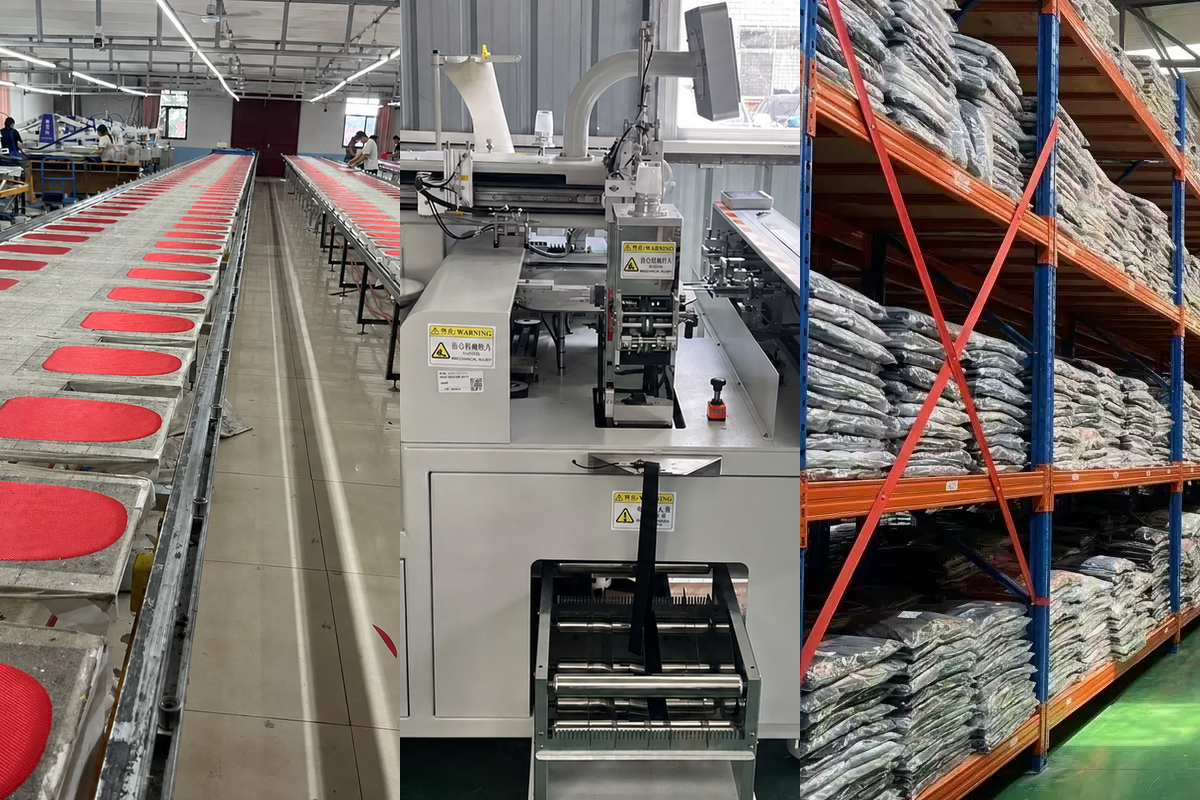
Made-to-order bag production through an affiliated China factory
Forthright coordinates Truedrape bag projects with an affiliated textile bag factory in China under common ownership. Production follows the agreed project specification and approved sample.
Forthright handles commercial and development coordination. The trading company and affiliated factory are separate legal entities.
Use agreed representative contents to check the open top, side gussets and rectangular floor. Review the small rear pocket opening, position and attachment against the approved drawing without treating it as a lining. Record the approved dimensions and contents arrangement.
02
Binding and handle assembly
Inspect edge capture at every vertical joint, the top binding and the bottom corners. Check both short doubled handles and all rectangular attachment patches. Apply the agreed handling or attachment checks and record results before accepting the sample.
03
Material and approval record
Match the body textile, cream binding, canvas bottom, handles and pocket to the approved material references. Review artwork appearance on the coarse weave, labels and packing. Keep the accepted sample revision, material specification and inspection criteria together.
Share the intended contents, target dimensions, jute material direction, cream component specifications, handle and pocket requirements, artwork, quantity per color and timing. The MOQ is 300 pieces per style per color. Sample timing is confirmed after specification agreement; bulk timing follows sample approval and order review.
We use essential cookies for site operation and optional analytics only with your consent.