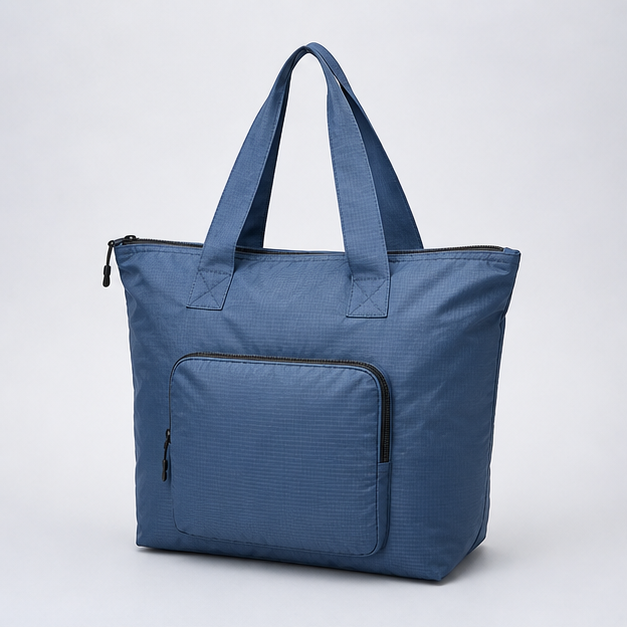
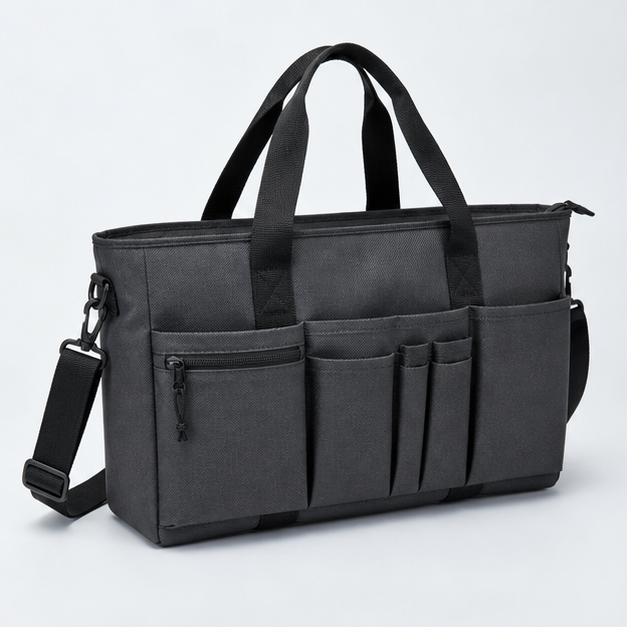
Made-to-order B2B production. Specifications are confirmed through sampling.
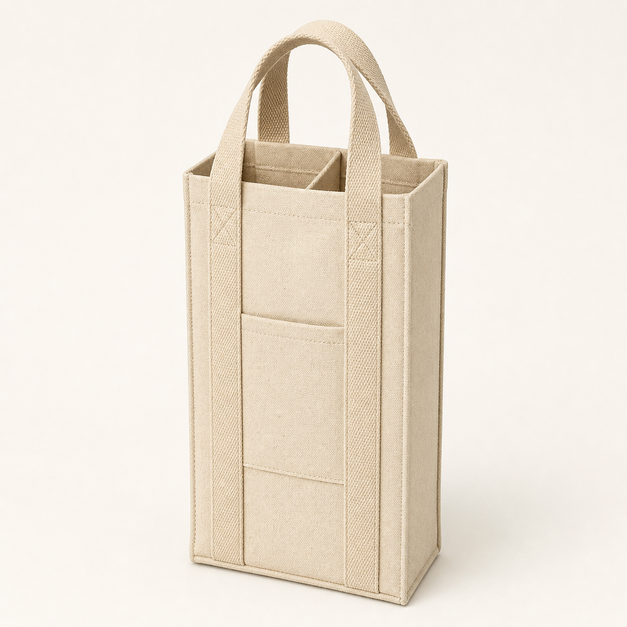
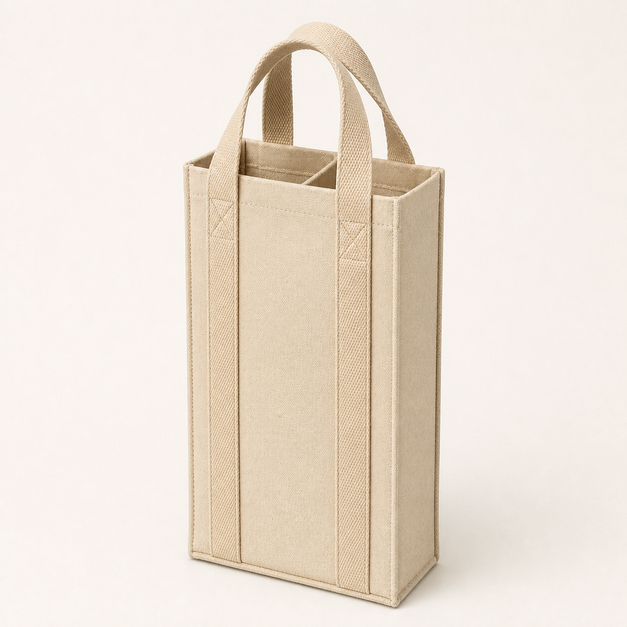
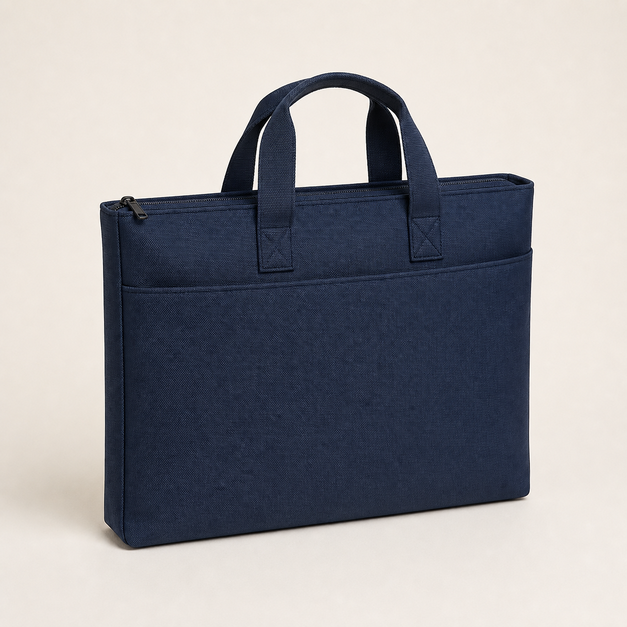
An upright OEM canvas bottle tote for beverage-brand presentation and procurement programs. Define the intended containers first, then confirm two cell proportions, the soft divider, webbing handles and front card pocket.
Look closer at the construction
Use the interior and detail views to specify the two-cell layout and presentation details.
Two-cell organization
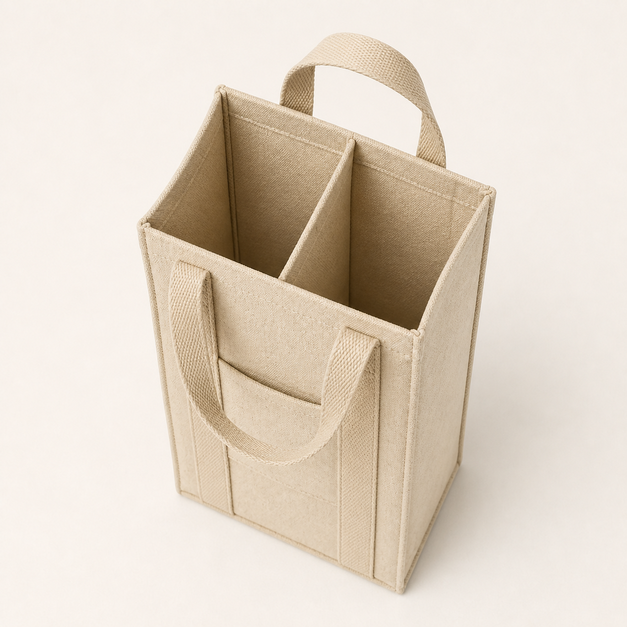
The open view shows two upright bottle cells separated by a soft textile divider. Confirm the intended containers and clearance during sampling before fixing the cell pattern.
Two internal bottle cells
Soft central divider
Reinforced webbing handles and front card pocket
Canvas, divider and handle build
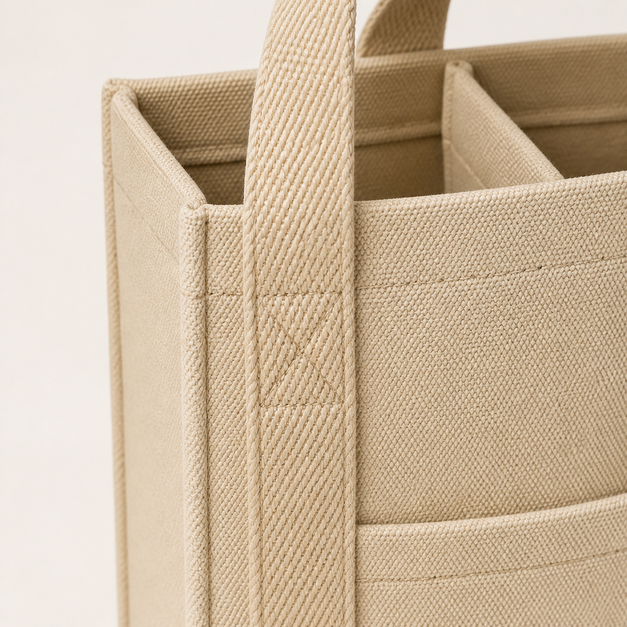
Review the natural canvas direction, divider edge, webbing attachment and card-pocket stitching as one configurable construction package.
Natural canvas direction
Textile divider and lining direction
Reference visuals, not production approval. Features, construction and any performance requirement must be confirmed on your sample.
MATERIAL BUILD
Divided bottle tote materials
The listed materials are a starting direction for the Cellar Divided Bottle Tote. Confirm the actual canvas, divider, trims and support during development.
Outer material
Reference directionNatural canvas direction
Review the physical canvas swatch for shade, hand feel and decoration compatibility before approving the outer specification.
Lining & inner finish
Reference directionTextile divider and lining direction
Set the divider material, edge finish and attachment method around the intended containers and presentation brief.
Support & structure
Reference directionTo be defined with your sample
Agree base direction, cell proportions and webbing reinforcement after reviewing the intended contents in a sample.
The close-up belongs to this design reference. It does not verify fiber composition, sustainability, protective performance or testing.
Treat each option as a development decision for the divided carrier, not a fixed specification.
Customization options
Bottle-cell proportions
Divider construction
Handle webbing
Card-pocket and branding layout
Size & layout
Provide the intended container profiles, then set the upright body, two cell proportions, soft divider and front card-pocket position.
Materials & trims
Confirm the canvas, divider textile, webbing and thread colors through swatches and sampling rather than relying on the image.
Brand & packaging
Supply artwork, decoration method, card or tag use and packing instructions. Approve the complete presentation on the agreed sample.
FUNCTIONAL DETAILS
Divided bottle tote design decisions
Use these checks to turn the Cellar Divided Bottle Tote reference into a clear OEM carrier brief.
01
Bottle-cell proportions
Set each cell around the intended containers and allow for the agreed divider and top clearance.
Buyer questionWhich container profiles must the sample accommodate?
02
Soft divider layout
Choose the divider height, flexibility and attachment method during sampling without treating it as tested protection.
Buyer questionShould the divider be fixed or removable for the program?
03
Handle and card-pocket placement
Review webbing attachment and the front card pocket together so branding and presentation details remain coordinated.
Buyer questionWhat information or insert belongs in the front pocket?
Discuss changes before the pattern is finalized. The pictured configuration is a design reference and does not establish protective performance.
OEM / ODM development process
From an approved direction to a packed custom bag order
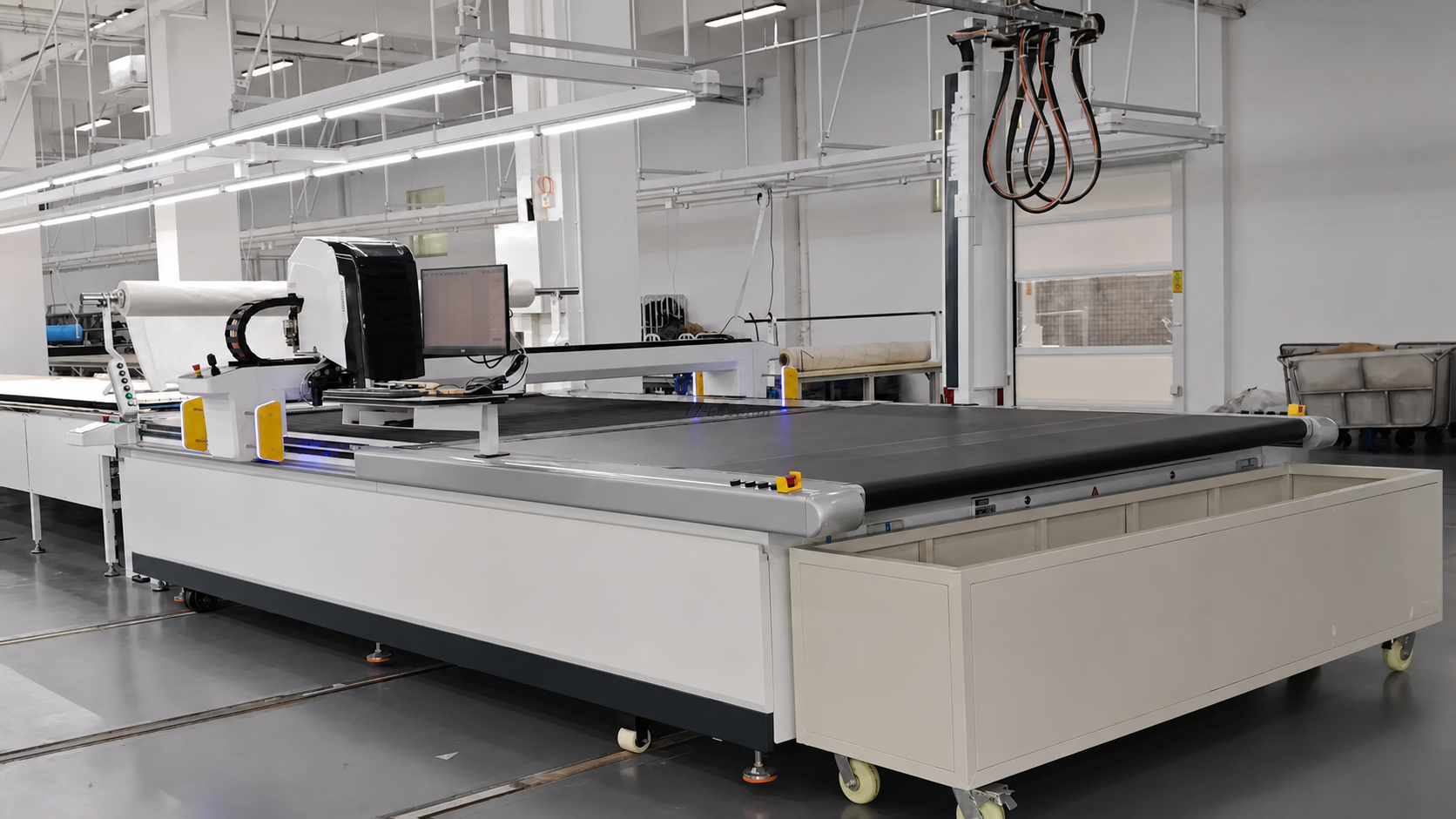
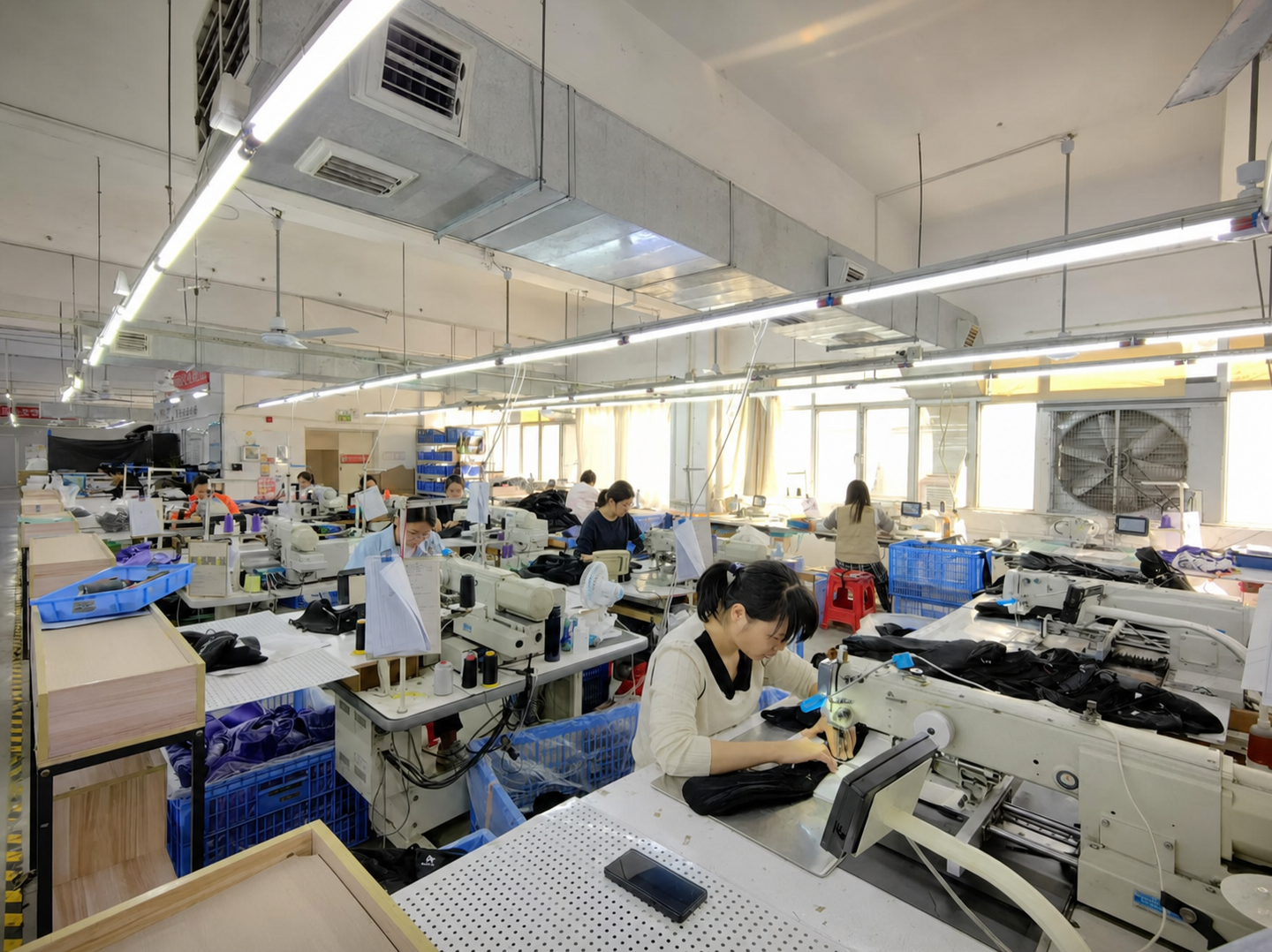
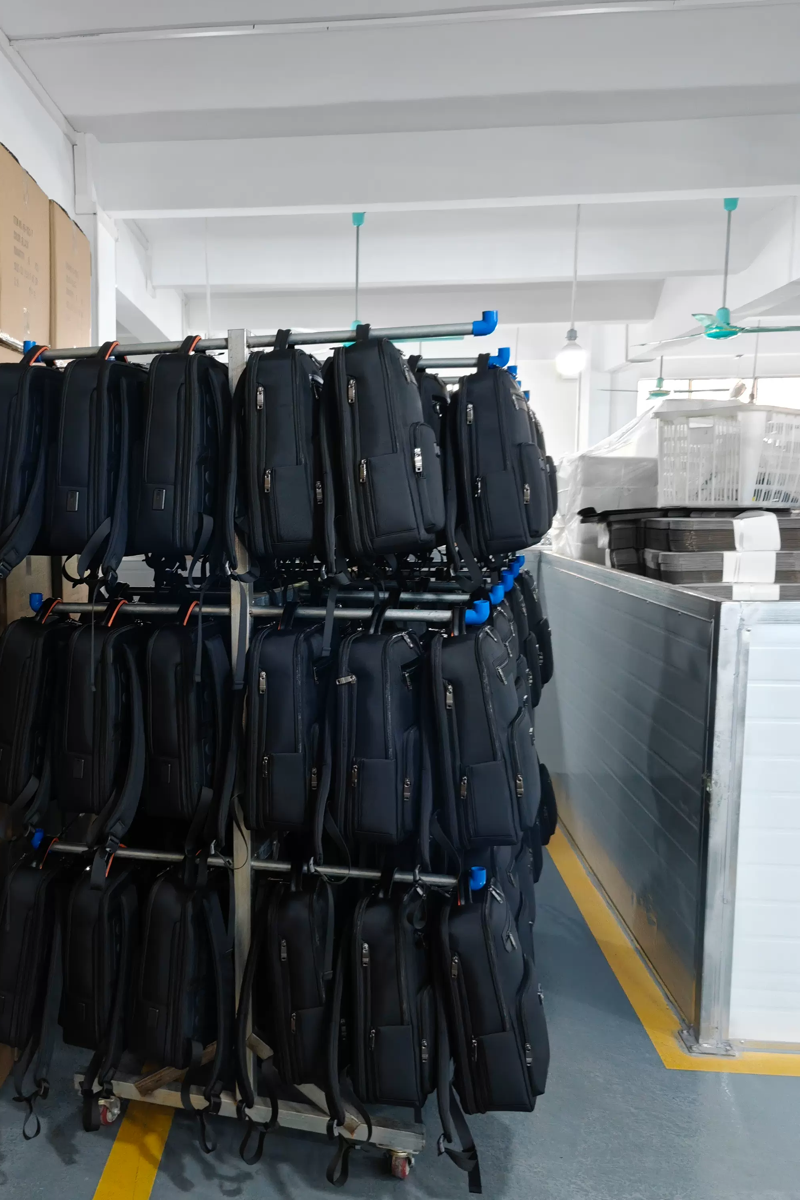
This shared OEM and ODM bag development route shows how a buyer brief moves through sampling, material preparation, sewing, agreed production checkpoints and packing.
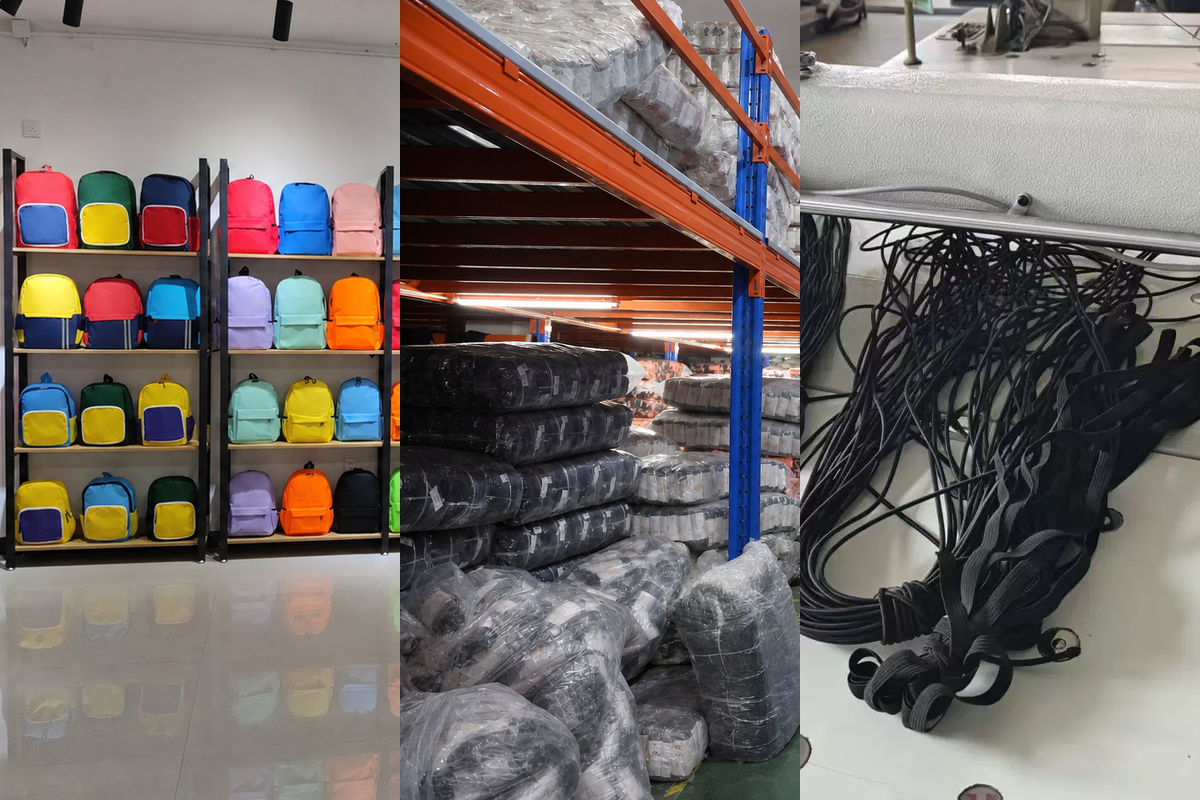
Brief input reference
01
Confirm the brief
Define intended use, dimensions, organization, material direction, branding and packing requirements.
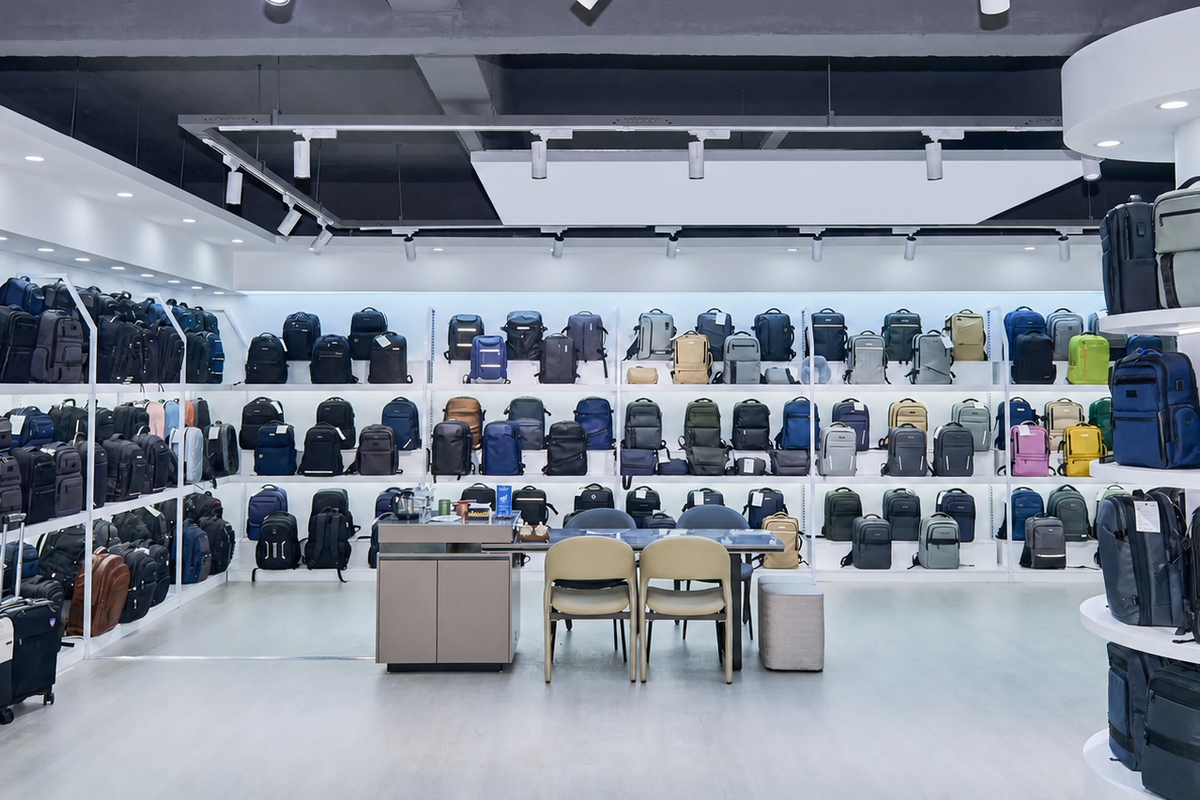
Sample review environment
02
Develop and review the sample
Turn the approved direction into a physical reference and record the revisions needed before production decisions close.
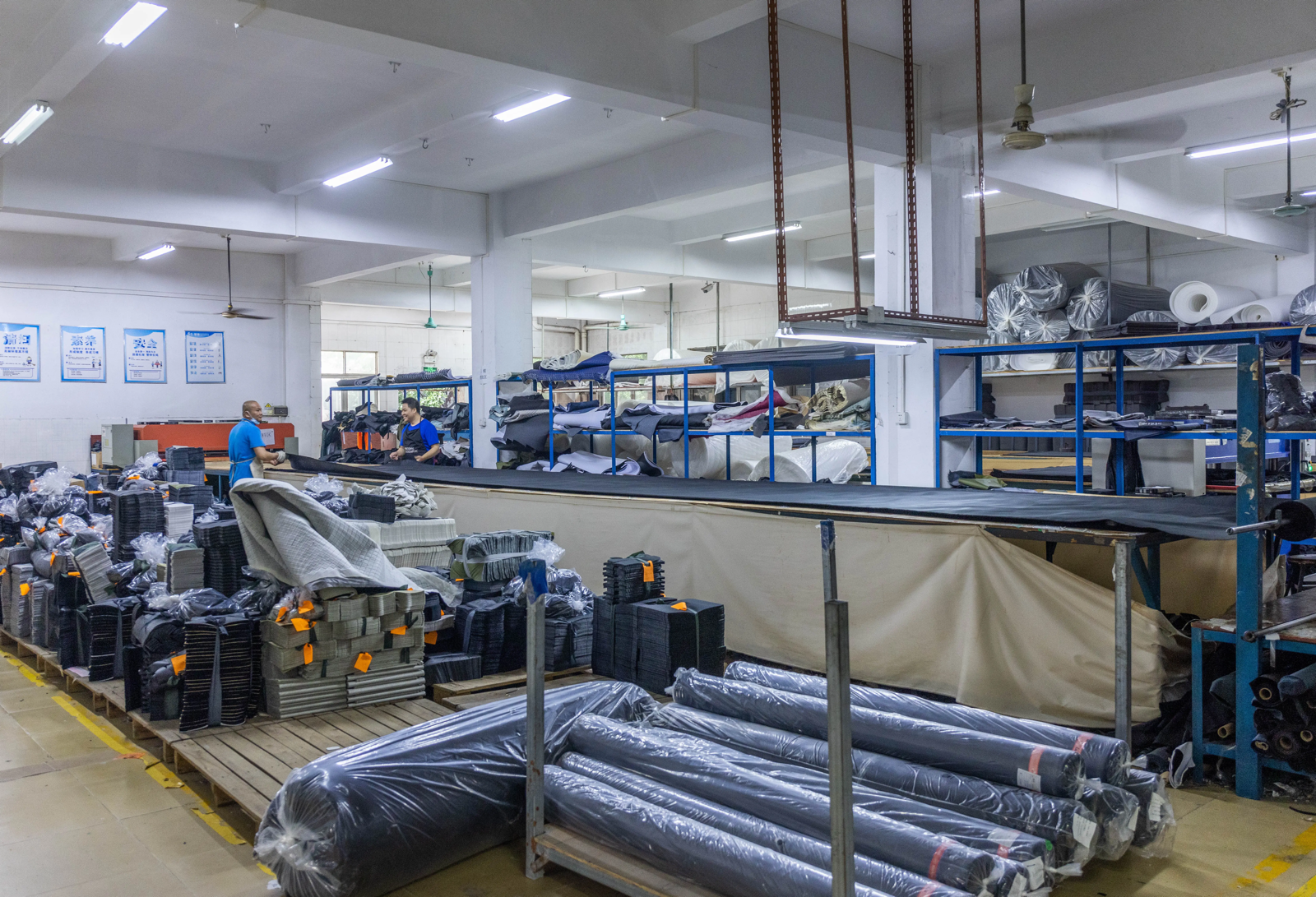
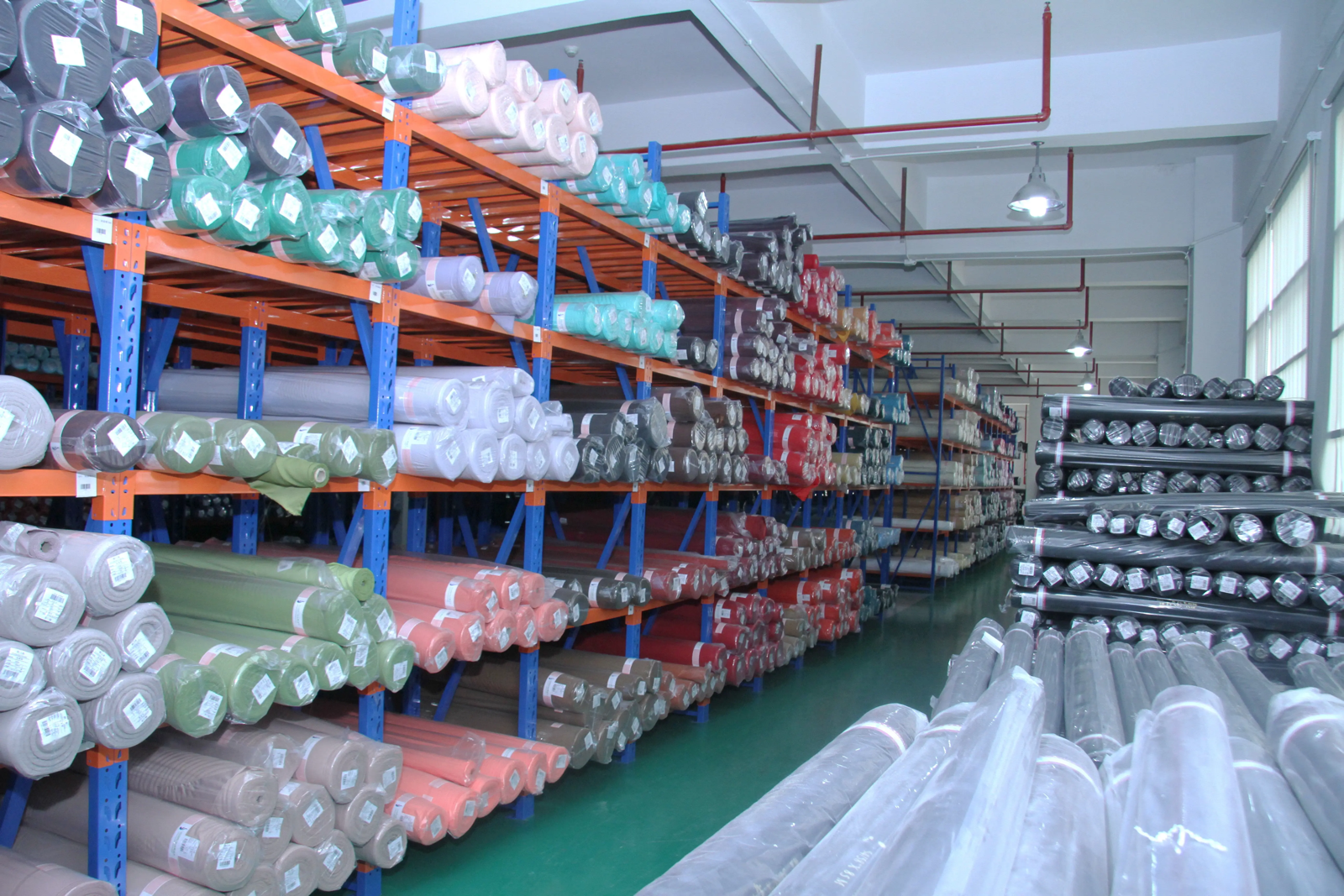
Material and panel preparation
03
Prepare materials and panels
Connect approved construction, components and color direction with material and panel preparation.
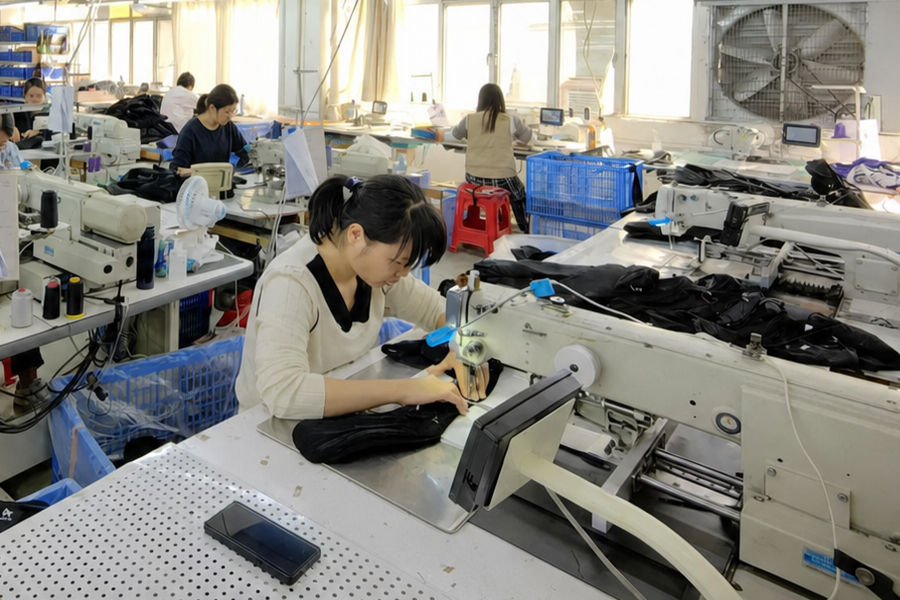
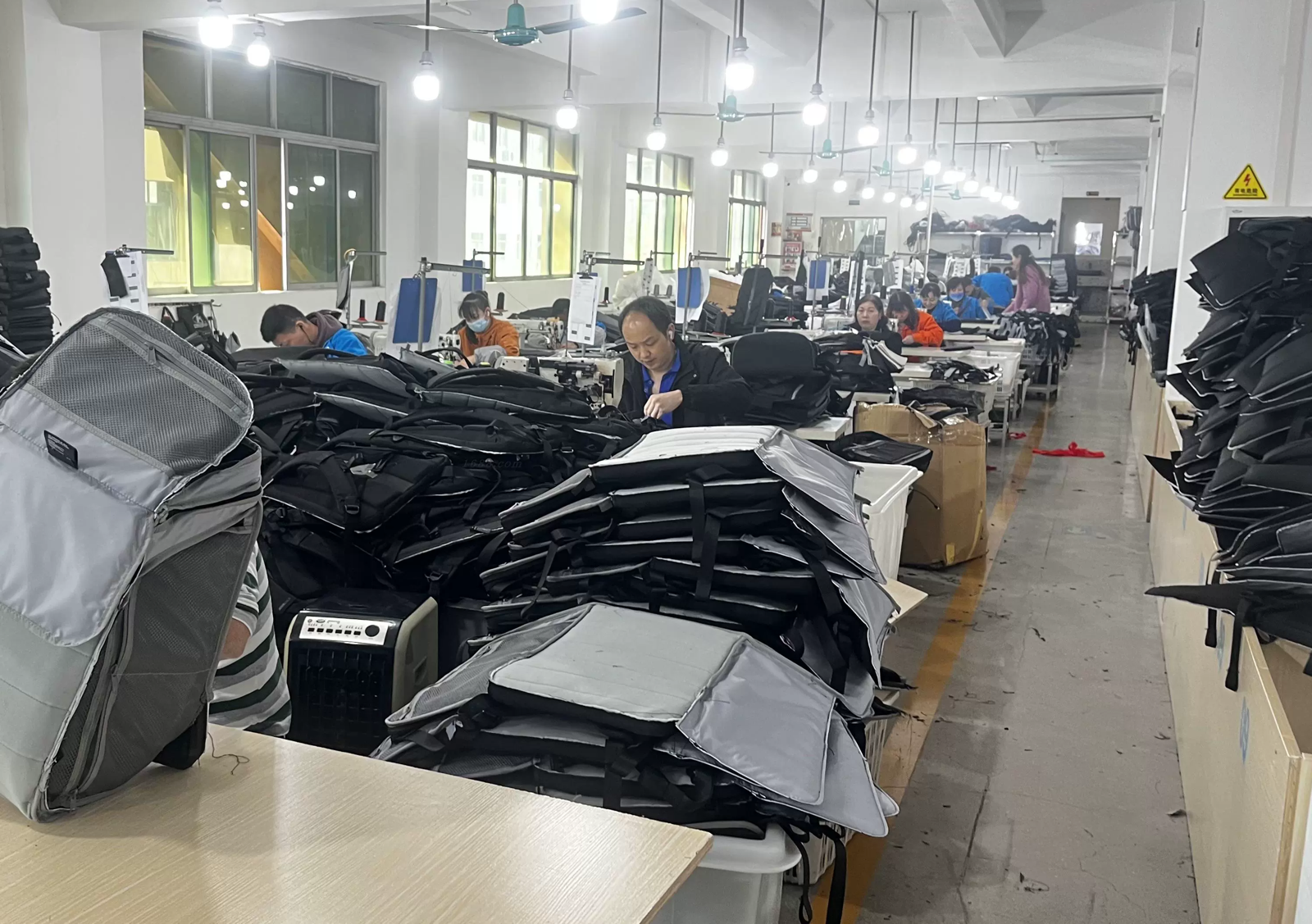
Bag sewing and assembly
04
Sew and assemble
Build the shell, lining, pockets, closures, handles and reinforcement in an agreed sequence.
Checkpoint reference
05
Follow agreed checkpoints
Review workmanship, dimensions, function, branding and order identity against the approved references for the programme.
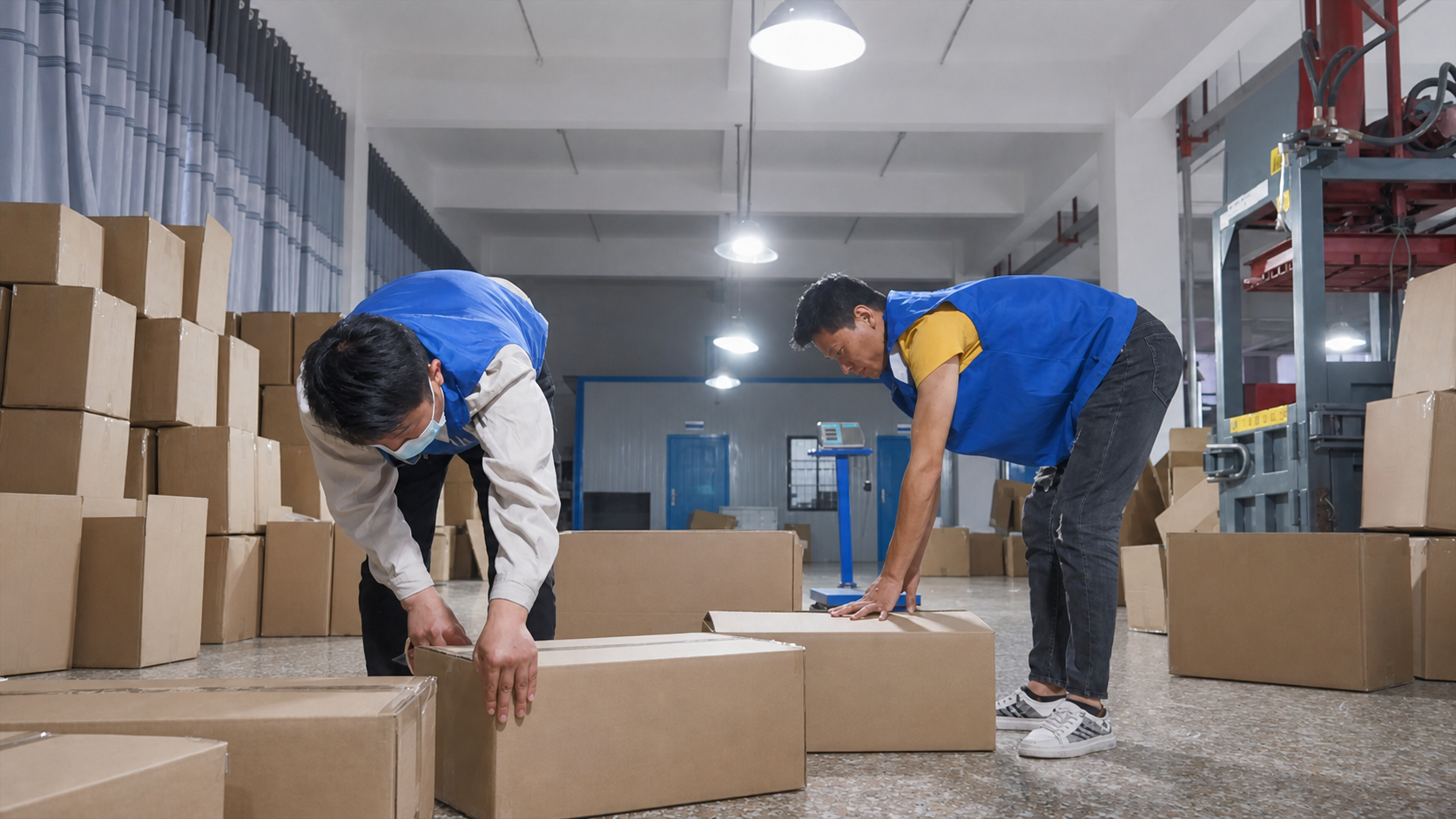
Confirmed carton packing
06
Pack and coordinate dispatch
Apply the confirmed packing, labeling, carton and shipment instructions for the completed order.
The exact development, inspection and production plan is confirmed for each product, specification and buyer requirement, and no image proves every check used for every order.
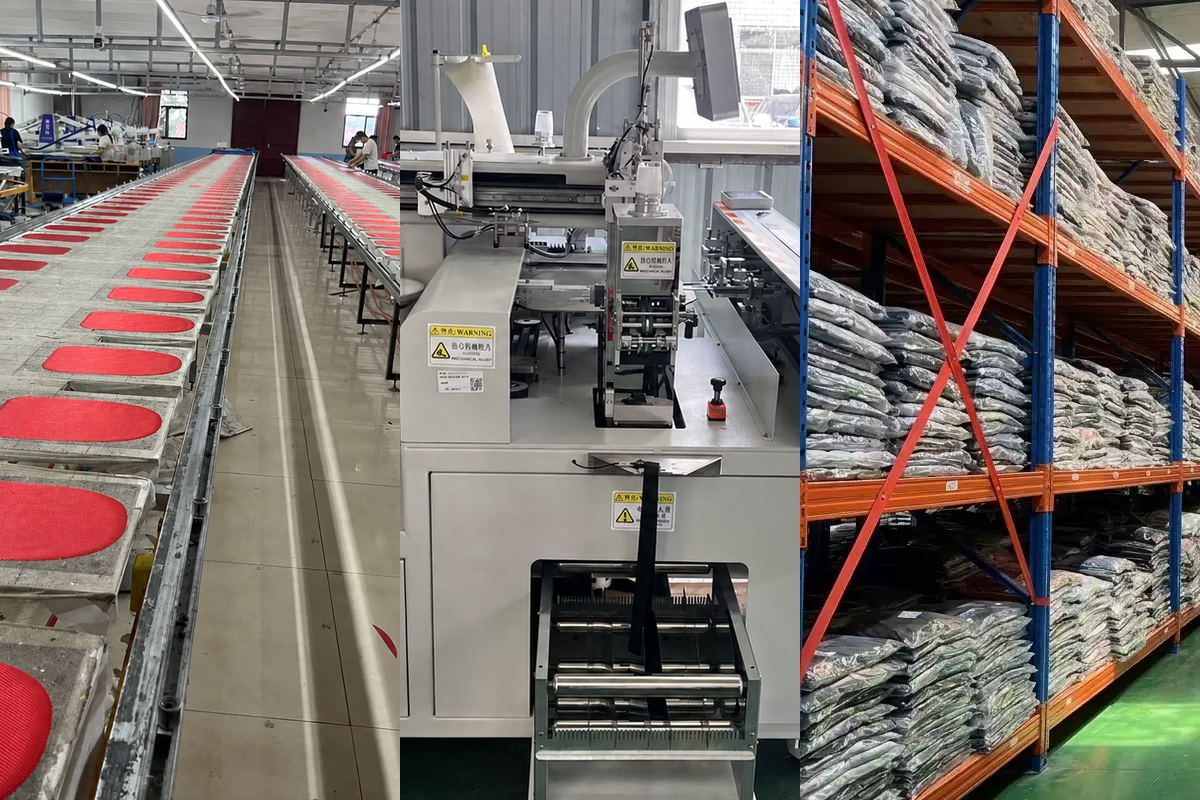
Made-to-order bag production through an affiliated China factory
Forthright coordinates Truedrape bag projects with an affiliated textile bag factory in China under common ownership. Production follows the agreed project specification and approved sample.
Forthright handles commercial and development coordination. The trading company and affiliated factory are separate legal entities.