Pencil Case Manufacturer Brief: Pillar Slide-Down Case
Pillar Slide-Down Pencil Case · OEM/ODM stationery-case development for stationery brands and corporate desk-kit procurement teams
Configurable OEM/ODM design reference. Cuff movement, access, base behavior and final construction require physical sample review; no standing or performance result is established.
Reference size
Specified around the intended stationery set and confirmed through sampling
Made-to-order OEM/ODM design reference. Final construction and timing are confirmed for the project.
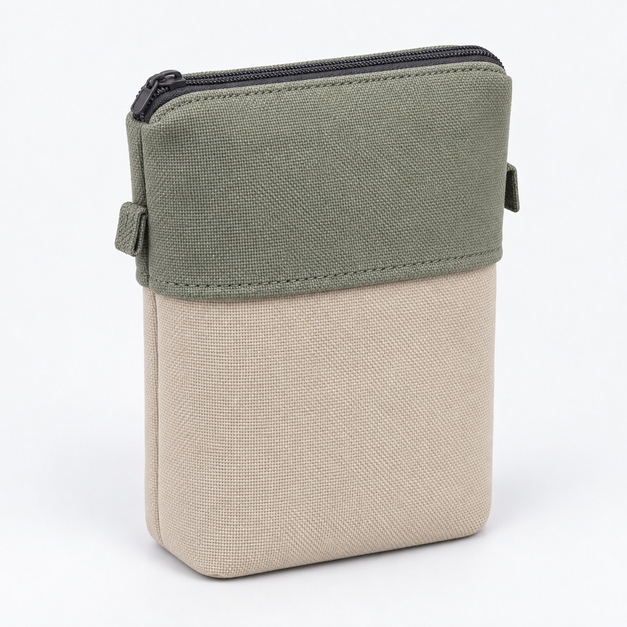
Pillar is a tall textile pencil-case direction with a warm stone/sand lower body, muted sage/olive-gray upper cuff and dark horizontal top zipper. A sewn fabric pull tab sits on each short side at the cuff edge. The cuff is intended to slide down over the lower body for desk access. For a pencil case manufacturer enquiry, define the stationery set and both intended states; movement, access and base behavior need physical sampling.
Review the tall and lowered-cuff states
The two-state shape is the reason to develop this reference. Agree how the cuff should move and where it should finish before fixing the panel and base dimensions.
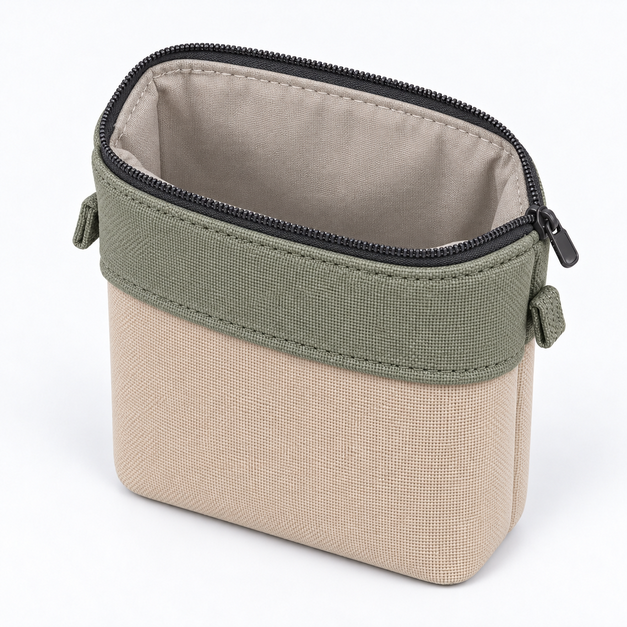
Open interior and intended access
The open reference shows plain warm-gray lining through a wider unzipped opening. Use it to discuss the intended contents, the area that should remain visible and the desired cuff stopping position. It does not demonstrate the complete slide-down action, smooth movement, loaded access or standing behavior.
Tall soft body with a rounded rectangular base
Upper cuff designed to slide down over the lower body
Horizontal dark top zipper
One sewn fabric pull tab on each short side at the cuff edge
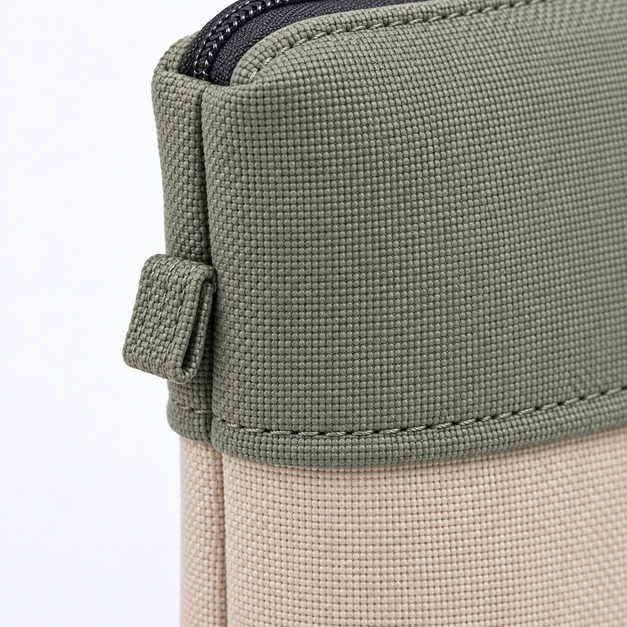
Cuff seam and side pull tab
One sewn fabric tab on each short side provides the proposed grip position. Specify the tab size, seam insertion and cuff overlap together. Review those points on the actual sample through the full intended movement; adding stiffness or changing seam bulk may alter the action.
Warm stone/sand lower-body textile direction
Muted sage/olive-gray sliding-cuff textile direction
Plain warm-gray lining and sewn fabric pull-tab directions
Reference visuals, not production approval. Features, construction and any performance requirement must be confirmed on your sample.
MATERIAL BUILD
Balance body shape with cuff movement
Material choices must be reviewed in the complete moving assembly. The lower body and cuff have different jobs, but their surface, thickness and seam stack affect each other.
Lower body and base
Reference directionWarm stone/sand lower-body textile direction
Confirm composition, weight, finish and color with an approved material reference. Specify the base layers and edge shape around the intended stationery set. Any desired base stiffness or standing behavior must be evaluated on the physical sample.
Sliding upper cuff
Reference directionMuted sage/olive-gray textile direction
Review cuff length, overlap and the contact between inner and outer surfaces. A material that looks suitable as a swatch may fold or bind at a seam in the assembly. Confirm the selected material and finished cuff behavior together.
Lining, zipper and tabs
Reference directionPlain lining, dark top zipper and sewn fabric pull tabs
Select the lining and closure components, then define tab material, seam insertion and stitch positions. Check that the lining and zipper ends stay clear of the cuff route. This reference includes no added handles, pockets or decorative hardware.
The close-up identifies proposed construction points only. It does not verify fiber composition, wear life, movement reliability, stability or completed production.
Mark the tall closed shape and the intended lowered position on the same drawing. Changes to body height, cuff overlap or base layers should be reviewed as one construction revision.
Customization options
Stationery envelope and closed proportions
Cuff travel, overlap and tab positions
Body, lining and base construction
Artwork placement and project packaging
Stationery set and access
Provide the dimensions and quantities of representative pens, pencils and other intended items, including the longest and widest pieces. Decide what should remain visible after the cuff is lowered and whether items can be reached without unloading the case.
Cuff route and grip points
Define the overlap, lowering direction, final cuff position and tab locations. State the expected handling sequence for the sample review. Confirm the case can return to its tall state and close with the agreed contents; the illustration is not movement evidence.
Color, artwork and packing
Confirm the lower-body and cuff colors separately and review how they meet at the overlap. Place artwork and labels where movement will not fold them into an unintended position. Specify packing in the approved tall or lowered state and identify each style/color version.
FUNCTIONAL DETAILS
Questions for a moving-cuff pencil case
Use the answers below to separate the proposed construction from the behavior that still needs sample approval.
01
Is the cuff action already verified?
No. The images describe an intended slide-down construction. Review lowering and raising with the selected shell, lining, seam stack and representative contents, then record any snagging, bunching or access issue for revision.
Buyer questionWhere should the cuff stop, and what handling sequence must the sample demonstrate?
02
Will the lowered case stand on a desk?
That is a sample question rather than an established feature. Contents, base shape, layer stiffness and the lowered cuff can change balance. Define the expected surface and loading arrangement before deciding whether a sample meets the project need.
Buyer questionWhich contents and desk conditions define an acceptable base review?
03
Can this use a fixed-pouch specification?
The stationery envelope is a useful input, but the moving cuff adds overlap and seam-clearance decisions. Record dimensions for the tall and lowered states and check access in both. A fixed gusseted pouch remains a different construction option.
Buyer questionDoes the project require this two-state construction or a fixed opening?
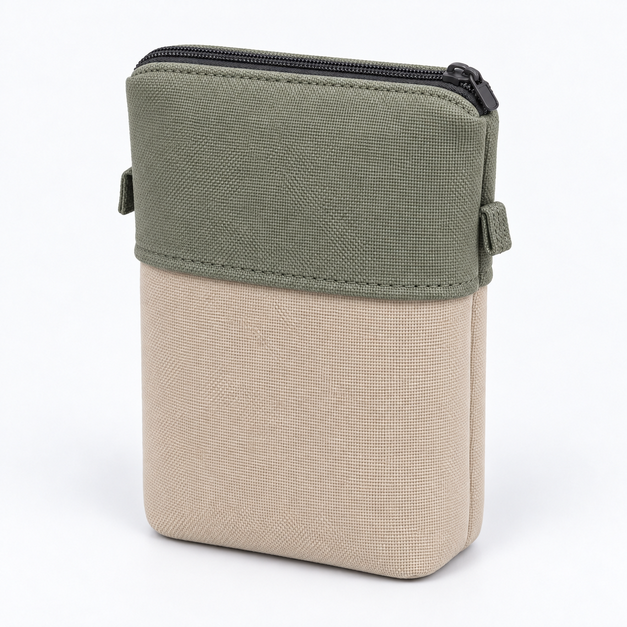
The back and side view is an editorial reference for the same case. Final movement, loaded access and base behavior are established only by the agreed sample review and any required testing.
OEM / ODM development process
From an approved direction to a packed custom bag order
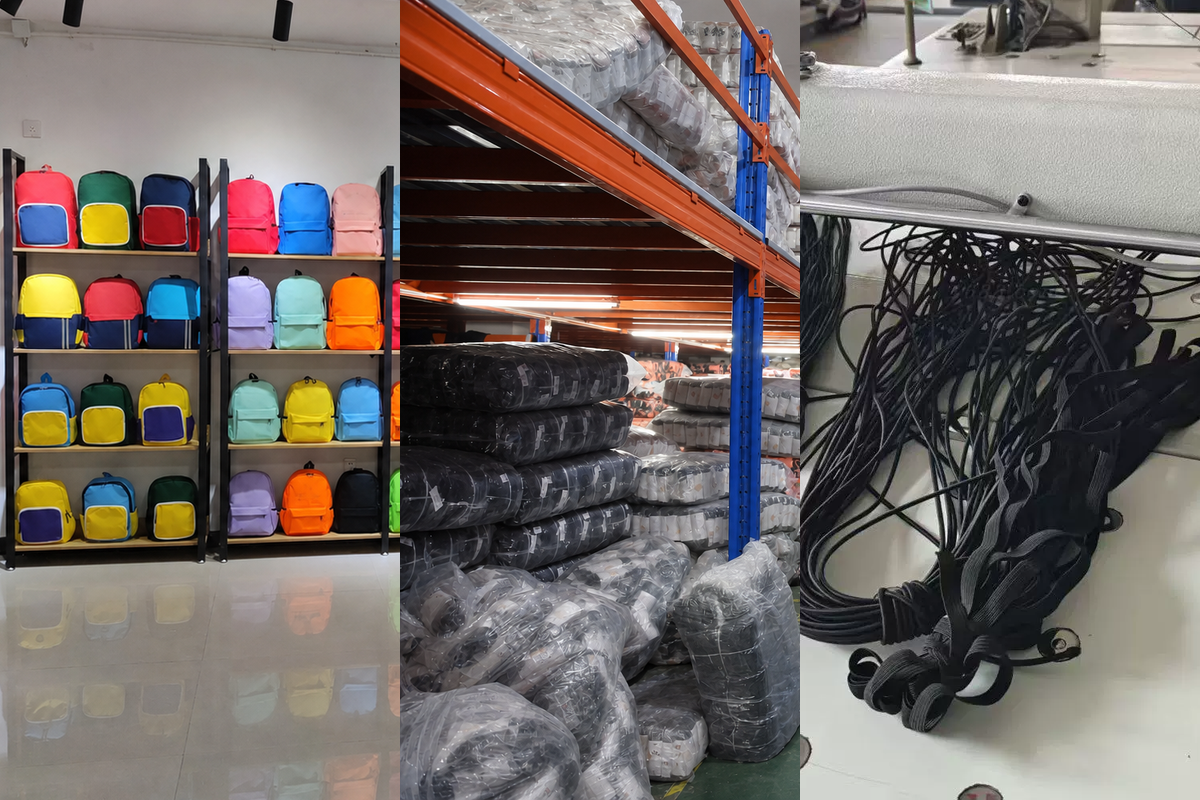
This shared OEM and ODM bag development route shows how a buyer brief moves through sampling, material preparation, sewing, agreed production checkpoints and packing.
Brief input reference
01
Confirm the brief
Define intended use, dimensions, organization, material direction, branding and packing requirements.
Sample review environment
02
Develop and review the sample
Turn the approved direction into a physical reference and record the revisions needed before production decisions close.
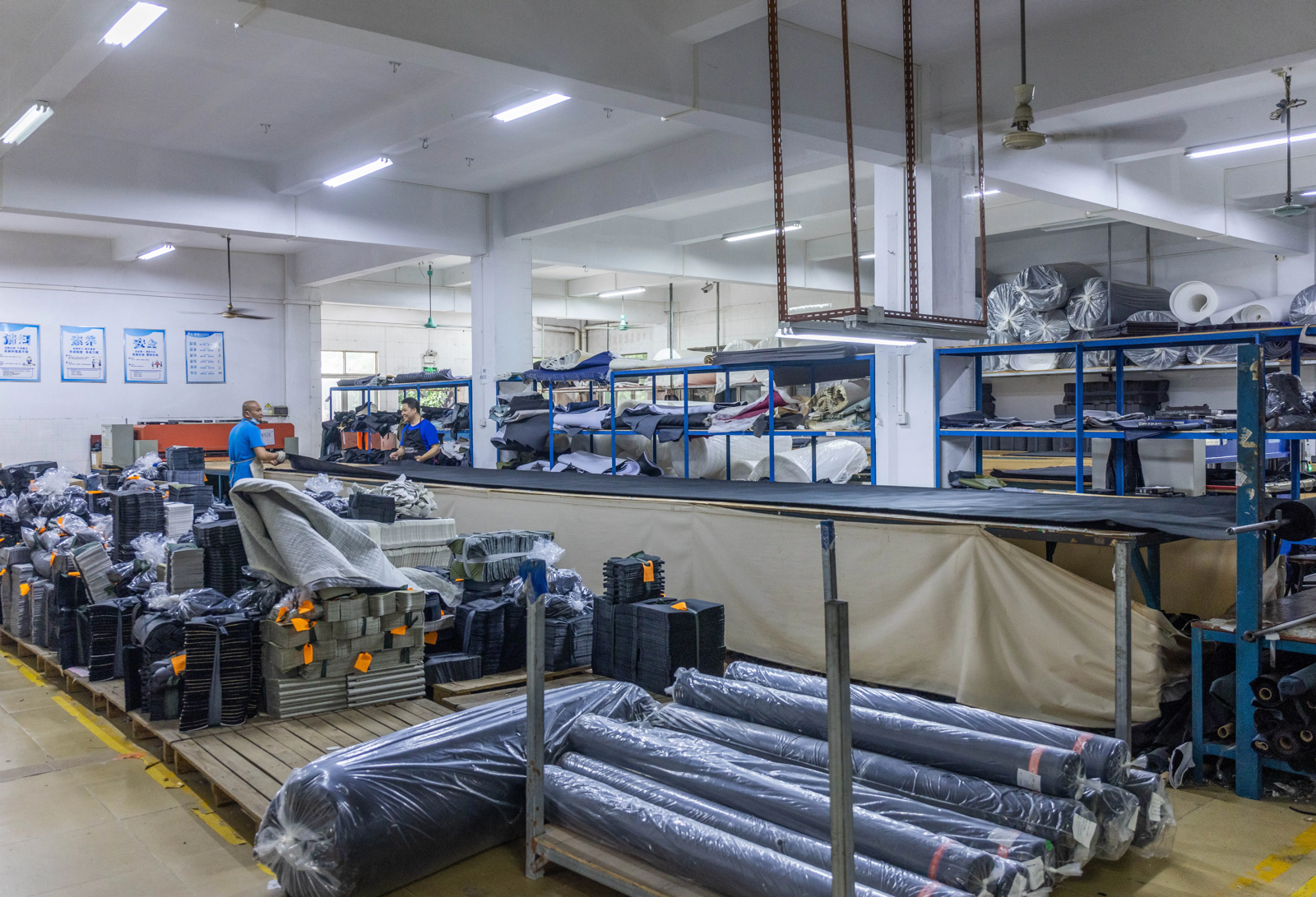
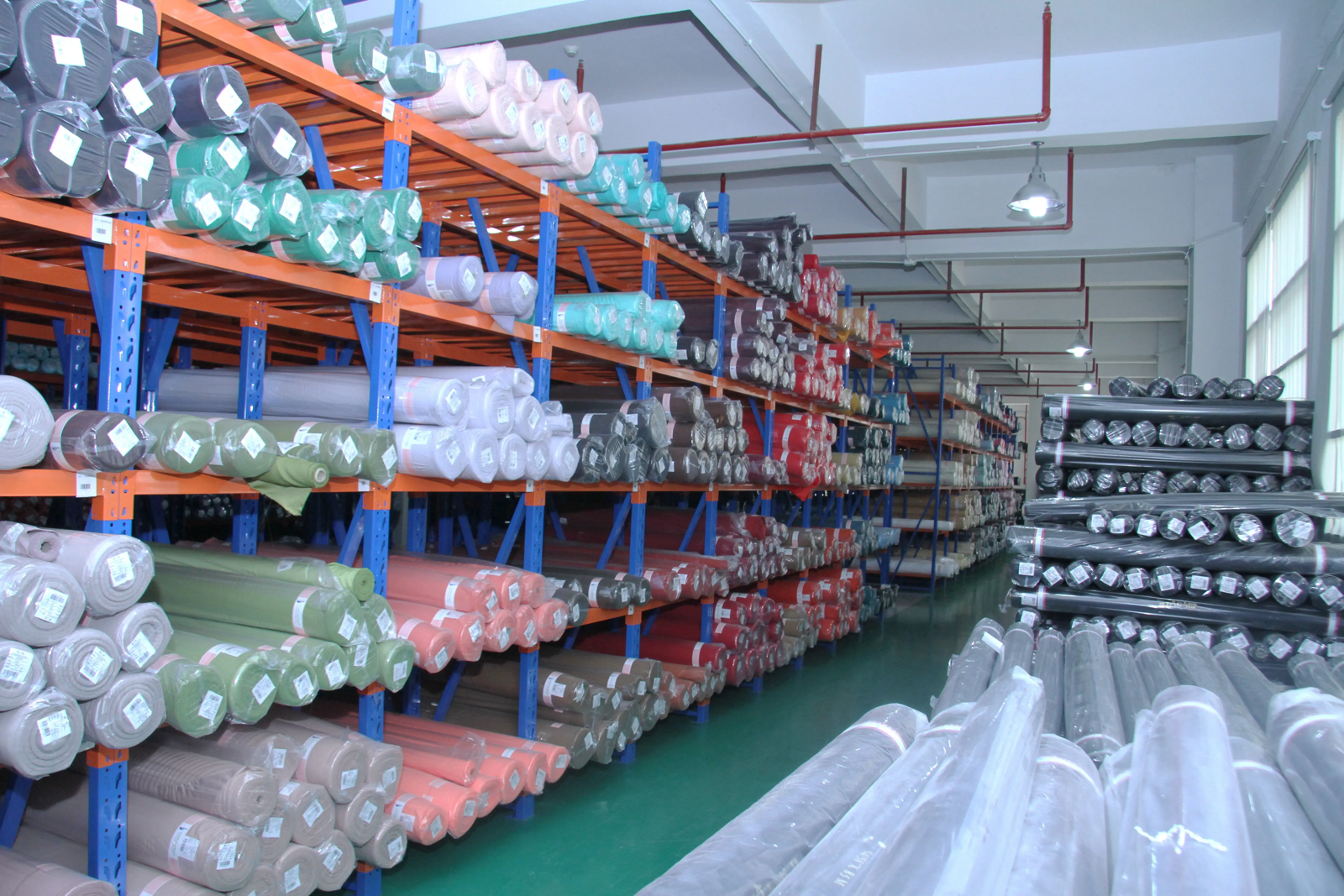
Material and panel preparation
03
Prepare materials and panels
Connect approved construction, components and color direction with material and panel preparation.
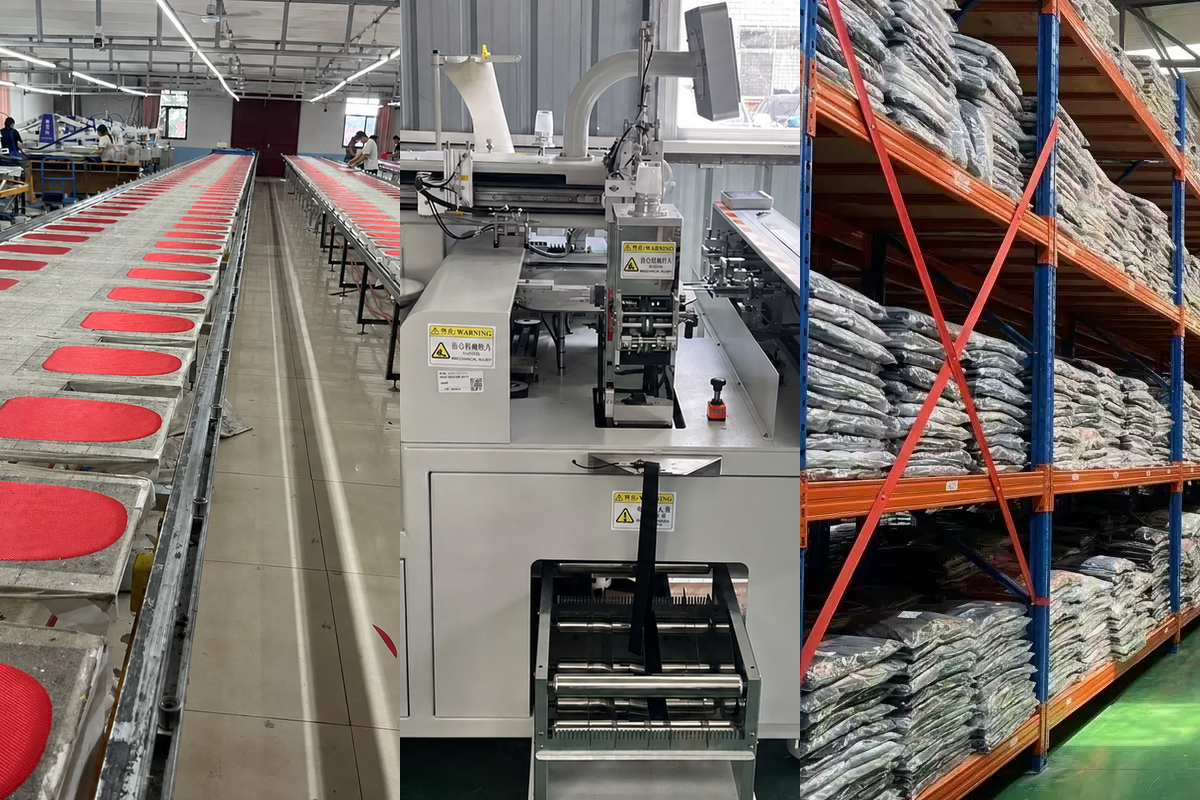
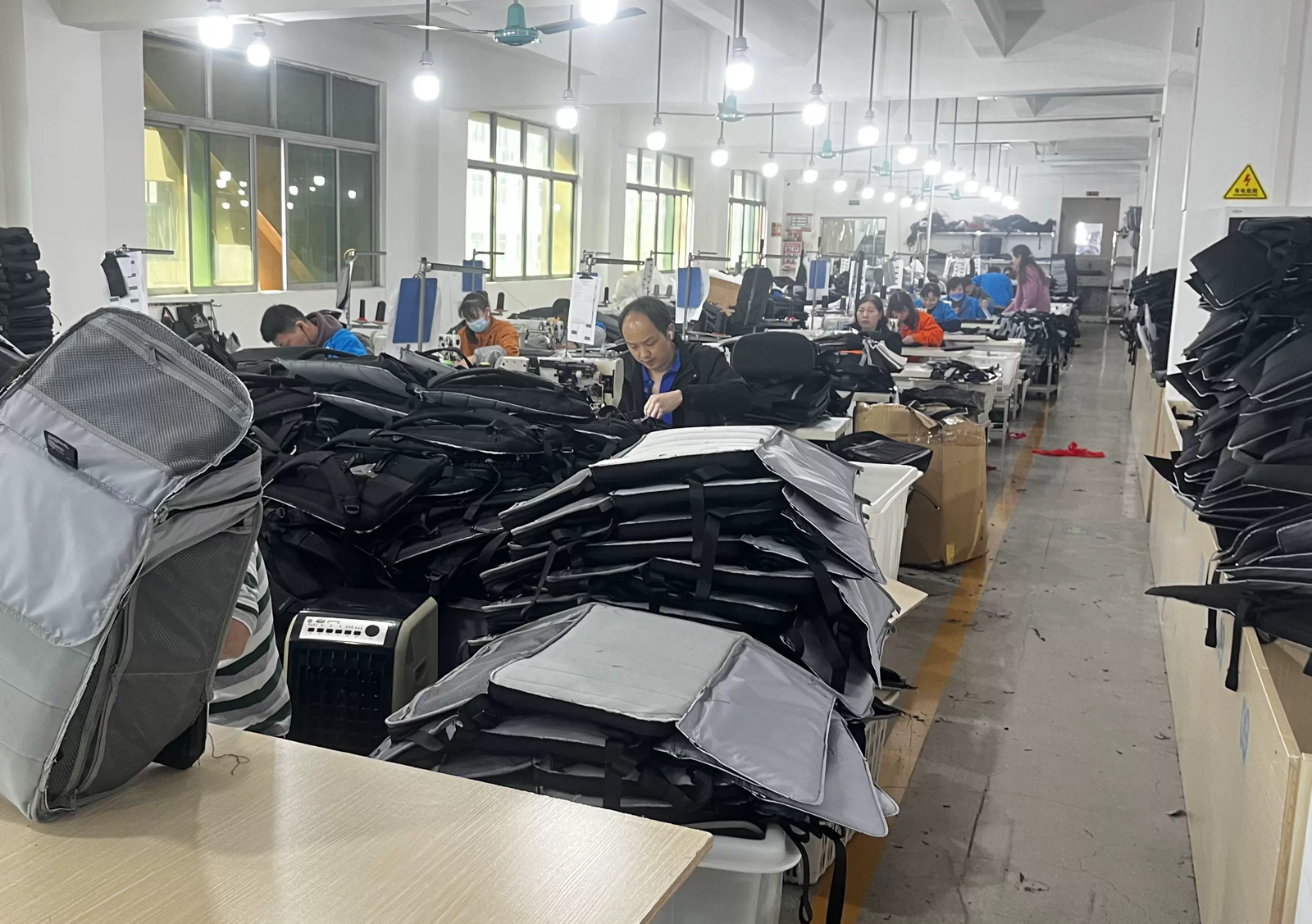
Bag sewing and assembly
04
Sew and assemble
Build the shell, lining, pockets, closures, handles and reinforcement in an agreed sequence.
Checkpoint reference
05
Follow agreed checkpoints
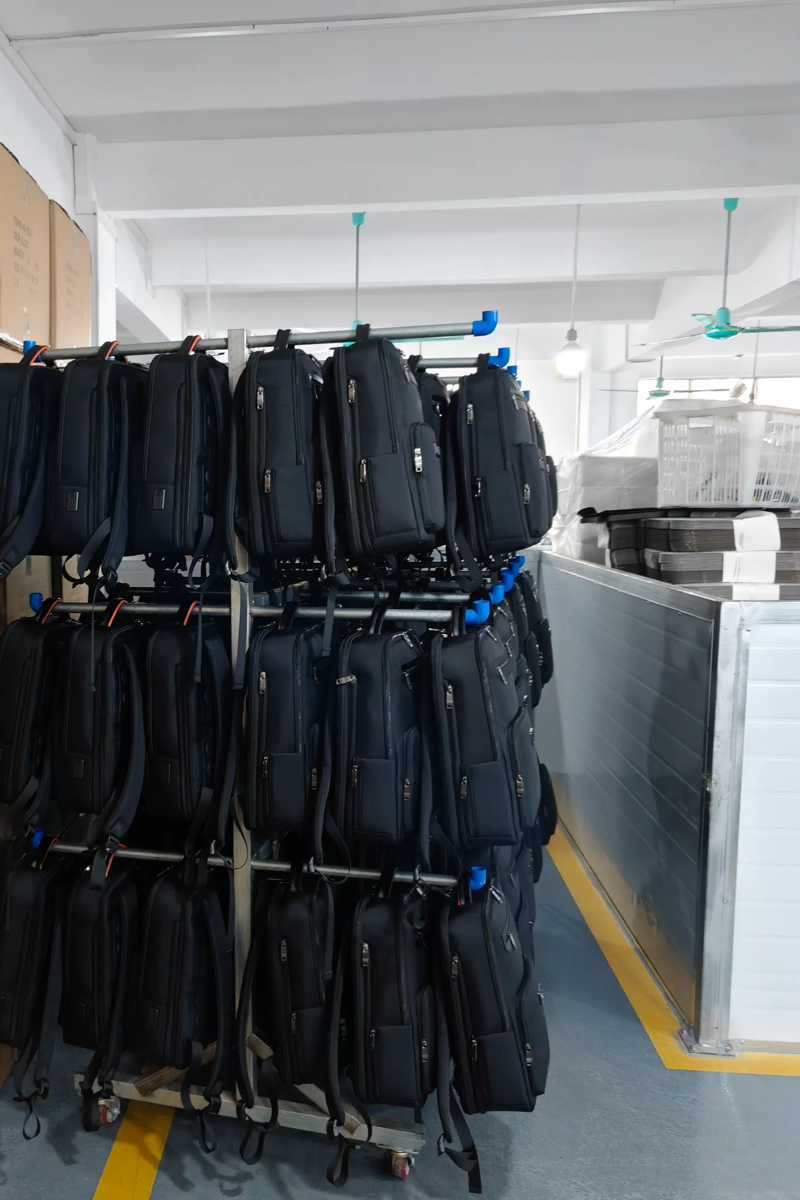
Review workmanship, dimensions, function, branding and order identity against the approved references for the programme.
Confirmed carton packing
06
Pack and coordinate dispatch
Apply the confirmed packing, labeling, carton and shipment instructions for the completed order.
The exact development, inspection and production plan is confirmed for each product, specification and buyer requirement, and no image proves every check used for every order.
Made-to-order bag production through an affiliated China factory
Forthright coordinates Truedrape bag projects with an affiliated textile bag factory in China under common ownership. Production follows the agreed project specification and approved sample.
Forthright handles commercial and development coordination. The trading company and affiliated factory are separate legal entities.
Use the agreed stationery set and loading arrangement. Check the longest item against the closed zipper, review access with the cuff lowered and record the base behavior on the intended surface. A successful review applies to that sample configuration, not every possible loading.
02
Movement and seam clearance
Lower and raise the cuff through the intended route and check for folded lining, tight seam crossings, tab distortion and zipper-end interference. Record the materials and construction revision. Agree any repeat-movement test and acceptance criteria separately before making a service-life claim.
03
Finish and approval record
Review tab attachments, seam finish, zipper operation, color boundaries, artwork, labels and packed state against the brief. Keep photographs and revision notes with the approved sample. Confirm quantities per style/color and project timing after the final construction is reviewed.
Send the stationery set, tall and lowered dimensions, intended cuff travel, required base behavior, artwork, quantity per style and color, and target timing. The MOQ is 300 pieces per style per color. Final feasibility, movement, construction and timing are confirmed through project and sample review.
We use essential cookies for site operation and optional analytics only with your consent.