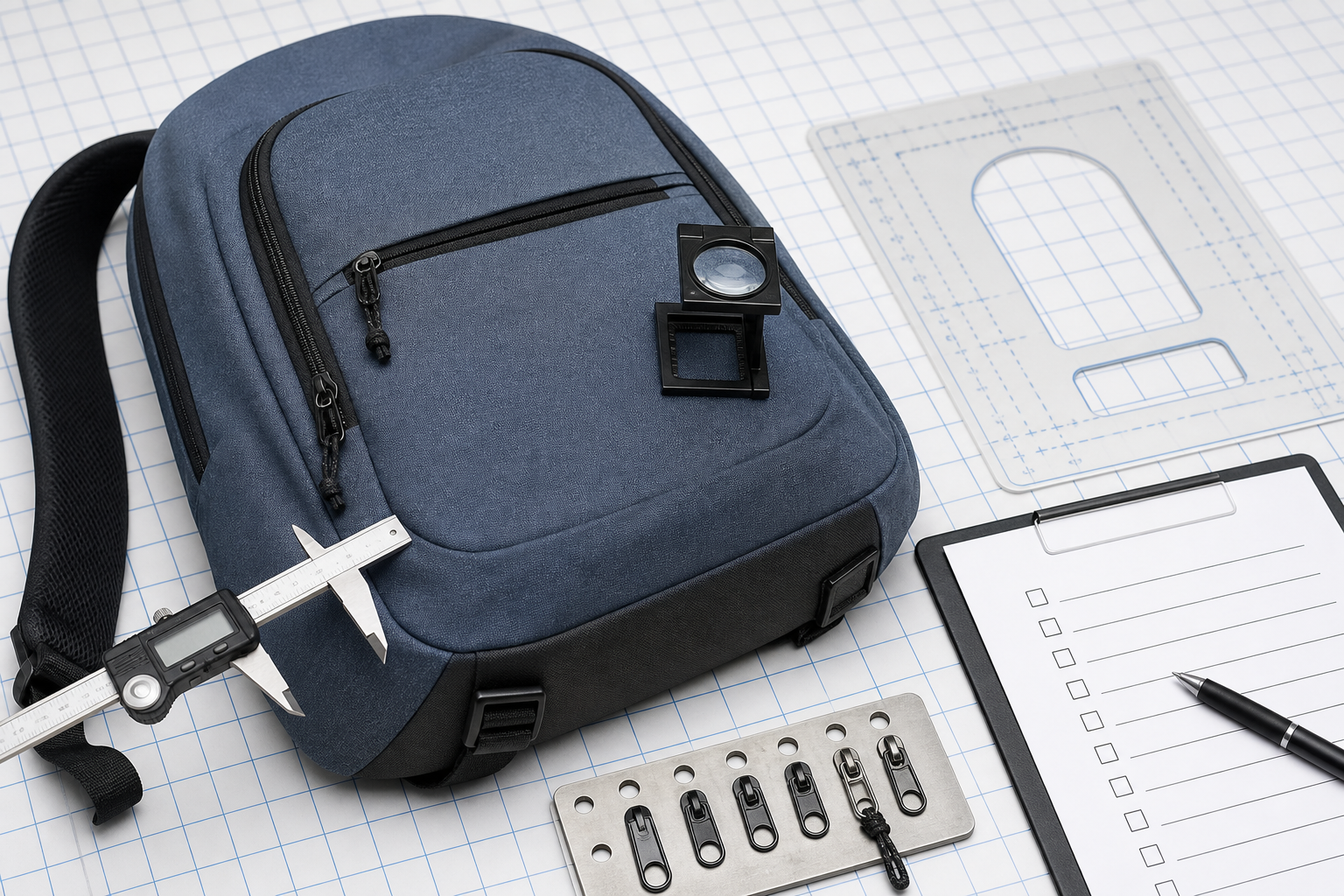
Seam Strength Test for Bags: Match Evidence to Construction
Before accepting a seam strength test report, identify the fabric, seam assembly and sample revision it covers. Build a construction brief that leaves no critical seam assumed approved.
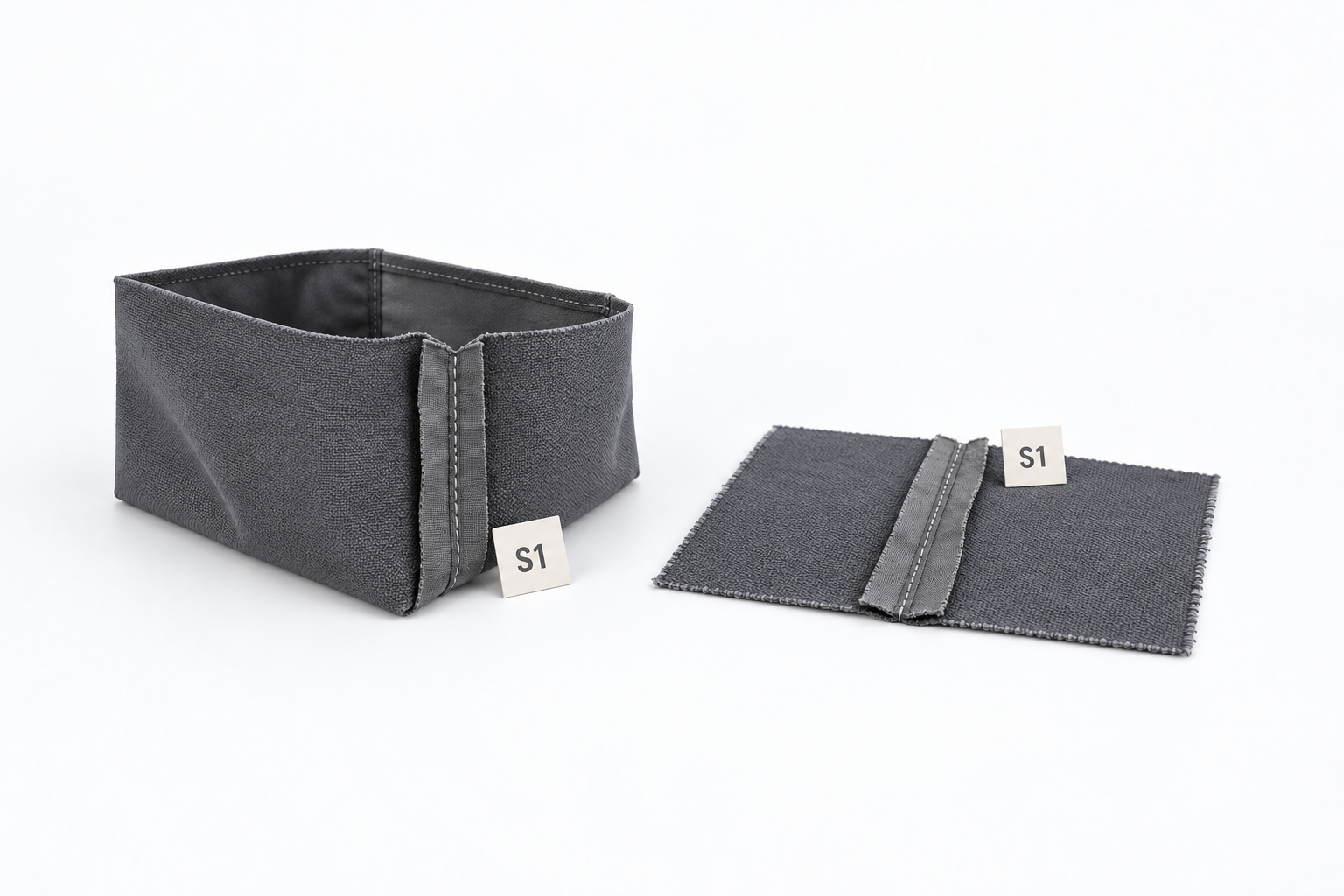
If a seam report identifies its sample only as “polyester fabric,” it may leave your bag's base seam, lining and reinforced handle attachments unresolved. Which construction has actually been evaluated? Before accepting a seam strength test, connect the reported specimen to an identified material and seam on the current drawing. Leave any unmatched construction open for review.
For a brand, importer or procurement team, the useful output is a seam evidence register: where the seam sits, how it is made, which specimen represents it and who can approve the result. A high number without that connection cannot resolve the bag's construction approval. Nor does one seam result establish the carrying performance of the complete bag.
Mark the seam before choosing the test
Give each seam question a location code on the bag drawing. Separate a body-panel join from a base join, handle attachment or internal pocket seam. They may use different materials, layers and stitch arrangements even when the visible thread looks the same.
Describe the buyer's concern beside the code. Is the question about the strength of a sewn panel join, a gap developing beside the stitching, or the performance of an assembled carrying connection? Ask the testing party which evaluation can answer that question. Do not turn every concern into a request for the same seam test.
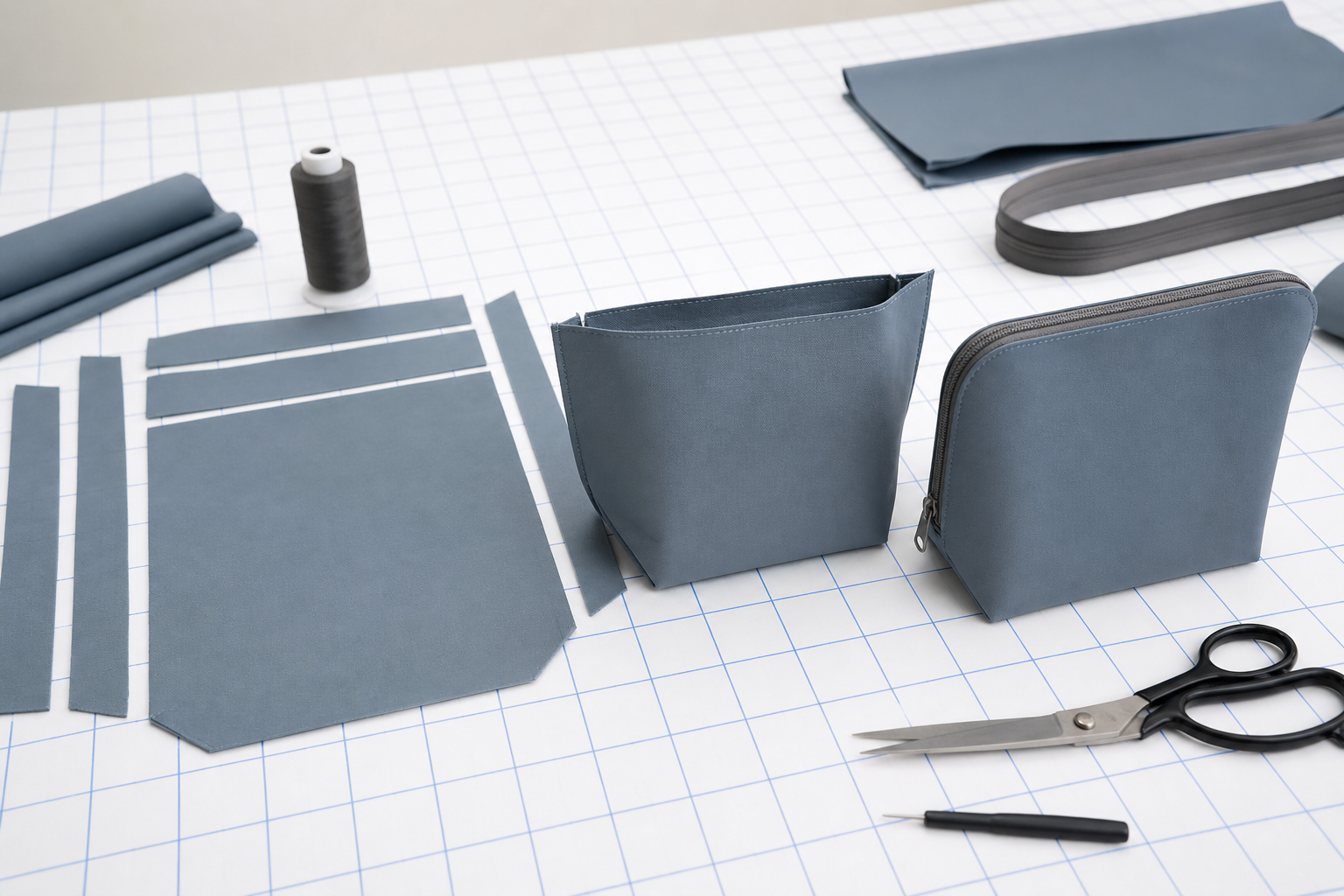
Record the construction as it is proposed for production. Include the fabric references, relevant finish, panel orientation, layer sequence, sewing thread, seam and stitch details, seam allowance and reinforcement. Use a cross-section or marked sample where the drawing cannot show concealed layers clearly. These are identification fields to resolve with the development team, not universal construction recommendations.
| Seam question | Reference to record | Coverage to confirm |
|---|---|---|
| Body-panel join | Both panel materials, orientation and seam assembly | Does the submitted seam represent this panel join? |
| Base-to-body join | Base and body references, layers and reinforcement | Are the actual material combination and construction included? |
| Handle or strap attachment | Attachment drawing, webbing, backing and stitch arrangement | Is a separate assembled-connection evaluation needed? |
| Lining or pocket attachment | Lining/pocket material and attachment detail | Is this seam included in the agreed evidence scope? |
This register can be short. Its purpose is to prevent an approval for one location from spreading silently to the rest of the bag. Keep the broader component list and drawings in the bag tech pack.
Check that the method fits the material and geometry
The public abstract for ISO 13935-1:2014 describes a strip method for maximum force to seam rupture, with force applied across the seam. It mainly concerns woven fabrics and covers straight seams; coated fabrics are among the materials to which it is not normally applicable. It also distinguishes specimens taken from sewn articles from seams prepared using fabric samples.
Those boundaries matter when a bag uses a coated shell, a curved join or a bulky attachment. Ask the laboratory to confirm applicability using the actual material and construction. A familiar method name does not remove a scope mismatch. Where another method or a project-specific evaluation is proposed, obtain its purpose, procedure reference and limitations before accepting the quotation.
ASTM D1683/D1683M-22 addresses failure in sewn seams of woven fabrics. Its public summary identifies thread, stitch type, seam type and stitch density as construction variables, and states that the method does not predict actual wear performance. A report under that method therefore needs the relevant seam details; it cannot become a general durability or full-bag load claim.
The public summaries help a buyer frame the request. They are not complete test procedures. Have the testing party confirm the applicable edition, specimen requirements, preparation, conditioning and reporting scope from the method it will use. Agree acceptance criteria with the responsible buyer before the work starts; this guide supplies no default passing force.
Make the specimen traceable to the sample revision
Ask whether the evaluation will use a seam removed from an assembled bag or a separately sewn specimen. A prepared specimen can help compare defined construction options, but its relationship to the proposed bag still needs to be recorded. Label any difference in materials, layers or assembly instead of describing the specimen simply as “same as sample.”
Use one submission identifier across the request, specimen photographs and report. Link it to the bag style, drawing revision, seam location and component references. If the current sample uses a temporary lining or substitute fabric, flag that before the laboratory prepares the specimens. Ask how much material or how many samples are needed rather than cutting pieces to an assumed size.
For a comparison, state what is intended to remain constant and what is changing. If both the thread and the fabric change between submissions, a difference in results cannot isolate the effect of the thread alone. Request clarification of any preparation or method difference before treating two reported values as a direct comparison.
Keep the physical and documentary references together. A close photograph may identify stitch placement, but it may not reveal the thread specification or layers hidden beneath the seam. Carry unresolved details as open fields in the register rather than filling them from appearance.
Read the reported behavior as well as the number
Start with the specimen description, method and qualifications. Confirm that the recorded construction matches the submission. Then read the reported values with their units and the description of what happened to the specimen. Ask the laboratory to explain unclear failure terms rather than interpreting an unexplained abbreviation yourself.
A thread break, fabric damage and yarn movement beside a seam raise different correction questions. The report and specimen observations should identify what was observed under the agreed evaluation. Do not infer the cause from the force value alone or prescribe a heavier thread before the construction has been reviewed.
Separate laboratory evidence from workmanship review. Seam alignment, skipped stitches, exposed raw edges and visible reinforcement can be checked against the agreed sample and specification. A tidy-looking seam does not establish a strength result; a satisfactory result does not excuse an assembly that differs from the approved construction. Use the bag quality inspection checklist to carry those production checks into the order plan.
Close approval by location and revision
For every seam location, record the report reference, the construction revision covered, the buyer's decision and any remaining action. A useful decision may be acceptance within the agreed scope, a request for missing identification, or review of a proposed correction. Avoid a single “seams approved” note when some locations were never represented.
When a change is proposed, identify what it alters. A new shell fabric, seam allowance, stitch arrangement or reinforcement can make the earlier evidence incomplete for the revised construction. Ask the responsible technical reviewer which evidence and sample checks need to be repeated. Retain the earlier record so the next submission can be matched to the correction it is meant to address.
Keep closure assembly questions in the separate zipper approval brief. Use the sample review record to show how the accepted seam evidence joins the other development decisions. Neither record should imply that a seam test has established an untested bag load rating.
When sending a construction brief to Truedrape, include the marked seam drawing, material references, intended contents and load, current sample revision, available reports and unresolved questions. Final construction, testing arrangements and acceptance requirements need agreement for the project before production approval.