Zipper Testing for Bag Sample Approval
A component report and a smooth empty-bag opening answer different questions. Identify the complete zipper assembly and agree how the installed opening will be reviewed.
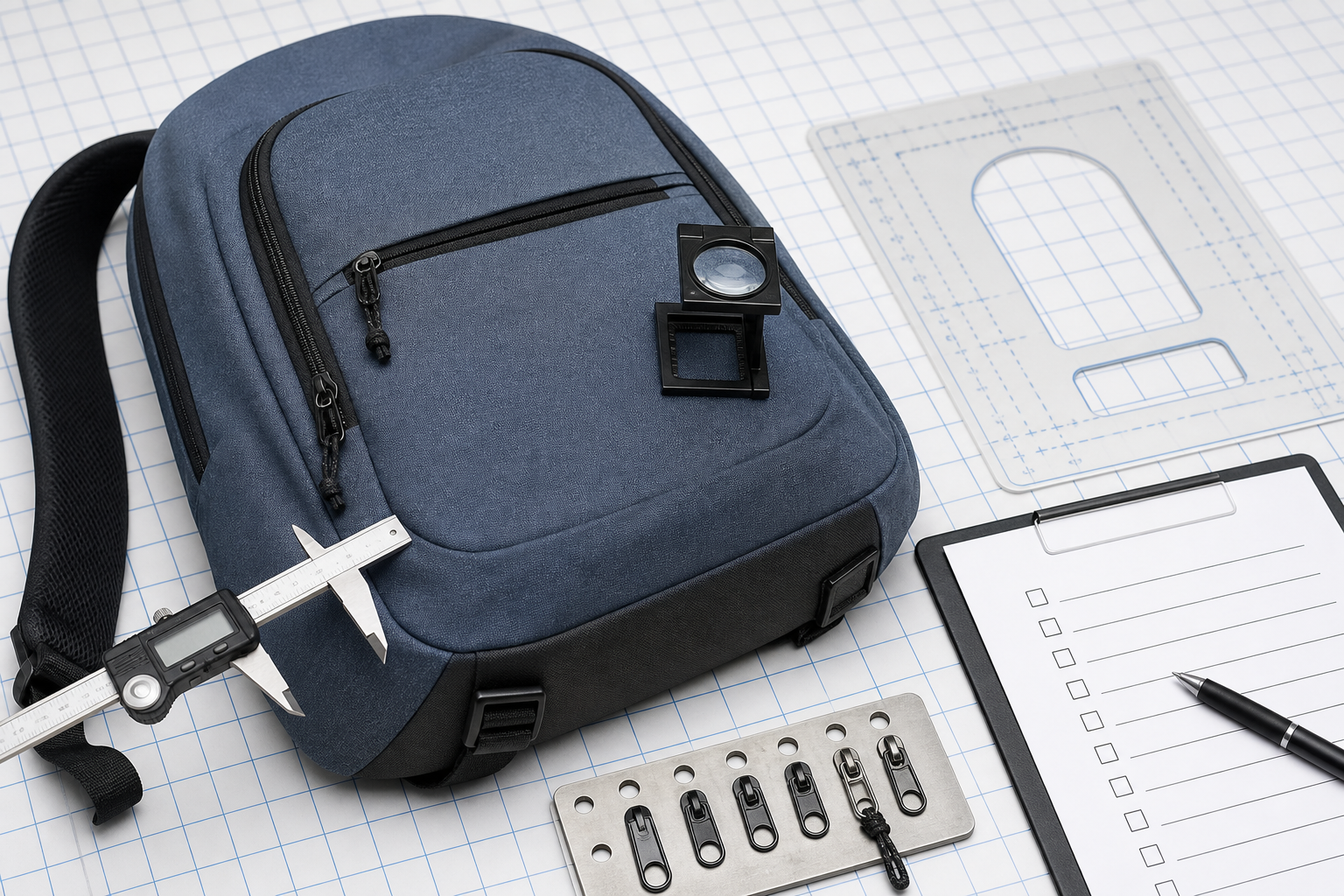
The zipper supplier has sent a report, and the bag sample opens smoothly while empty. The opening may still catch the lining when the intended contents are inserted, or the report may describe a different slider from the one on the sample. Before approving the closure, connect zipper testing evidence to the exact assembly and review that assembly in its installed position.
For OEM and ODM bag development, start with two decisions: what evidence is needed for the zipper component, and what the buyer needs to observe on the assembled bag. Write both into the sample brief. A component result cannot describe every interaction between the zipper, panel shape, lining, seam allowance and contents.
Identify the complete assembly before asking for a report
“Black zipper” is an appearance description, not a complete component reference. Record the chain type and size designation, tape, slider, pull and stop arrangement using the proposed supplier's identifiers. Include the intended opening length, number of sliders, opening direction and any relevant finish. Do not rely on the pull shape alone to identify the assembly.
Link that record to a drawing and photographs of the sample. Mark both ends of the opening and the surrounding construction so the reviewer can see which zipper belongs where. A bag with several closures may use different assemblies at the main opening and internal pockets.
| Record area | Information to retain | Question before approval |
|---|---|---|
| Chain and tape | Supplier reference, type, size designation and color | Does the report identify the proposed component? |
| Slider and pull | Exact references, quantity and finish where relevant | Do the documents and physical sample use the same combination? |
| Ends and stops | Arrangement and attachment shown on the drawing | Is the evidence relevant to this configuration? |
| Installed opening | Length, path, seam details and adjacent lining | Can the buyer use the opening as intended? |
| Revision | Component list and sample identifiers | Was anything changed after the evidence was prepared? |
Use the bag tech pack to keep these details together. If the proposal leaves a component undecided, label it as pending rather than approving a generic description that can later cover several alternatives.
Give each zipper testing request a specific question
Strength and operation are different questions. YKK's corporate testing explanation illustrates repeated opening and closing under loading separately from lateral chain pulling. The distinction is useful when reviewing a proposal: a result from one setup does not automatically answer the other question.
Ask the supplier or laboratory to state what part or behavior the proposed test addresses. A chain, stop, slider or pull concern may call for different evidence. The request should identify the method and edition, the exact specimen or assembly, test configuration and required outcome. Agree the acceptance criteria with the buyer and laboratory before work starts.
Where a project specifies an ASTM method, its title alone is not enough. The public summaries distinguish ASTM D2061 strength tests for zippers and parts from ASTM D2062 zipper operability tests. Confirm the applicable procedure and scope with the laboratory; those public descriptions do not establish an endurance programme or acceptance limit for a particular bag.
Compare test quotations only after those details match. Otherwise, one proposal may address a different assembly or a different failure question. Keep any component evidence separate from the planned installed-sample review so neither is lost in a single “zip approved” instruction.
Review the opening in the form the buyer will use
An installed zipper follows the bag's shape and sits beside other materials. YKK Africa's precautions discuss fabric catching, space for the slider to move after sewing and problems caused by forcing an overfilled bag closed. These points support a practical buyer recommendation: review the final opening with an agreed representative packing arrangement as well as reviewing component evidence.
Define that arrangement before the sample meeting. List the intended items or approved substitutes, their placement and the bag position. Do not force the closure to compensate for an unresolved fit requirement. If the contents differ between reviews, record the difference so the observations can be compared.
For a zip-top canvas tote, proposed checks could include inserting the intended contents, reaching the slider at both ends and observing clearance from the lining along the full opening. For a document travel pouch, review whether the intended document format enters and leaves through the opening without forcing the corners. These are sample-review proposals to agree for the actual project, not reported test results.
Observe the movement and record the location of a catch, hesitation or access restriction. A marked photograph can show where it occurred; a short video may help explain the movement. Do not treat those records as a substitute for a specified laboratory test. They document the assembled sample and the check that was actually performed.
Keep a finding narrow enough to correct
“Zipper feels wrong” gives the development team little to work with. Identify the sample revision, zipper reference, packing arrangement, opening direction and exact location of the finding. State the observable behavior before suggesting a cause.
For example, a buyer might record that the lining entered the slider path near one end under the agreed sample check. That is a hypothetical finding description, not a Truedrape test result. Ask the development team to examine the construction and propose a correction rather than assuming the component itself must be replaced.
A correction can affect more than the visible fault. Changing seam allowance, lining attachment, opening length or the zipper assembly may alter access or appearance. Record the proposed change, who approves it and what should be reviewed again. Retain the earlier record so the next sample can be compared with the problem it was intended to resolve.
Make the approval boundary visible
Before closing the sample record, confirm which component evidence was accepted, which installed-opening checks were completed and which matters remain open. Keep the report reference and sample identifier beside the decision. Do not let approval of the bag's appearance silently approve an undecided zipper assembly.
Use the sampling process guide for the wider sample decision and the bag quality inspection checklist to carry the final closure requirements into production inspection. The zipper brief owns the assembly and opening question; inspection still needs the final approved revision and agreed scope for the actual order.
When sending a bag sample brief, include the opening drawing, component references, intended contents, available reports and the questions still to resolve. Add quantities by style and color; Truedrape's MOQ is 300 pieces per style per color. Final components, testing arrangements and acceptance requirements should be agreed for the project before production approval.