
OEM Duffel and Travel Bag Procurement Guide
Choose a travel bag format for an OEM brief, define the packed configuration and compare compartment, carry and sampling scope across supplier quotations.
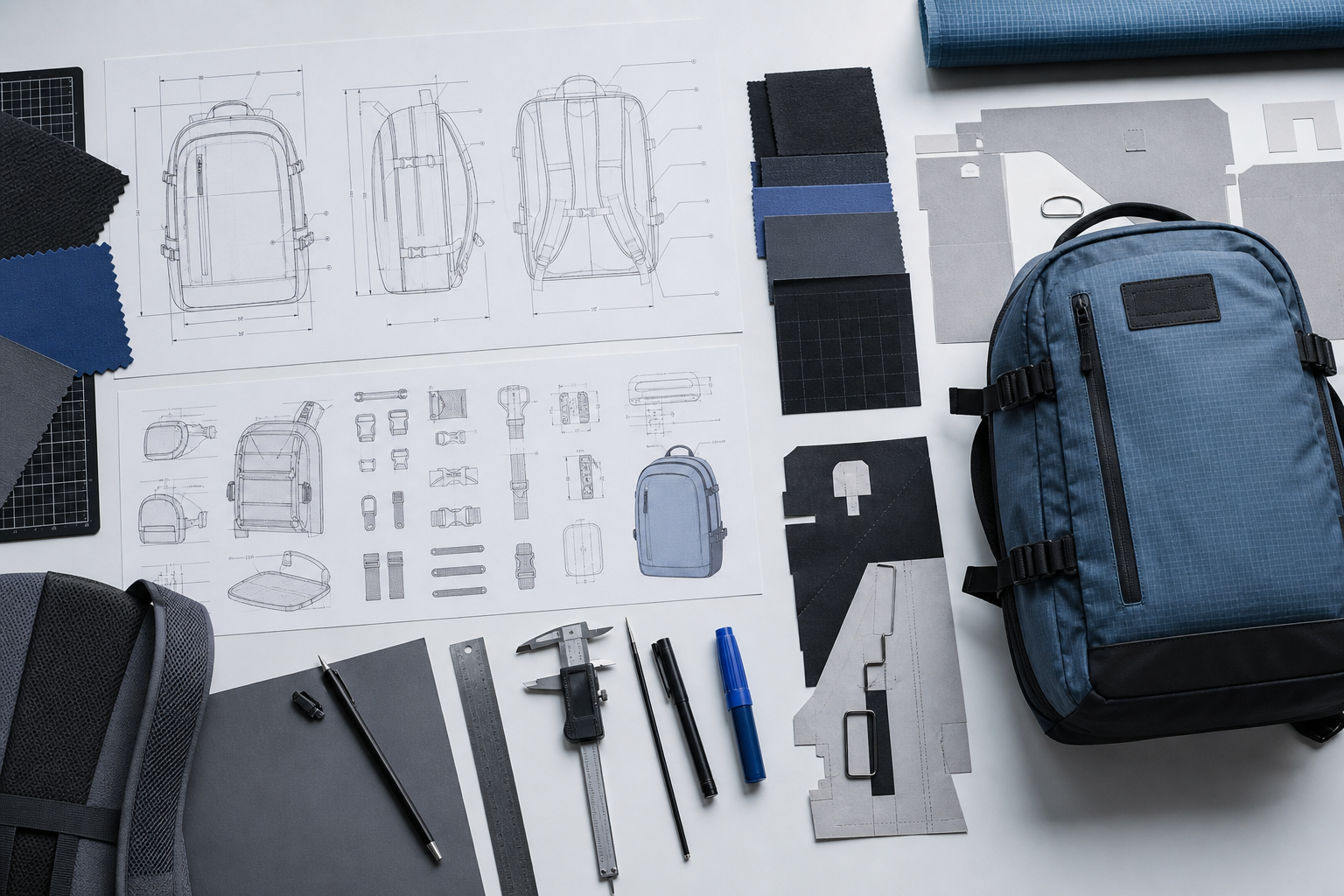
Two travel bag quotations may describe the same external size while allowing very different packing arrangements. A shoe compartment, support panel or folding requirement can change which contents fit together. Before asking an OEM duffel bag manufacturer for a confirmed quotation, choose the required packing configuration and state which features must remain usable when every compartment is occupied.
For brands and importers planning private label travel bags, the first decision is the format to develop. Use the OEM travel bag references to discuss a starting construction, then attach a load list and layout sketch. Duffel and duffle are alternative spellings in supplier searches; a consistent specification matters more than the spelling used in the quotation heading.
Choose the format by the decision it must satisfy
Do not request a weekender, gym duffel and packable bag as if only their silhouettes differ. Ask which requirement is essential to the program: a particular packed arrangement, a separated item, a defined opening or a small stored format. Rank those requirements before adding pockets and accessories.
The table below provides directions for a development discussion. It does not assign performance or capacity ratings to a format. The final component combination and sample must answer the selected requirement.
| Format direction | Procurement requirement to define | First sample question |
|---|---|---|
| Weekender | Named packing set and access order | Can the complete set be loaded, closed and removed as intended? |
| Gym duffel with separate compartment | Items that need separation and their dimensions | What usable main space remains when the separate compartment is full? |
| Packable travel bag | Stored dimensions and the required folding sequence | Do the straps, zipper and support components fit into the agreed stored form? |
| Travel bag with an external size limit | Exact measurement requirement and packed configuration | Does the filled sample meet the specified envelope using the agreed method? |
If two requirements conflict, ask for alternatives that show the tradeoff. For example, an optional support component can be quoted separately for a project that also needs compact storage. Record which configuration the sample represents so the team does not approve one arrangement and order another.
Measure the packed bag as well as the empty sample
List the actual items, their dimensions and their intended compartments. Identify rigid items and any packaging that remains on them. Record whether soft contents are folded, rolled or otherwise arranged. Substitutes used during development should be identified so the team understands what the review did and did not establish.
Define the external measurement method on the drawing. State the measurement points, whether pockets are loaded, and how handles or other protruding components are treated. Ask for photographs showing the agreed measuring arrangement. Keep the empty dimensions and packed dimensions in separate fields rather than silently replacing one with the other.
Where a program has a transport-related size requirement, supply the applicable requirement and its source with the brief. Review that specific requirement independently before making a public compatibility claim. A category name or sample photograph cannot establish acceptance across different transport services. This guide does not prescribe a universal size limit.
Review compartments together
A compartment should have a named purpose, loading route and required usable space. Ask the supplier to show the dividing construction and its position when occupied. Check the main compartment with the separate compartment loaded, then reverse the access sequence. Record which items must be removed to reach others.
Separation also needs a precise meaning. Keeping footwear apart from clothing is a layout requirement; resistance to moisture transfer would need a separately defined construction and verification requirement. Do not accept an undefined label such as a wet compartment as the entire specification.
Review the carry arrangement with the same full load. Identify handles, shoulder strap, adjustment and attachment details, including any removable components. Ask whether the proposed sample and quotation include the same hardware. Define required formal load or durability evidence separately from a handling review; the latter cannot establish a rated capacity.
Ask suppliers to quote the same development scope
Attach the chosen format, packed layout and component list to the inquiry. Include outer material and lining references where known, branding files, quantities by variant, packaging requirements and the required destination date. Mark undecided components as questions rather than letting each supplier assume a different answer.
Request a response against the same revision. The supplier should identify included components, proposed alternatives, sampling work, excluded checks and assumptions that affect timing. If a quote omits the removable strap or uses a different internal divider, resolve that difference before comparing the total with another offer.
For an alternative design, ask what changes in the sample review as well as in the quotation. A revised zipper route may need a new access check; a new divider may need the full packing arrangement reviewed again. The custom bag quotation guide provides a broader method for documenting these differences without treating the lowest number as an equivalent offer.
Approve the configuration that production will follow
Keep the sample identifier, drawing revision and packing photographs together. Record the accepted material references, external measurements, loading sequence, compartment observations and carry components. Specify the unresolved points and the evidence required to close each one. Update the bag tech pack so the accepted arrangement can be reproduced in the production specification.
Confirm the release conditions before treating a production duration as a destination promise. Artwork, material and sample decisions may belong to different people on the procurement team. Use the delivery deadline planning guide to connect those approvals to the order schedule without assuming a universal lead time.
To discuss an OEM travel bag project with Truedrape, send the selected reference and packed layout. Include the quantity split, branding scope and date requirement. Highlight the compartment or stored-size decision that the first sample needs to resolve so the development discussion starts with a specific question.