Can a Custom Bag Order Meet Your Required Delivery Date?
Turn a quoted production lead time into a reviewable order schedule. Name the destination, approval deadlines and unresolved dependencies before committing to a launch date.
A supplier quotes a production lead time. Your team puts that number beside a campaign date and assumes the bags can arrive in time. The missing question is what the quoted period starts from and where it ends.
For a custom bag order, ask for a dated schedule linked to named approvals and a defined delivery location. Keep manufacturing completion, shipment readiness and receipt at your destination separate. This gives procurement a way to assess the proposed plan without treating an estimate as a confirmed arrival commitment.
Define the date your business actually needs
Write down where the bags must be and what must happen before they can be used. Receipt at an importer’s warehouse may still leave allocation, checking and onward delivery before a brand campaign begins. A shipment arriving at a port is not the same milestone as bags reaching a distribution team.
Identify whether the date is fixed or preferred. If only part of the order is needed first, specify the required variants and quantities rather than saying “some bags urgently.” That gives the supplier and logistics provider a concrete alternative to assess; it does not establish that a split delivery is available or economical.
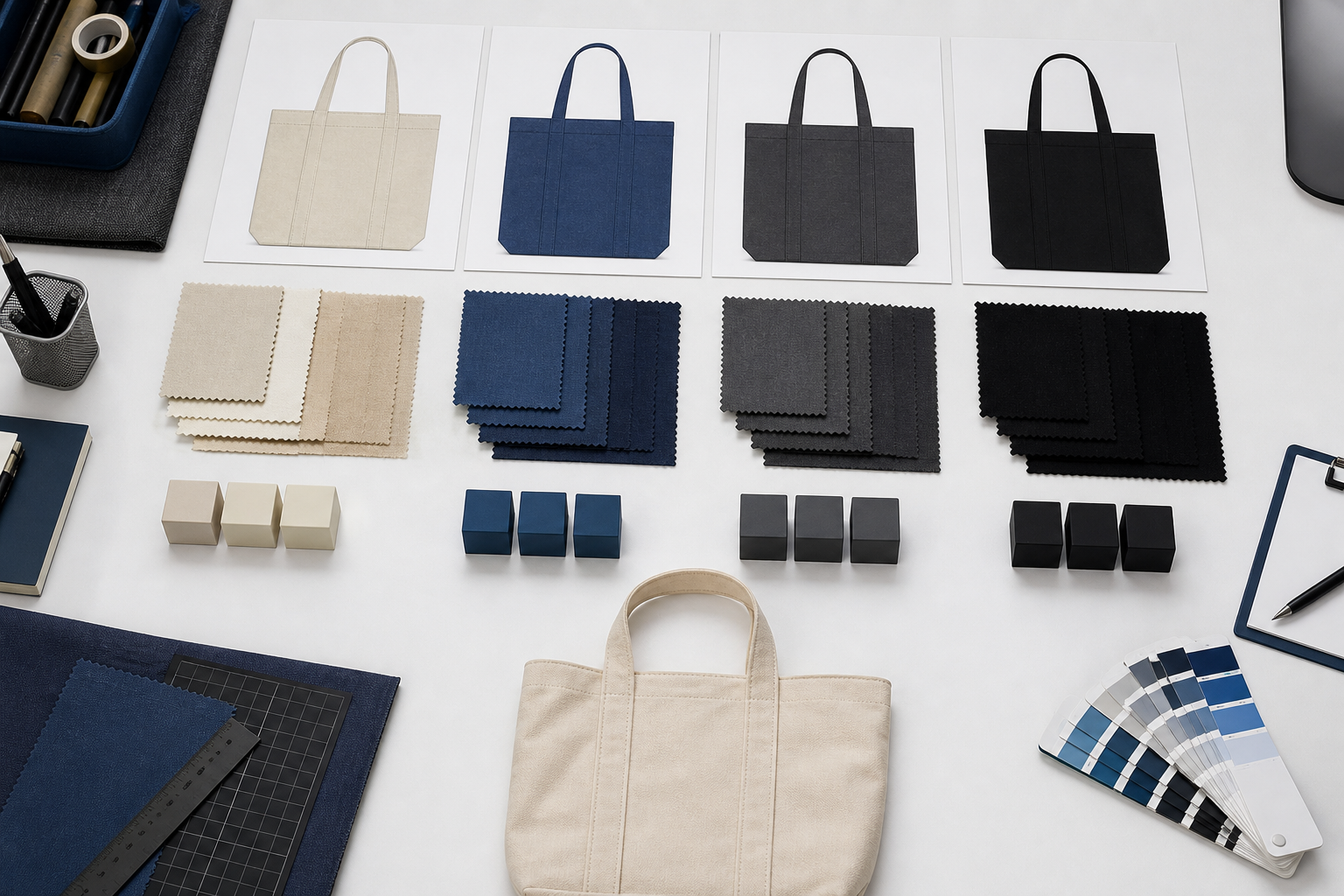
Share receiving constraints that are already known. These may include a receiving appointment, a specified carton arrangement or a destination split. Ask the responsible receiving contact to confirm the current requirements. The carton assortment guide helps turn those instructions into identifiable bag variants and quantities.
Find the event that starts the quoted lead time
Ask the supplier to complete a plain sentence: “The quoted production period starts when these conditions have been met.” List each condition instead of allowing “after confirmation” to cover several different decisions.
Possible conditions to clarify include acceptance of the production reference, artwork approval, component confirmation and the agreed commercial release. Which ones apply depends on the quotation and project. Your procurement team should not assume that sending a purchase order alone starts every part of the work.
Record who confirms that the conditions are complete. A design team may believe the sample is approved while the supplier is still waiting for the final artwork file. One person should collect the status of those decisions and return a clear release record. Keep any unresolved exception visible beside the proposed start date.
Build a milestone sheet with dependencies
Use dates confirmed by the responsible parties, not generic durations copied from another order. Mark tentative entries as tentative. The sheet below is a set of fields to complete, not a promised Truedrape production calendar.
| Milestone | Date to request or agree | Dependency to record |
|---|---|---|
| Buyer receives review sample | Expected arrival and review window | Sample completion and dispatch arrangement |
| Buyer issues consolidated decision | Internal approval deadline | Reviewers available and all required references supplied |
| Production is released | Confirmed start condition and date | Accepted sample, components, artwork and agreed order conditions |
| Bags are ready for agreed checks | Supplier’s proposed completion date | Production progress and defined check scope |
| Shipment is ready for collection | Confirmed readiness milestone | Packing, documents and resolution of open findings |
| Bags reach the required destination | Logistics estimate or commitment, clearly identified | Collection, transport arrangements and receiving requirements |
Some work may overlap, but do not remove time from the plan by assuming it will. Ask which activities can run together and what commitment that requires. If material purchasing is proposed before all approvals are closed, clarify the remaining decision and its consequences before accepting that sequence.
Your own review time belongs on the sheet. Include the time needed for colleagues to inspect a physical sample, consolidate feedback and approve a revision. A sample sent for review is not yet an approved production reference. The sampling guide describes how to close the review itself.
Test the schedule with one unresolved decision
Choose the open item most likely to affect release and ask what happens if its decision arrives later than planned. This turns a vague discussion about urgency into a question about a particular dependency.
Consider a hypothetical order whose logo proof is accepted but whose lining is still being reviewed. Ask which milestone depends on the lining decision, whether the proposed production slot remains available and when the supplier needs a final answer. Do not assume the artwork approval has released the entire bag. The purpose of the example is to expose an open decision, not to predict a standard delay.
Record any contingency as an option with conditions. A revised component, changed quantity or different shipment arrangement may need new cost and approval decisions. If the proposal involves a replacement material, use the material-change review before accepting it simply to preserve the date.
Reconfirm the affected dates when the brief changes
A requested change should include a schedule question. Ask the supplier to identify the affected milestone and return a revised plan, or explicitly confirm that the dates remain unchanged. Keep the reason for the revision beside the date so the team can distinguish a new buyer request from a missed existing commitment.
Agree how progress will be reported against the milestones. “On track” is more useful when it names the next deliverable, the expected date and any decision needed from the buyer. Avoid treating a production photograph as confirmation that checking, packing and shipment preparation are also complete.
Before accepting the final proposal, compare the schedule with the scope in the custom bag quotation. Identify who owns the transport arrangement and which dates are estimates versus commitments. Leave unresolved items open rather than presenting the campaign date internally as secured.
To review a Truedrape project, send the required destination date, bag brief and quantity split. Include the current sample and artwork status. Those details allow a schedule discussion around your actual order instead of an isolated question about how many days a bag takes to make.