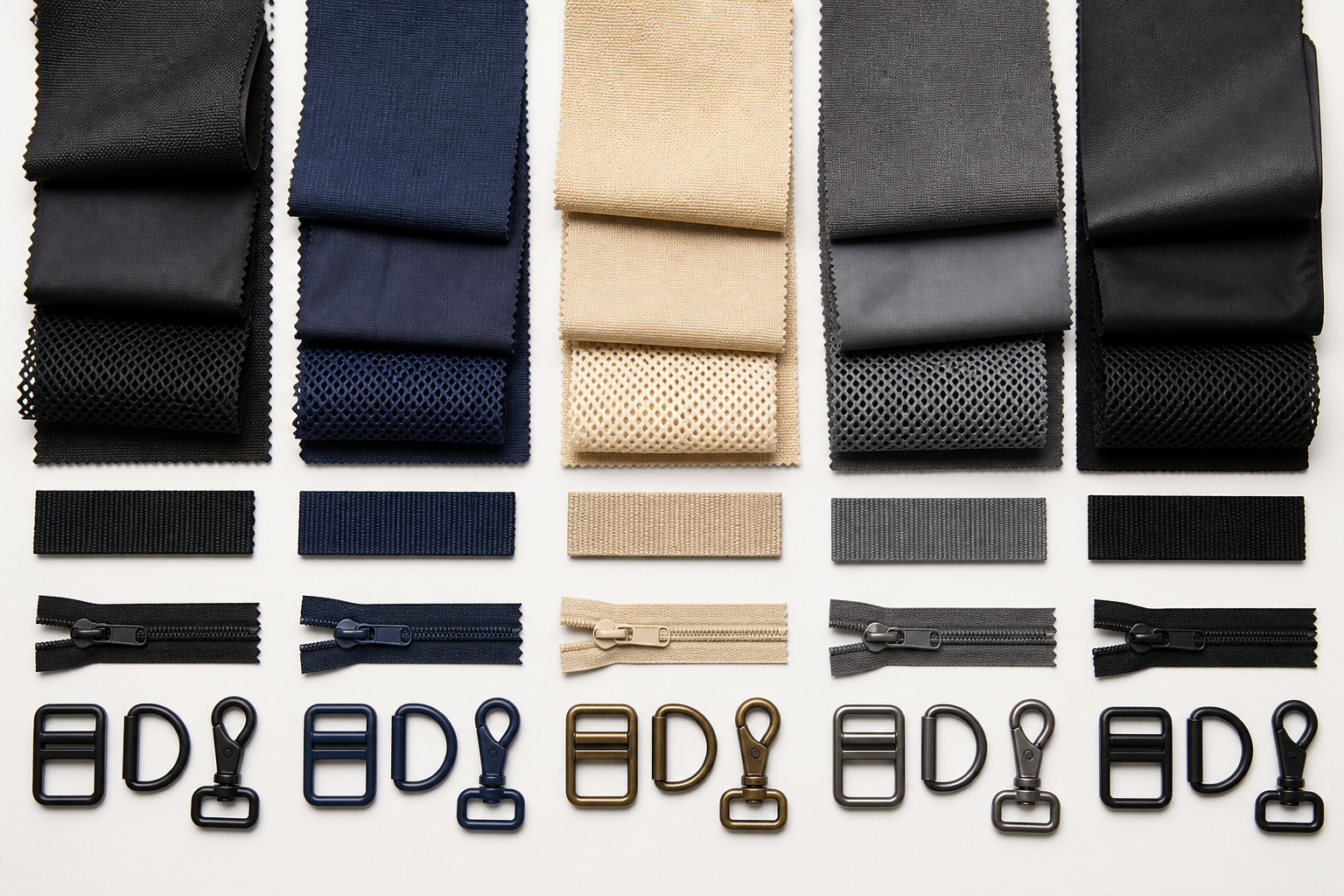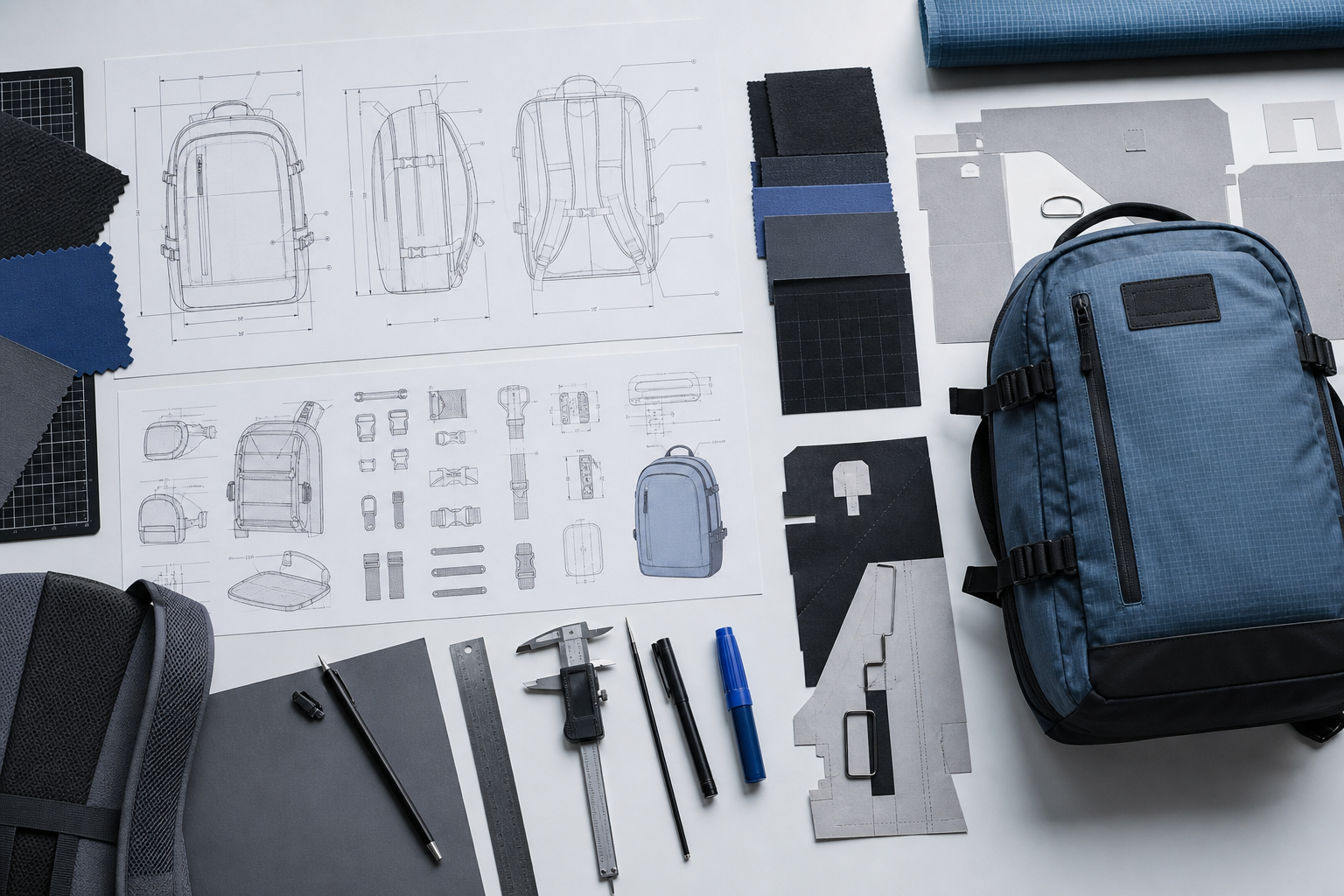
Fabric GSM for Bag Orders: Compare Weight on One Basis
One fabric quote gives ounces and another gives GSM. Identify the area, width and finishing basis before converting the figures or choosing a bag fabric.
One supplier quotes “10 oz canvas” for a tote shell. Another quotes “340 GSM.” Before treating those descriptions as comparable, ask what area or length each weight covers and whether both figures describe the same finishing state. The missing denominator can matter more than the apparent difference between the numbers.
Fabric GSM means grams per square metre, written g/m². It is a mass per unit area. For a brand developer or importer comparing OEM bag proposals, the immediate task is to put each description on a confirmed common basis. Choosing the material still requires its identity, finish and physical reference.
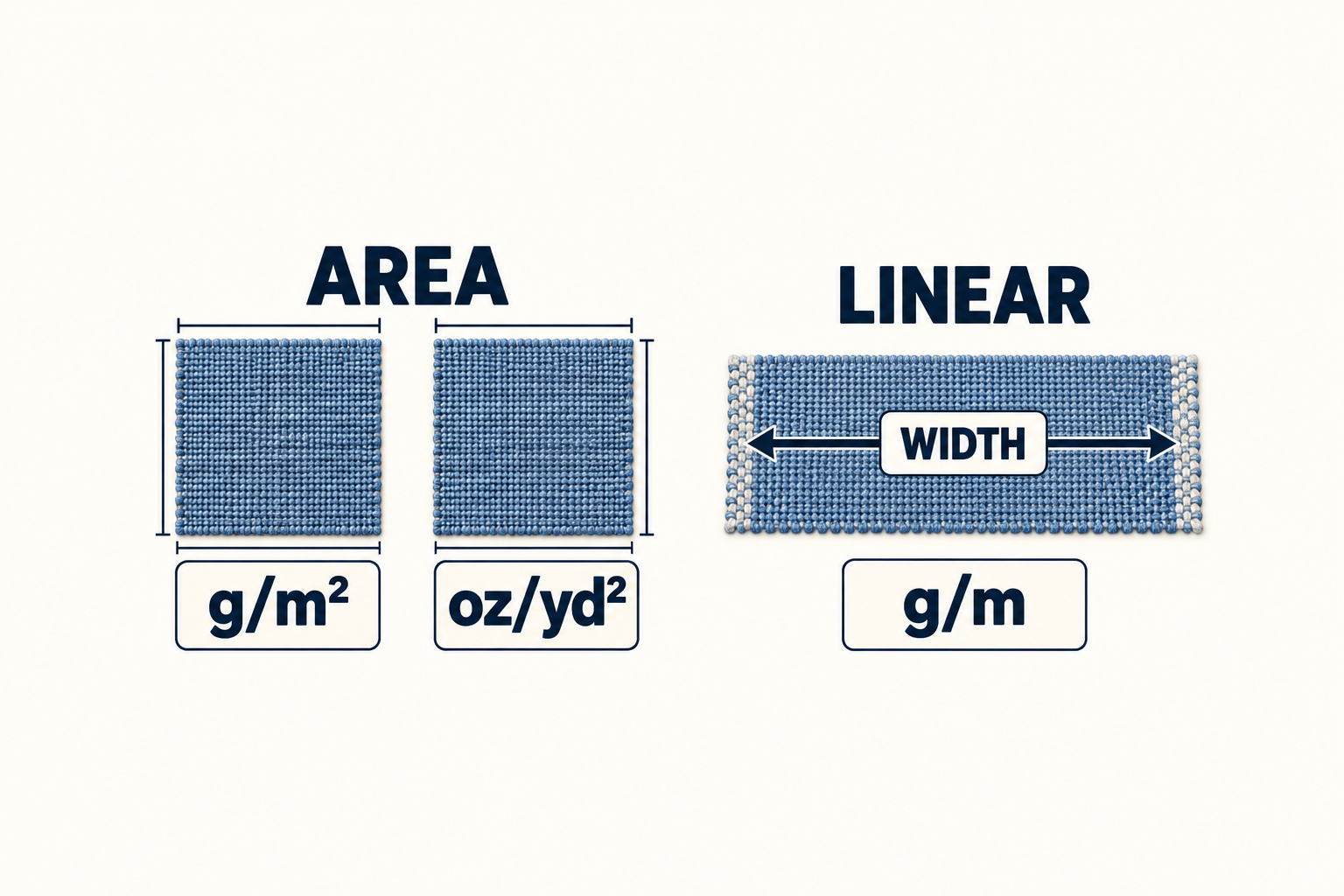
The cover diagram separates area units from a weight per running length. Its matching square frames illustrate an area basis; the linear strip needs a width input. It is a design reference, not a fabric measurement.
Read the unit before ranking the fabric
Copy the supplier's original description into your comparison record. Keep “oz,” “oz/yd²,” “g/m²” and “g/m” exactly as received until their meaning is confirmed. Rewriting every ounce figure as ounces per square yard can hide the very question your team needs to resolve.
Ounces per square yard and grams per square metre describe the same kind of quantity in different units. A weight per running metre describes the mass of a length of fabric at a particular width. To turn that into a mass per area, you need the width represented by the quoted weight.
Ask the supplier to complete the unit, rather than interpreting a catalog abbreviation yourself. A useful reply identifies the fabric reference and says whether the figure is per square yard, square metre, running yard or running metre. If the answer remains only “10 oz,” leave normalization pending.
Keep the finishing basis beside the number
Before calculating, ask what is included in the quoted fabric mass. Does the figure describe the base cloth, the finished coated fabric or an identified laminated combination? Request a clear description tied to the supplier's material code. Do not infer that coverage from the appearance of a swatch.
Two figures expressed in g/m² can still refer to different purchases. One may describe the proposed finished shell while another describes a substrate before a backing is added. Converting the units does not remove that difference. Keep the proposals separate until the supplier identifies the scope of each figure.
Record whether a number is a nominal specification, a supplier declaration or a reported measurement. If a measured result is needed, agree the material state, sampling and method with the responsible testing party. A converted nominal figure remains a converted nominal figure; arithmetic does not create a measurement.
For the wider choice between shell, lining and support options, use the bag materials guide. Here, the narrower decision is whether the weight descriptions can be read together.
Use a fabric GSM clarification worksheet
Create one row for each proposed component and supplier fabric reference. A body fabric and a separate base fabric need separate rows even when both are described as canvas.
| Record field | What to obtain before comparison |
|---|---|
| Component and reference | Bag location, supplier material code and quotation revision |
| Original weight | The supplier's figure and complete unit, without an assumed denominator |
| Quantity basis | Mass per area or mass per running length |
| Width when needed | The confirmed fabric width represented by the linear-weight figure, with units |
| Material state | Which substrate, coating, backing or finished combination the weight covers |
| Information source | Nominal specification, declaration or identified measurement record |
| Normalized figure | A value and unit calculated only after the required inputs are confirmed |
| Open action | Missing input, person replying and decision still pending |
Ask whether the width in the quotation is the same width used for the weight statement. A usable cutting width and a full supplied width should not be substituted for one another without confirmation. Preserve the supplier's explanation with the row so another colleague can reproduce the calculation.
The worksheet should produce a small number of clear actions: compare the confirmed area figures, request a missing input, or retain a materially different proposal as an alternative. It should not award a material score from weight alone.
Convert a confirmed basis, then check the arithmetic
NIST's unit-conversion tables give one avoirdupois ounce per square yard as 0.03390575 kilograms per square metre. Expressed in grams, that is approximately 33.90575 g/m². Multiply a confirmed oz/yd² figure by that factor to express it in GSM.
For a figure in grams per running metre, divide by the confirmed width in metres. A one-metre length at a width of 1.50 metres represents 1.50 square metres. This relationship concerns the stated material and width; it does not estimate how much fabric a bag pattern will consume.
The following example is hypothetical. The figures are calculation inputs, not Truedrape material specifications, measurements or suggested tolerances.
| Confirmed supplier description | Calculation | Normalized nominal mass |
|---|---|---|
| Fabric A: 10 oz per square yard | 10 × 33.90575 | About 339 g/m² |
| Fabric B: 510 g per running metre at 1.50 m width | 510 ÷ 1.50 | 340 g/m² |
| Fabric C: “10 oz,” basis unanswered | No conversion yet | Pending clarification |
The first two descriptions are close in nominal mass per area. That does not establish that the fabrics are interchangeable or that their difference falls within an accepted variation. Compare their material references, construction, finishing scope and physical samples separately. Do not turn rounding in this table into an order tolerance.
Leave denier outside this conversion
A denier description answers a different question. NIST lists denier under mass per length, whereas fabric area weight appears under mass per area. A yarn designation alone does not provide the fabric construction information needed to infer GSM.
If a woven polyester proposal names only a denier, ask for the fabric's own area-weight specification and reference. Do not fill the GSM cell with a conversion borrowed from another fabric carrying the same yarn description. Leave each supplied quantity in its own field.
Return the corrected field to the bag brief
Send the supplier a focused clarification: identify the component, quote the original description, list the missing basis or width, and ask for a revised material line. Keep the original reply in the record and mark the corrected quotation as current.
Once the basis is settled, link the selected material description to the approved swatch. Review the actual combination in the bag where stiffness, folding, decoration or access matters. A heavier area figure does not establish a strength rating or settle how the assembled bag will behave.
Carry the confirmed field into the quotation comparison sheet, keeping unanswered scope and separately proposed alternatives visible. For a zippered canvas tote brief, retain the shell and lining identities alongside the opening and handle requirements; a corrected weight line does not approve the whole construction.
When sending a fabric GSM question to Truedrape, include the original quotation wording, component location, fabric references, known finishing scope and any physical swatches available. Mark the missing information so the next reply can resolve the calculation before your team chooses the material.