Reordering Custom Bags When the Original Material Is Unavailable
A repeat order needs a new decision when a component changes. Compare the proposed replacement with the accepted reference before releasing the reorder.
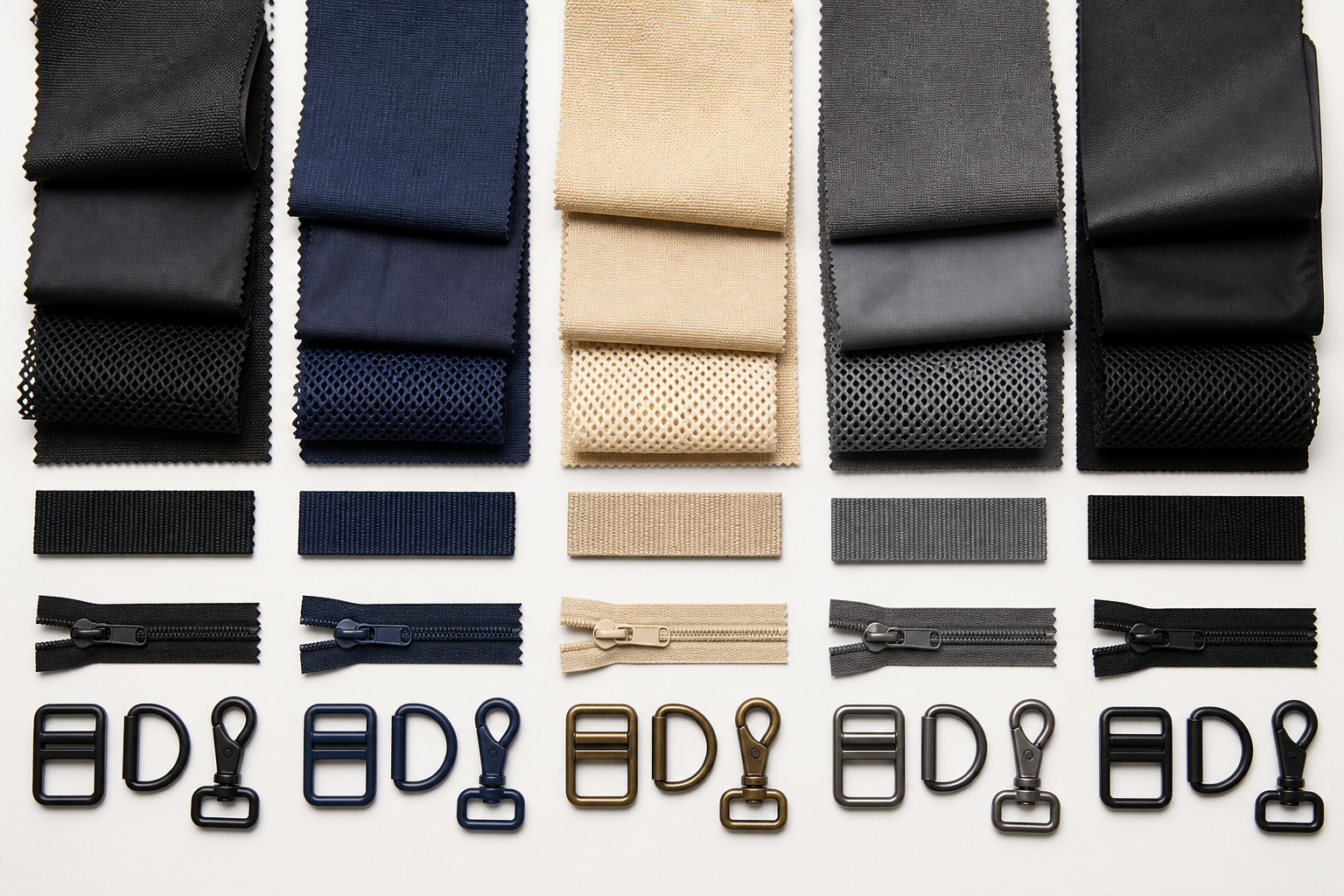
Your procurement team requests another run of an approved bag. The supplier replies that the original lining is no longer available and proposes something similar. The order may still use the same style code, but it no longer describes exactly the same combination of components.
Ask the supplier to identify the replacement before approving the repeat order. Separate the parts that remain unchanged from the requirement affected by the substitution. Then agree what evidence is needed to accept that change. A previous production approval should not silently cover a component your team has not reviewed.
Recover the reference behind “same as last time”
Locate the previous order number, accepted sample identifier and final component list. Use the version that actually governed the order, including any approved exceptions. An early quotation or an old development photograph may describe a different lining, zipper or trim from the version eventually supplied.
Ask the supplier which reference it has retained. Compare identifiers before discussing the alternative. If the buyer has a retained bag but no clear material record, state that limitation. A photograph can help locate a visible difference, but it cannot establish every characteristic of an unidentified component.
Keep one copy of the original specification unchanged in the order history. Prepare the reorder as a new revision that refers back to it. This makes the substitution traceable without rewriting the record of what was previously accepted. The bag tech-pack guide can help reconstruct missing specification fields.
Ask for a named replacement, not a general assurance
“Equivalent lining” is a proposal that needs detail. Request the component reference, available description, color reference and location where it will be used. Ask the supplier to distinguish confirmed information from anything still awaiting confirmation from its material source.
Check the scope of the proposal. Does it apply to one bag color, every variant in this order or a later delivery as well? Is the original component unavailable altogether, or unavailable for the requested schedule and quantity? Those answers may lead to different purchasing decisions.
Keep commercial effects beside the component proposal. Request any change to quoted cost, quantity requirements and timing in writing. Do not assume a faster alternative is otherwise identical, or that accepting a sample also accepts a revised price. Use the quotation comparison sheet if several alternatives are being considered.
Choose the review from the requirement at risk
Start with the job the original component was meant to do. A lining selected for appearance raises different questions from a component tied to a specific documented performance requirement. The review should answer those questions rather than collect a generic set of reassuring photographs.
| Requirement affected | Evidence to discuss with the supplier | Decision still to record |
|---|---|---|
| Appearance beside existing trims | Identified swatches viewed together under agreed conditions | Whether the combination is accepted for this reorder |
| Feel or handling inside the bag | Physical material and, where needed, an assembled sample | Whether the revised interior is acceptable in use |
| Fit around the intended contents | Revised sample checked with the agreed contents | Whether previous fit approval still applies |
| Decoration or attachment involving the changed part | Application or construction sample using the proposed component | Whether that combination is approved |
| A documented performance or compliance requirement | Applicable evidence reviewed against the actual requirement | Whether further verification is required before release |
This table is a way to select review questions, not a test standard. Agree any technical method, acceptance criterion or evidence requirement for the actual project. A visual match should not be recorded as proof of an untested performance claim.
For example, imagine a repeat cosmetic pouch whose proposed lining looks acceptable as a loose swatch. The buyer also needs a particular palette to pass through the finished opening. If the proposed construction changes the space available there, the swatch decision does not settle fit. Record the appearance decision separately and use the cosmetic bag fit check for the remaining question. This is a hypothetical review scenario, not a reported test.
Limit the approval to what was reviewed
Write the decision so another person can tell what it permits. Include the new order, affected variants, original and replacement references, supporting sample or document, reviewer and date. List any conditions that remain open. Avoid an unqualified “approved” beside a proposal containing several unresolved changes.
A useful approval identifies one replacement for one defined scope. If the supplier later proposes a different component under the same general description, ask for a new review. Likewise, an accepted change for one color combination does not automatically settle its appearance beside every other trim combination.
Carry the accepted replacement into the component list and the production quality checkpoints. The people checking incoming components and finished bags need the current reference, not a verbal explanation that the buyer agreed to something similar.
Keep the next reorder from reopening the same question
At the end of the decision, retain the previous reference, the accepted replacement record and the order revision together. State which reference should be used for a future quotation, while asking the supplier to reconfirm availability when that order is placed.
If no proposed replacement meets the requirement, leave the order decision open. Your team can consider a different component, a revised design or a changed schedule, but each option needs its own confirmed scope. Do not close the material question simply because the purchase-order total has already been agreed.
For a Truedrape repeat-order discussion, send the previous order or sample reference and the proposed component change. Mark the characteristics your procurement team needs to preserve so the next review addresses the actual purchasing decision.