Made-to-order B2B production. Specifications are confirmed through sampling.
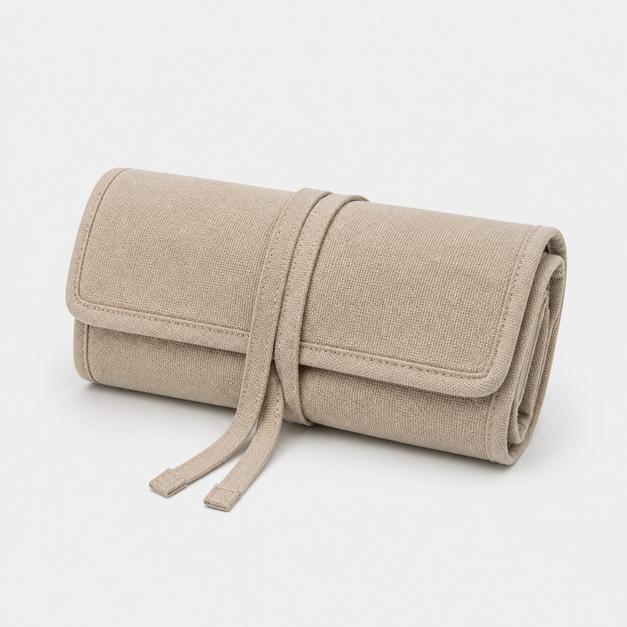
An OEM makeup brush roll direction for branded brush sets and cosmetic organization programs. Define the intended tool profiles before confirming the graduated slots, fold-over flap and twin-tie closure.
Look closer at the construction
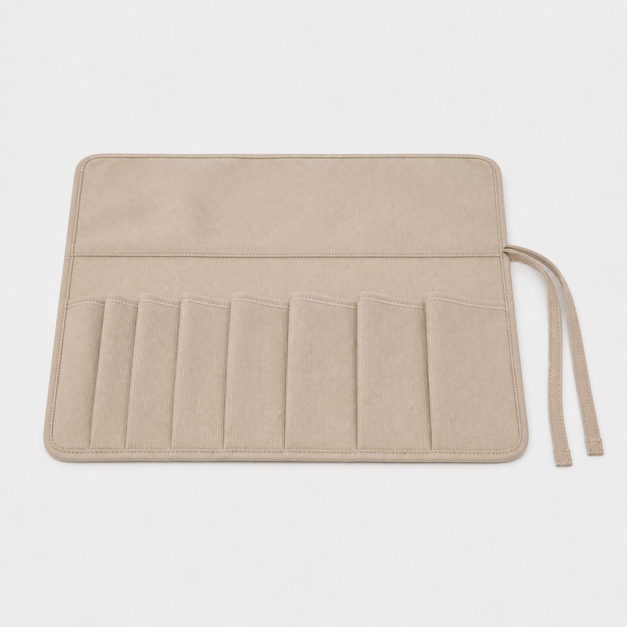
Use the open interior and detail views to specify the brush-slot map and closure build.
Graduated slot organization
The open reference shows empty slots in graduated widths beneath a fold-over flap. Map each slot to an intended tool profile before fixing the stitch lines.
Protective fold-over flap
Graduated-width brush slots
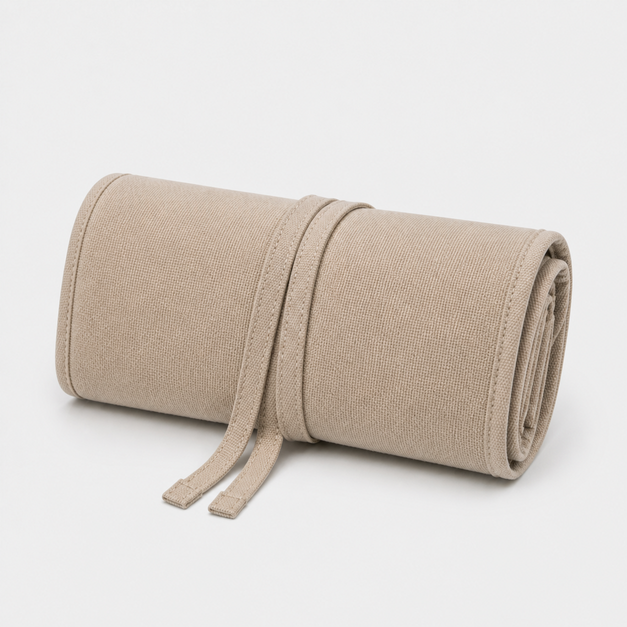
Twin securing ties
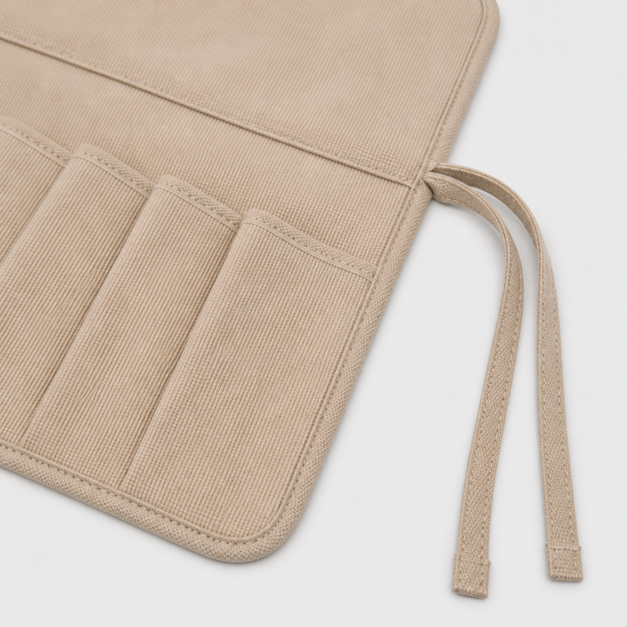
Slot, flap and tie finishing
Review the warm stone shell direction, bound edges, slot stitching and twin-tie attachment as one configurable construction package.
Warm stone woven textile direction
Coordinating woven backing direction
Reference visuals, not production approval. Features, construction and any performance requirement must be confirmed on your sample.
MATERIAL BUILD
Makeup brush roll materials
The listed materials are a starting direction for the Studio Brush Roll Organizer. Confirm the actual shell, backing, binding and ties during development.
Outer material
Reference directionWarm stone woven textile direction
Review a physical swatch for shade, hand feel, fold behavior and decoration compatibility before approving the shell specification.
Backing & inner finish
Reference directionCoordinating woven backing direction
Set the backing shade, slot-edge finish and flap construction around the intended brush-set brief.
Support & structure
Reference directionTo be defined with your sample
Agree the balance between a flexible roll and clear slot definition after reviewing the empty and loaded sample.
The close-up belongs to this design reference. It does not verify fiber composition, coating, certification or performance.
Treat each option as a development decision for the brush-set program, not a fixed specification.
Customization options
Slot count and widths
Flap depth
Tie construction
Branding placement
Size & layout
Provide the intended tool profiles and mark the slot count, width sequence, flap depth and final rolled proportion.
Materials & trims
Confirm the warm stone shell, backing, edge binding and twin ties through swatches and sampling rather than relying on the image.
Brand & packaging
Supply artwork, decoration method, placement and packing instructions. Approve the final appearance on the agreed sample.
FUNCTIONAL DETAILS
Makeup brush roll design decisions
Use these checks to turn the Studio Brush Roll Organizer reference into a specific brush-set brief.
01
Graduated slot map
Set each stitch line around an intended tool profile instead of dividing the roll into equal spaces by default.
Buyer questionWhich tool profile belongs in each slot?
02
Protective flap depth
Choose how far the fold-over flap should cover the slot openings when the organizer is rolled.
Buyer questionHow much top coverage does the agreed brush set require?
03
Twin-tie placement
Review the two ties on the rolled sample so the closure position suits the final fill and fabric bulk.
Buyer questionWhere should the ties meet on the finished roll?
Discuss changes before the pattern is finalized. The pictured configuration is a design reference, not the final specification for an order.
OEM / ODM development process
From an approved direction to a packed custom bag order
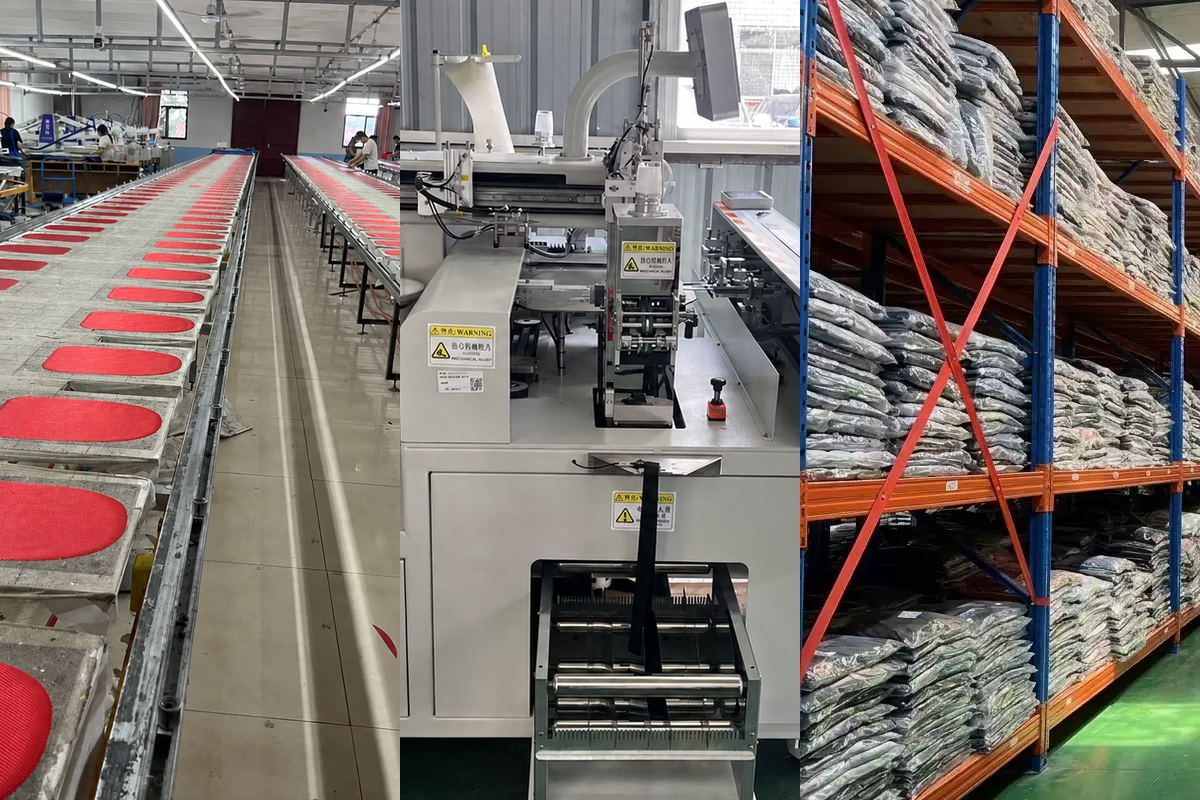
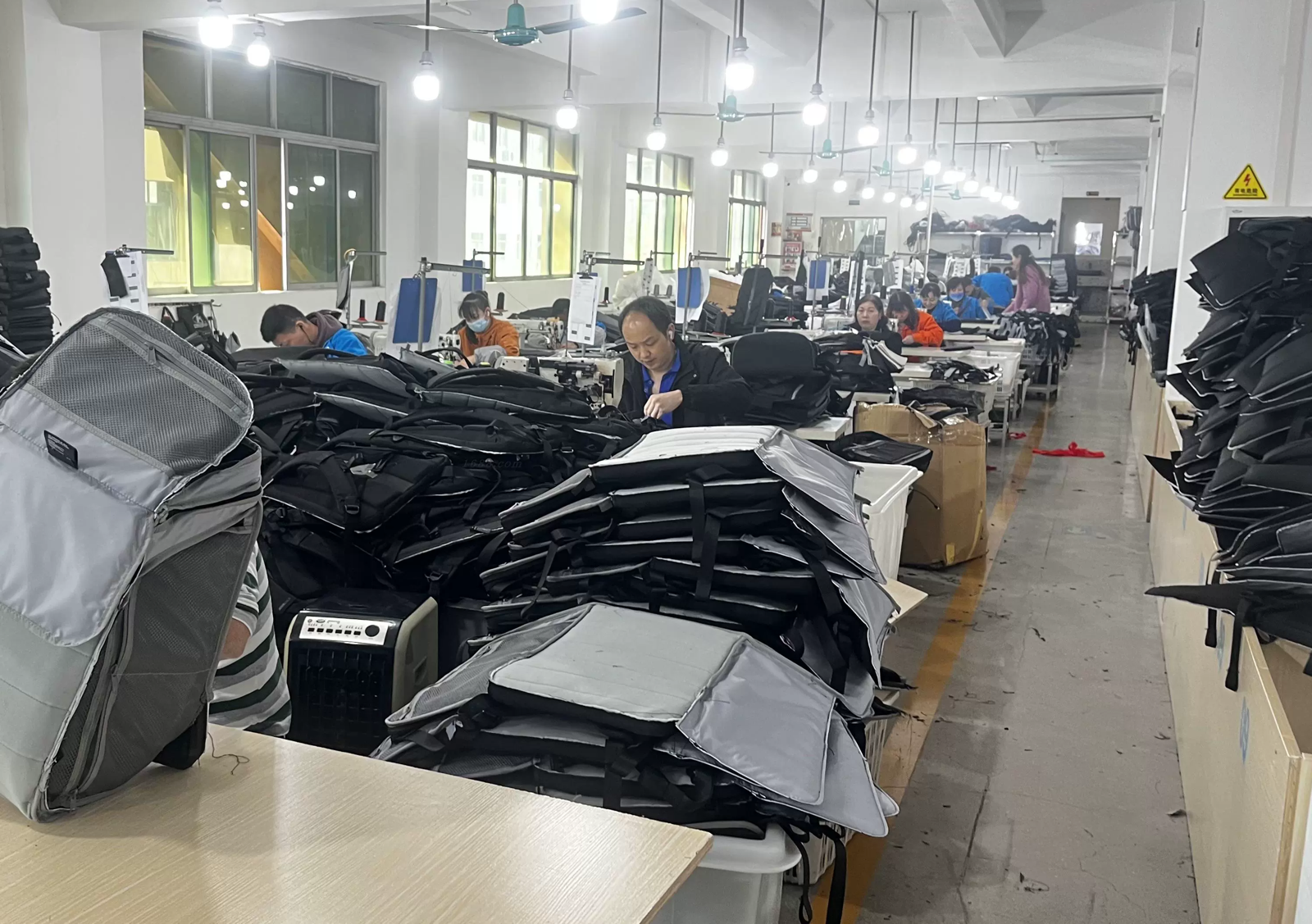
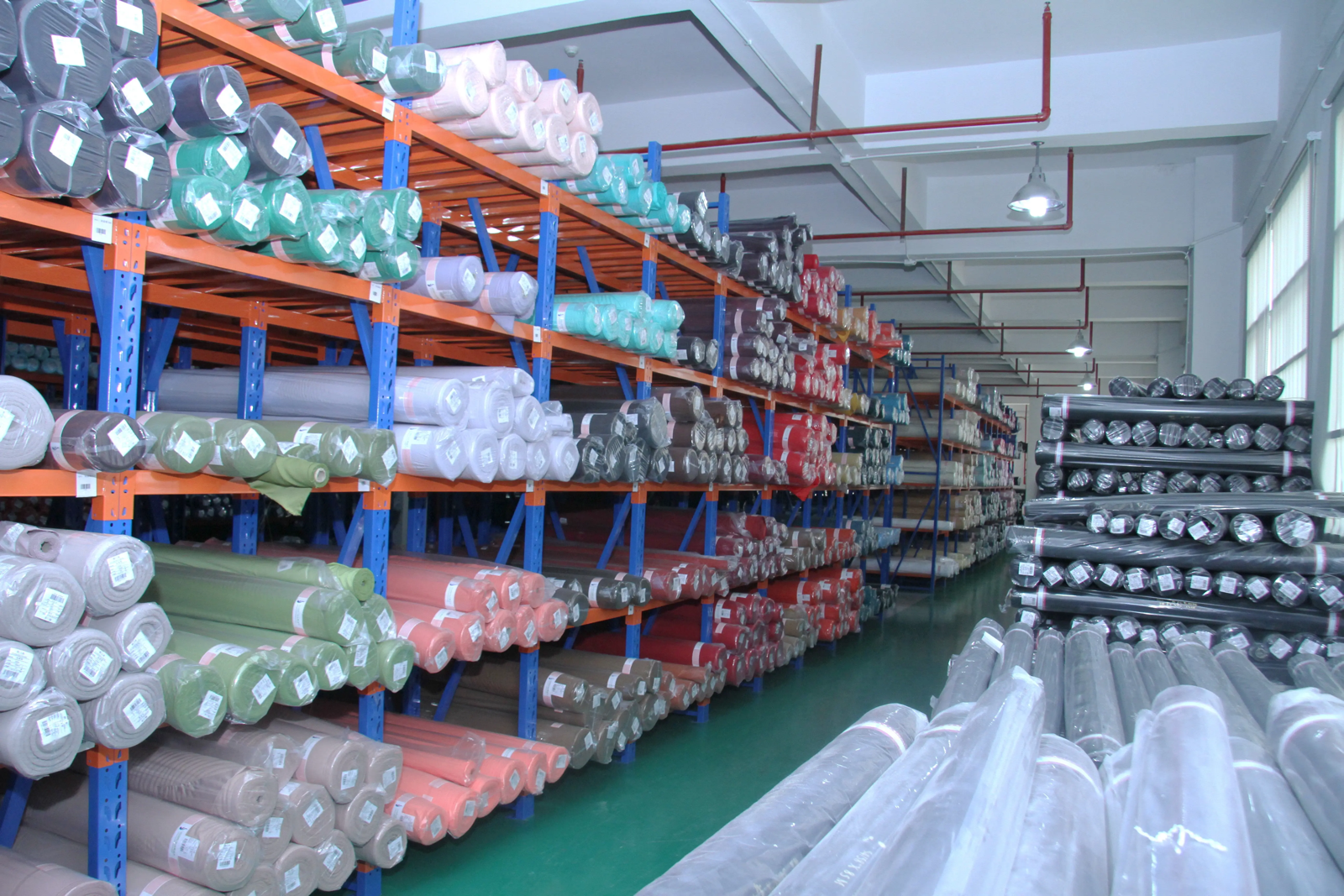
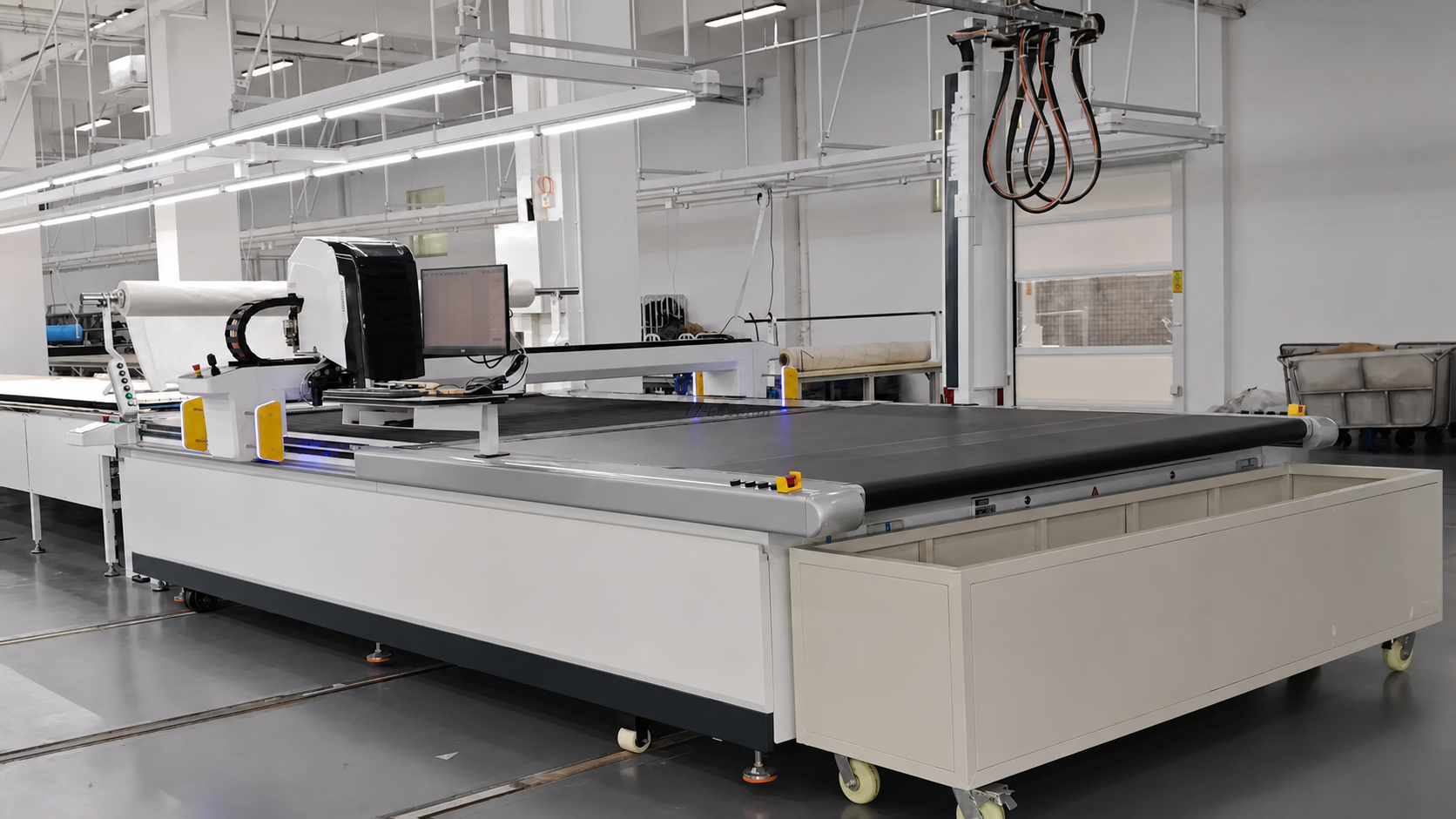
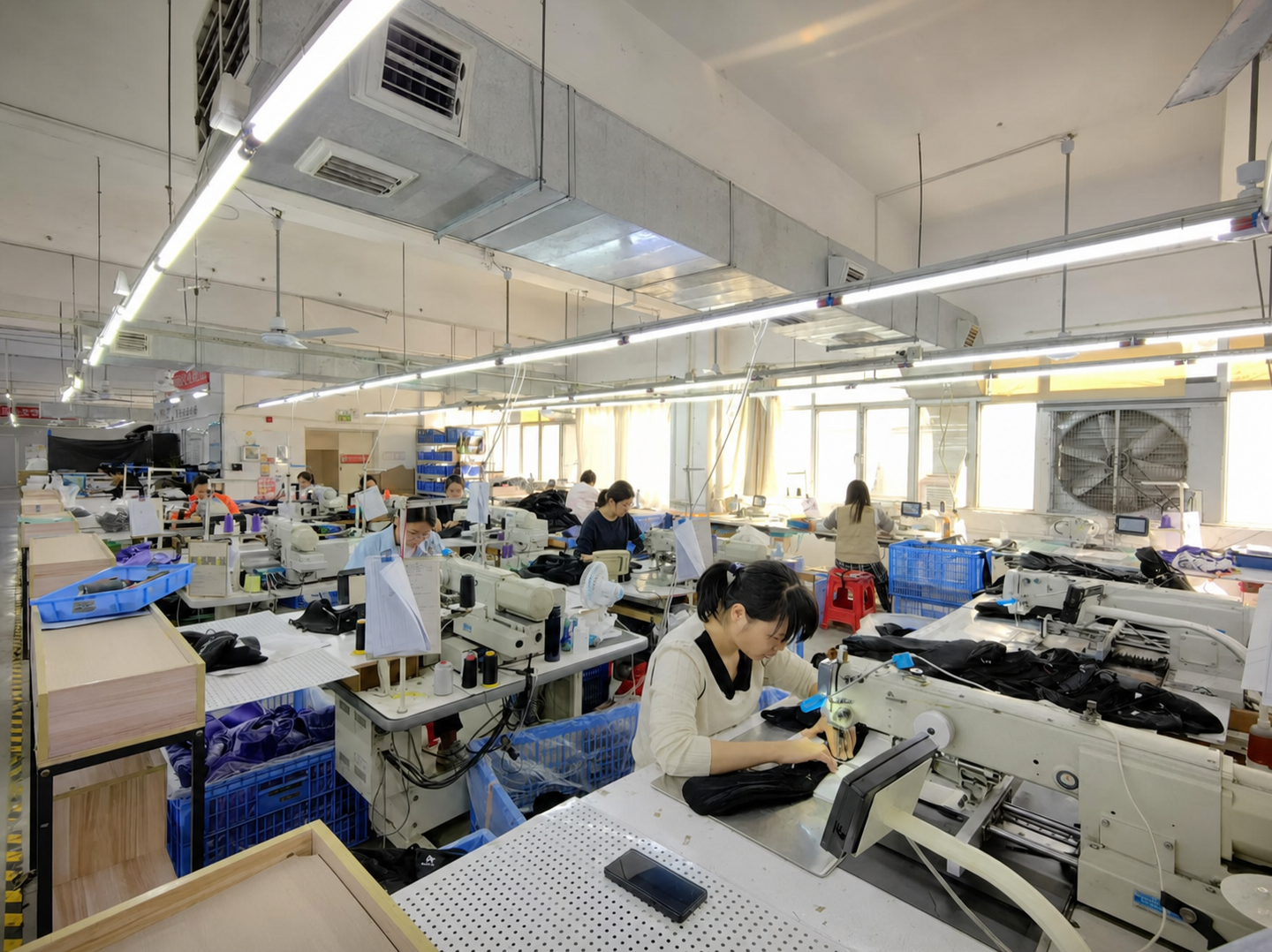
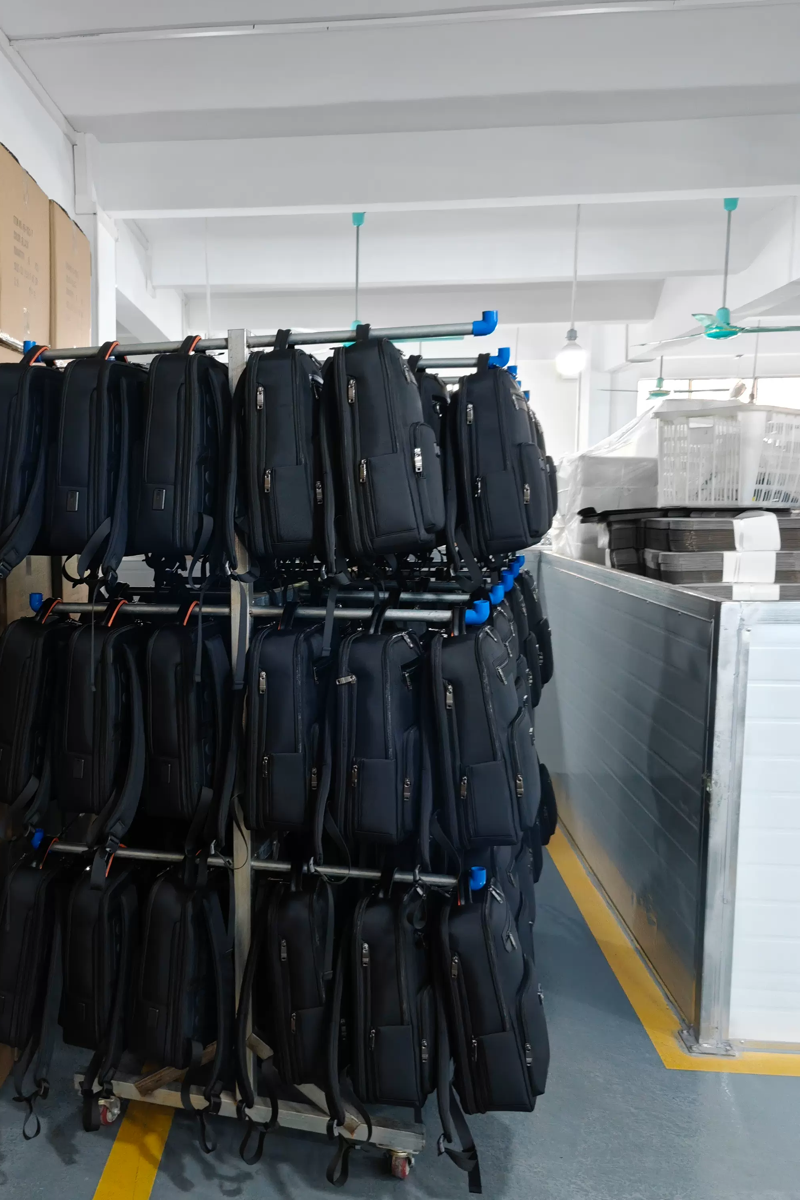
This shared OEM and ODM bag development route shows how a buyer brief moves through sampling, material preparation, sewing, agreed production checkpoints and packing.
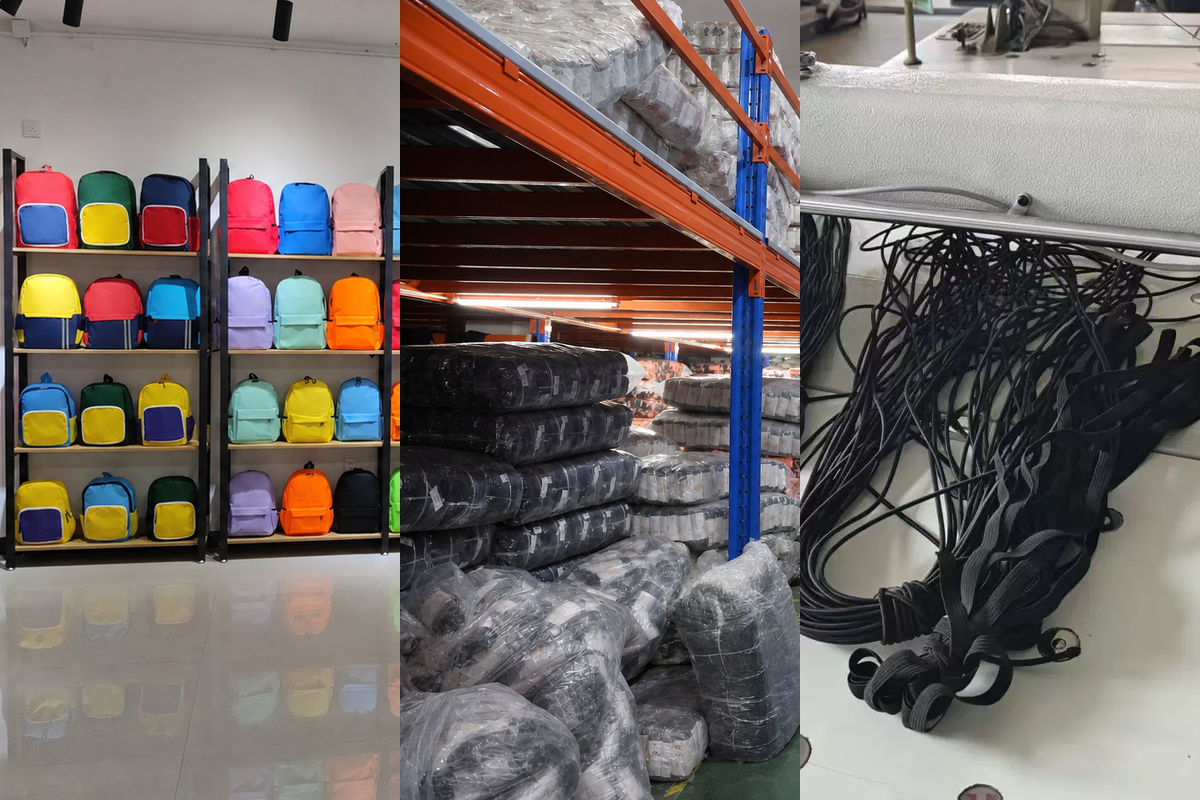
Brief input reference
01
Confirm the brief
Define intended use, dimensions, organization, material direction, branding and packing requirements.
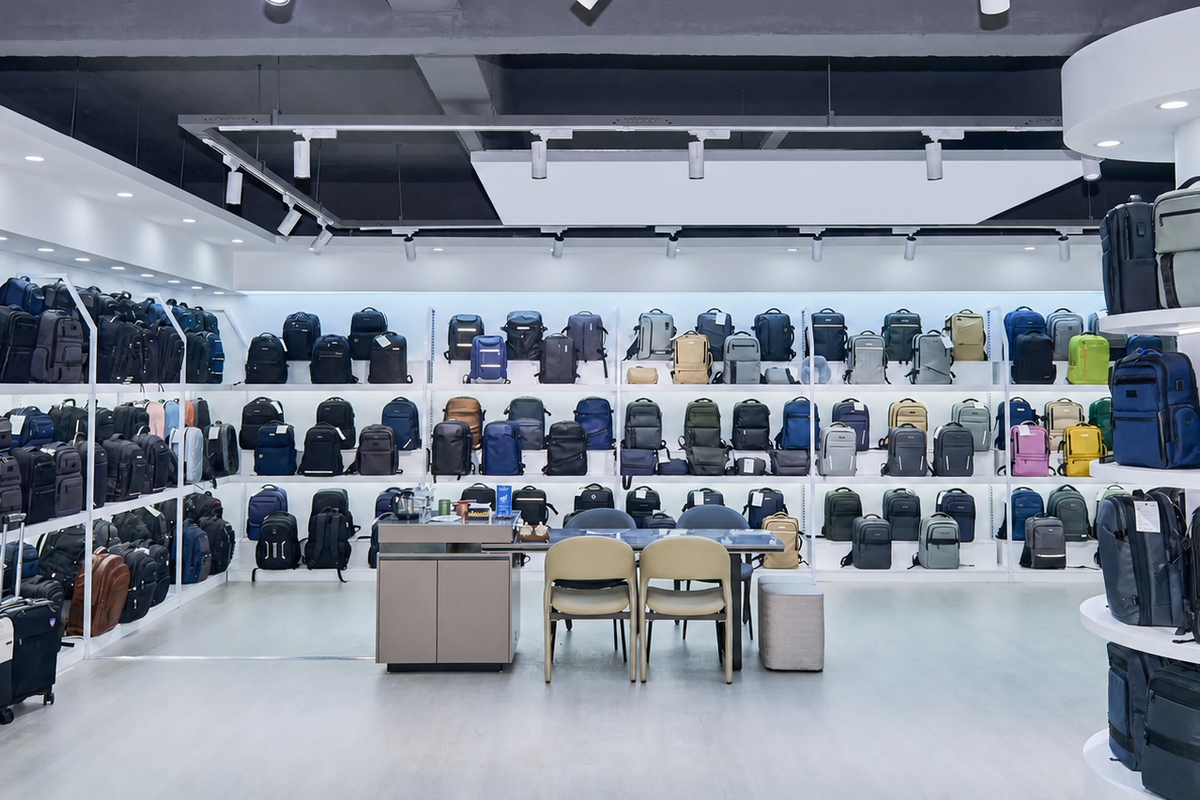
Sample review environment
02
Develop and review the sample
Turn the approved direction into a physical reference and record the revisions needed before production decisions close.
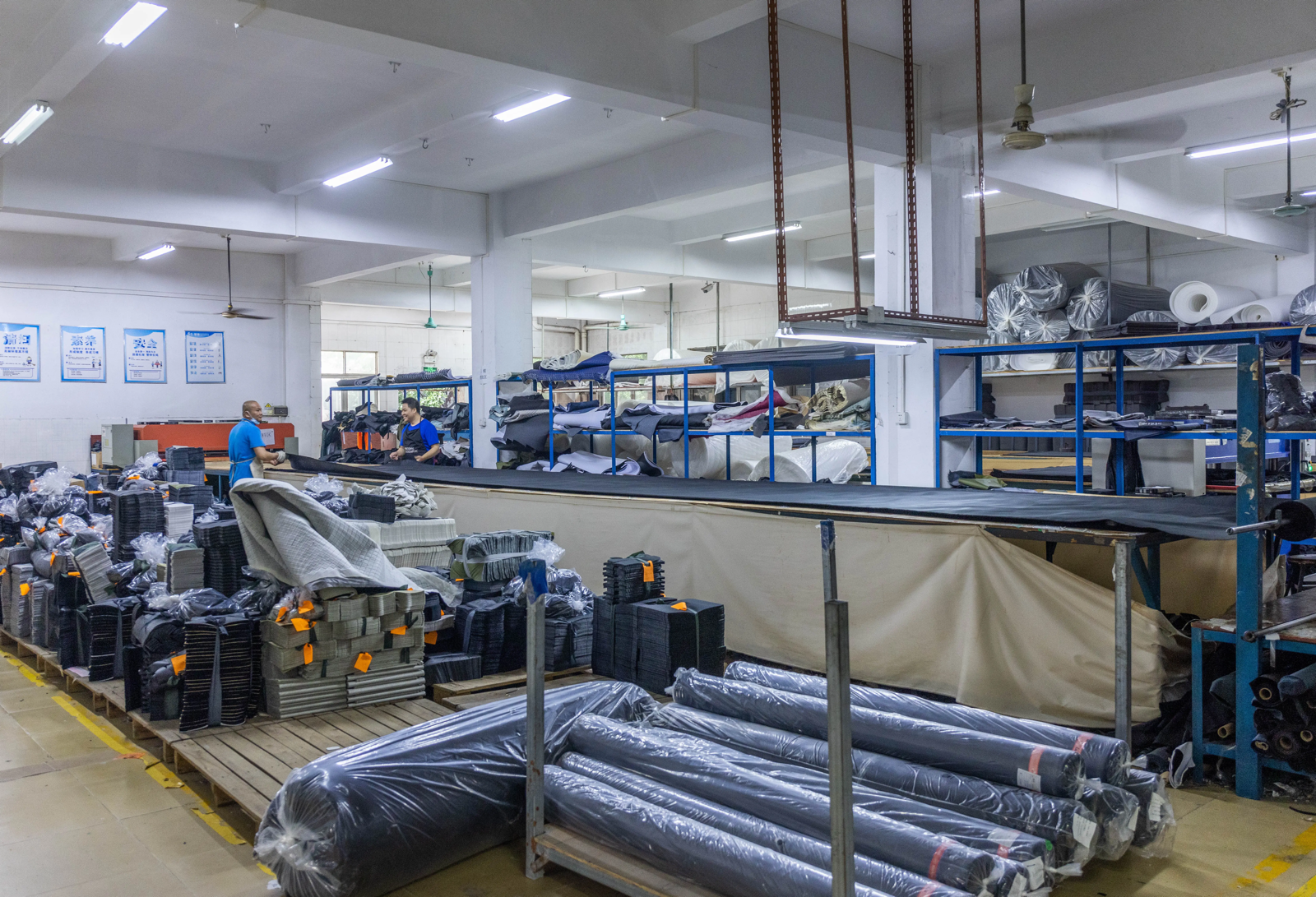
Material and panel preparation
03
Prepare materials and panels
Connect approved construction, components and color direction with material and panel preparation.
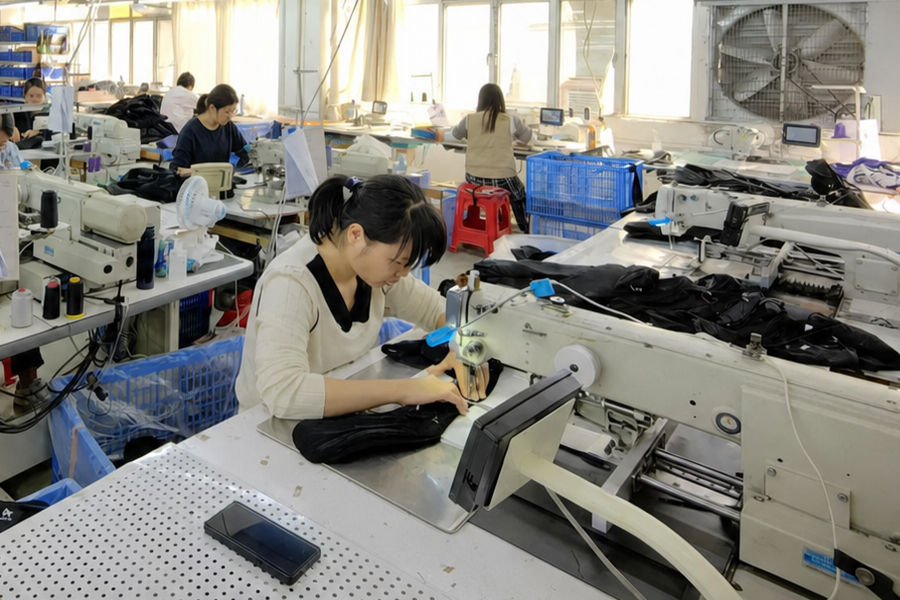
Bag sewing and assembly
04
Sew and assemble
Build the shell, lining, pockets, closures, handles and reinforcement in an agreed sequence.
Checkpoint reference
05
Follow agreed checkpoints
Review workmanship, dimensions, function, branding and order identity against the approved references for the programme.
Confirmed carton packing
06
Pack and coordinate dispatch
Apply the confirmed packing, labeling, carton and shipment instructions for the completed order.
The exact development, inspection and production plan is confirmed for each product, specification and buyer requirement, and no image proves every check used for every order.
Made-to-order bag production through an affiliated China factory
Forthright coordinates Truedrape bag projects with an affiliated textile bag factory in China under common ownership. Production follows the agreed project specification and approved sample.
Forthright handles commercial and development coordination. The trading company and affiliated factory are separate legal entities.