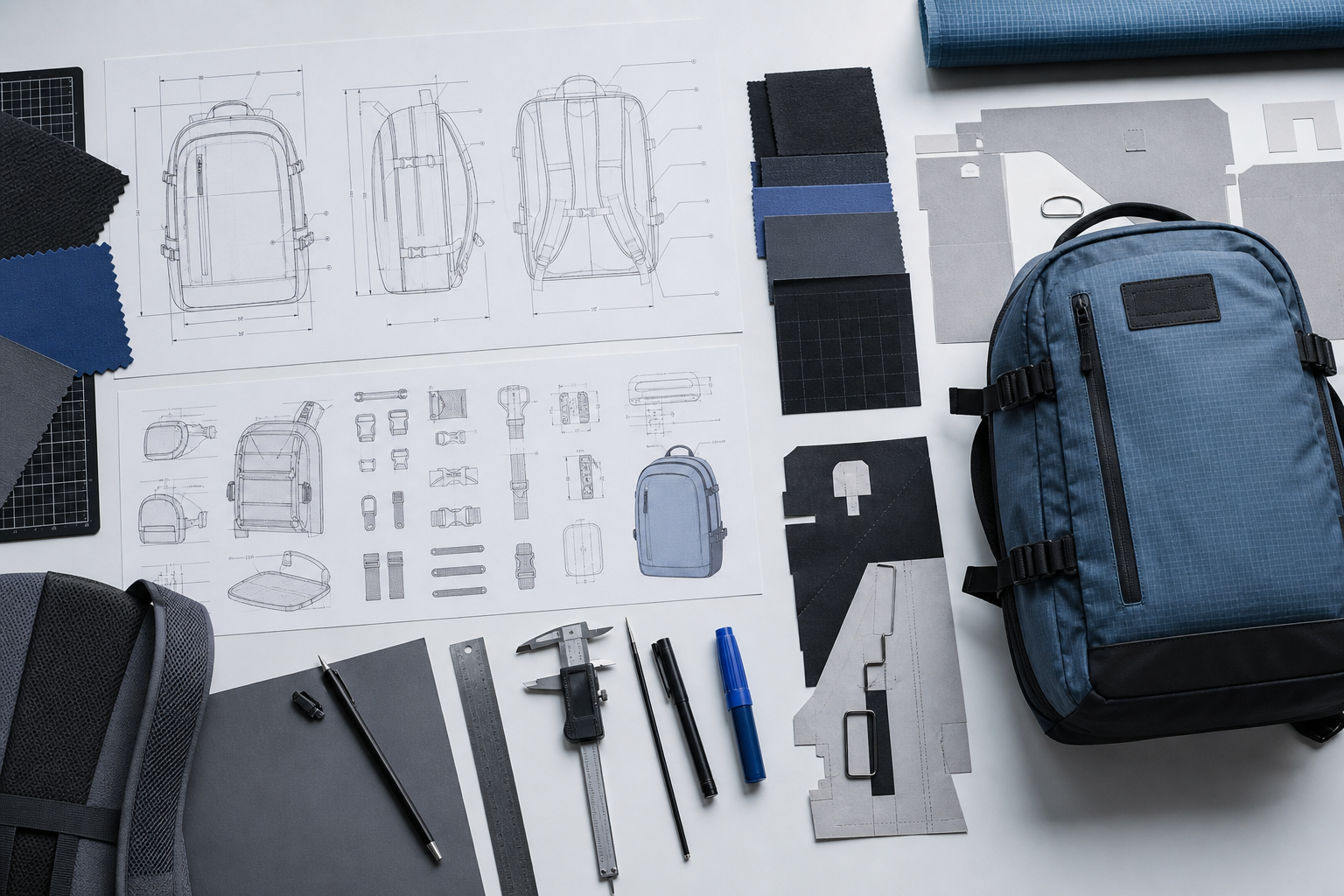
Country of Origin Marking for Bags: Prepare the US Label Brief
Turn importer-confirmed origin wording and scope into an identified bag-label instruction, with separate decisions for copy, position, attachment and physical proof.
The bag artwork is approved and the packing plan names every carton, but nobody has issued the origin-label instruction for the finished bag. Before labels are ordered, ask the responsible U.S. importer or reviewer to confirm the applicable origin wording and marking scope. Then give the supplier a separate physical instruction showing where that text will appear and how it will be attached.
This guide is for finished sewn bags imported as articles for business distribution or supply in the United States. It helps procurement teams translate confirmed requirements into an order brief. It does not determine customs classification, legal origin or the treatment of disposable packaging bags and filled containers. Other destinations and other labeling regimes need their own review.
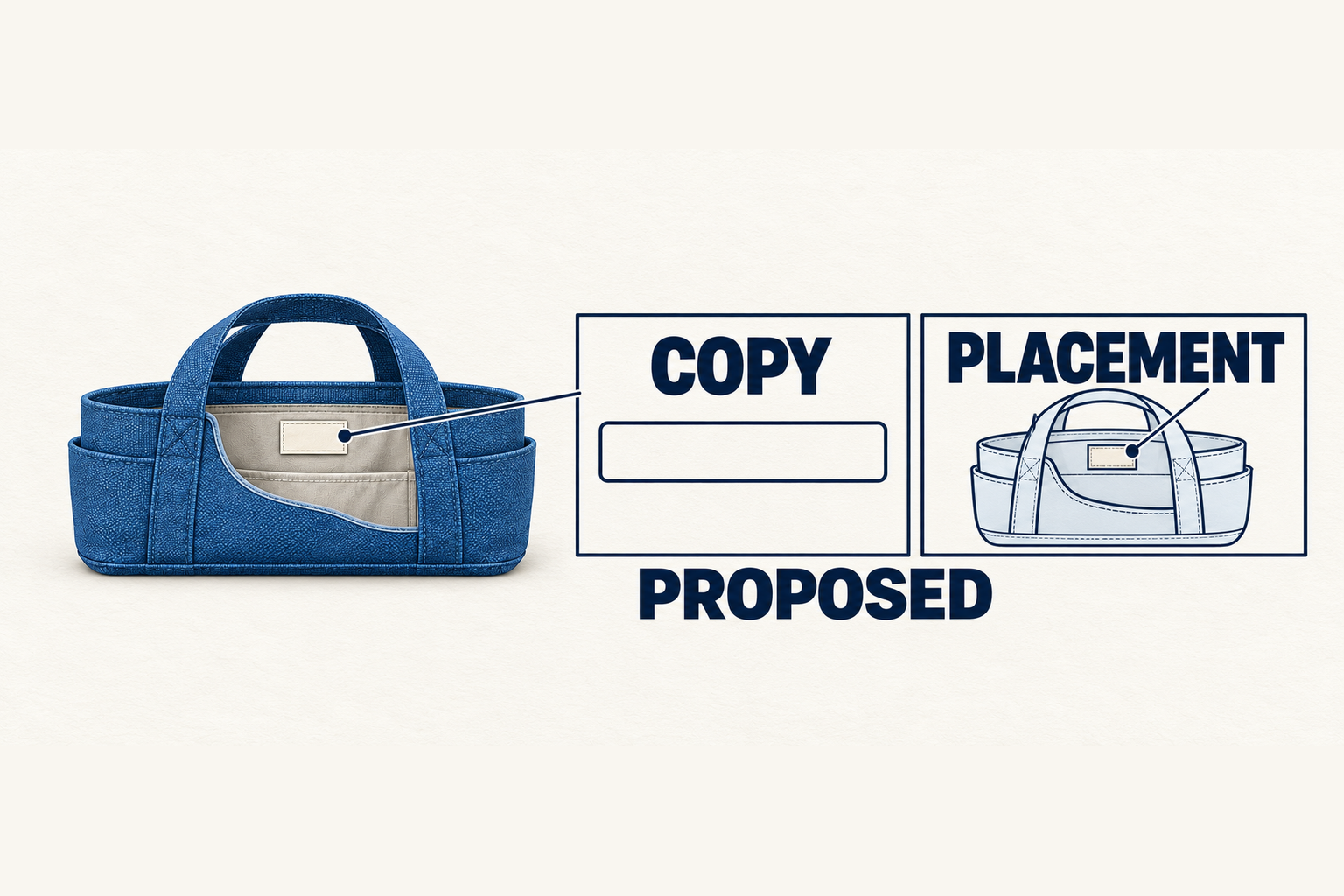
The cover shows a proposed blank label and separate copy and placement proofs. The illustrated interior position is one design reference; it is not a universally accepted legal location or an approved Truedrape label.
Establish the scope before approving the copy
The general rule in 19 CFR 134.11 requires foreign-origin imports to carry the English country name in a conspicuous, legible and sufficiently permanent form, subject to legal exceptions. Applying that rule to an order still requires the correct product, origin and ultimate-purchaser facts.
Give the importer a description of the finished bag, its intended distribution and the known manufacturing route. Identify where relevant operations occur and flag missing information. A supplier address, fabric source or shipping country should not be used as a substitute for the origin determination.
Record who has resolved the applicable requirements and the basis for the instruction supplied to procurement. If that review is incomplete, label copy remains open. A label supplier can reproduce text; that does not make it responsible for deciding which country the bag must name.
Keep article and container marking distinct. Section 134.32 includes an exception where container marking reasonably indicates the articles' origin. That provision does not make every marked shipping carton a substitute for marking the bag. If an exception is relied on, ask the importer to identify its applicable basis and the corresponding container instruction.
Send every geographic reference for review
Collect the words that will appear on the bag, attached material and packaging. Include the main brand artwork, address lines, destination references and any statement about where design or production occurs. Send the complete set to the reviewer; an isolated origin-label PDF can conceal a conflicting reference elsewhere.
Two provisions deserve separate attention. Section 134.46 addresses non-origin geographic wording that may mislead the ultimate purchaser, with conditions concerning origin wording, proximity and comparative size. Section 134.47 has a different provision for specified U.S. references in trademarks, trade names and souvenir markings.
Have the responsible reviewer identify which provision applies to the actual artwork. Do not apply the same proximity rule automatically to every place name, or assume that using a place name within a brand removes the need for review. Preserve the reviewed artwork set so a later address or tagline change is visible.
Keep approved wording separate from physical placement
Once the wording is confirmed, issue a copy file that shows the exact text, capitalization, line breaks and artwork version. Mark its purpose clearly. The placement drawing should refer to that copy file without becoming a replacement for it.
The physical instruction needs its own details: label type, finished dimensions, fold or edge treatment, attachment, orientation and location on the bag. These are project specification fields to agree with the supplier. A note saying “inside label” leaves several decisions unanswered, especially when the bag has a lining, pockets or a reversible arrangement.
Use an annotated drawing with identifiable bag features and measurement points. Decide how the bag is positioned for the review and show the proposed label face. Keep aesthetic branding placement in the separate logo approval record; confirmed legal text and the position of a decorative mark need not have the same owner or purpose.
Check the proposed label on the assembled bag
Section 134.41 addresses permanence through normal distribution and the purchaser's ability to find and read the mark easily. It does not prescribe one sewn-label position or one font size for every bag. Use the applicable confirmed requirements to review the actual proposal.
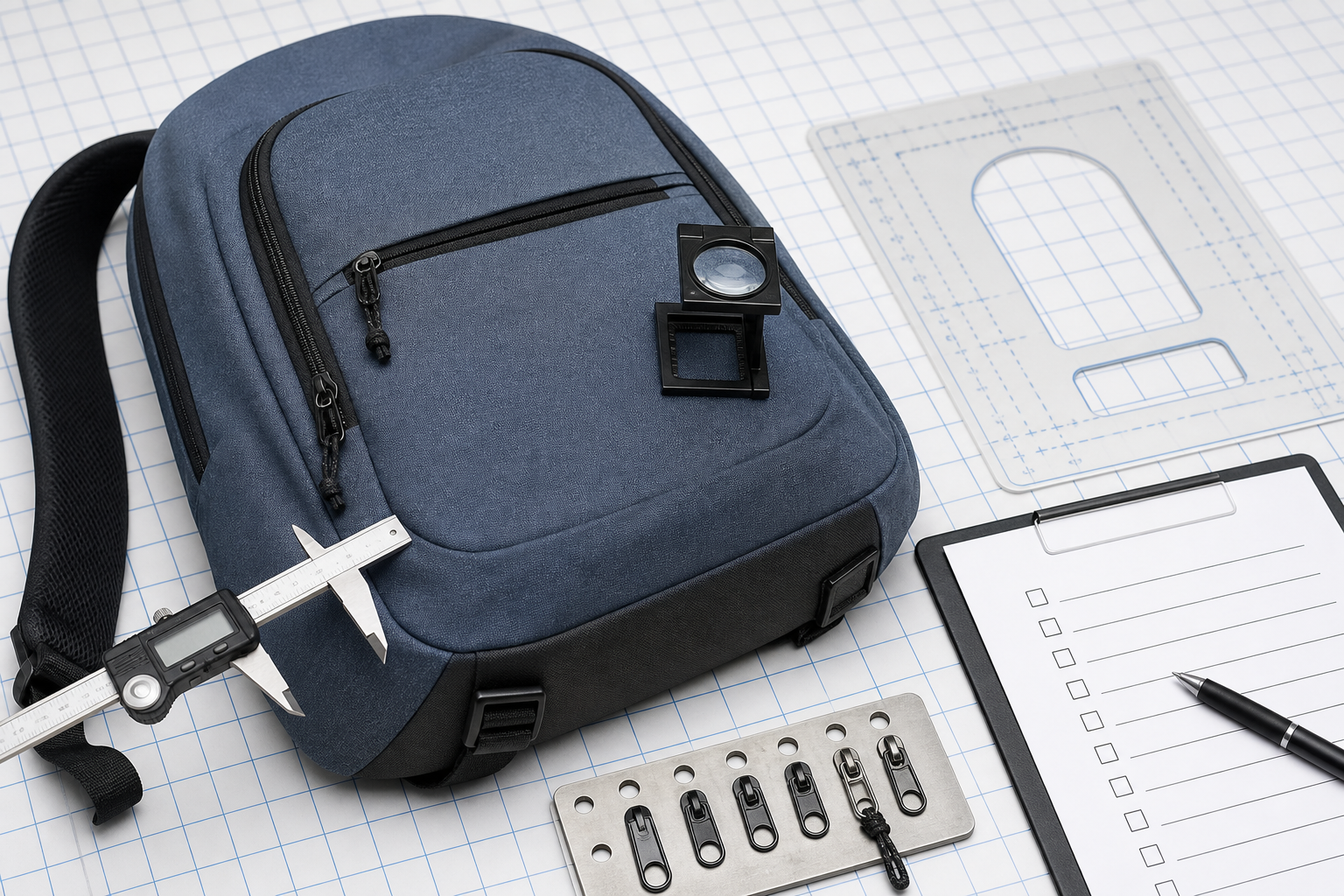
Ask for an overall view showing where the label sits and a close view showing the text and attachment. Where the decision depends on handling or access, request the assembled physical sample. A close photograph of a loose label cannot show whether a lining fold, pocket or later attachment will hide it.
For a proposed interior label, review how the relevant compartment opens and whether the text is accessible in the finished construction. Ask the supplier to explain the proposed attachment and refer any unresolved permanence question to the responsible reviewer. Do not assume that a hangtag, adhesive label or stitched label is sufficient merely because another bag used it.
Complete one country of origin marking brief
Keep the confirmed scope, copy and physical proof connected in one short record. The purpose of this table is to make an instruction usable; completing it does not establish legal clearance.
| Brief field | Record to keep | Leave open when |
|---|---|---|
| Product and destination | Finished bag reference, intended distribution and United States destination | The product or distribution arrangement is not defined |
| Origin and applicable scope | Importer/reviewer decision, date and identified basis; article/container instructions | Origin, classification or an exception remains unresolved |
| Complete artwork set | All geographic wording and the reviewed versions | A brand, address or other location reference has changed |
| Confirmed copy | Exact text file and revision supplied for reproduction | The text has only been inferred from an earlier order |
| Physical instruction | Label construction, position, orientation and attachment drawing | A loose proof is the only evidence of placement |
| Sample review | Bag/sample ID, overall and close views, reviewer and findings | Access, readability or attachment needs further review |
| Order handoff | Current brief revision, affected variants and remaining conditions | The accepted proof does not match the order documents |
For example, consider a hypothetical bag whose proposed label is attached to a lining panel. The buyer accepts the text, then a pocket is moved across that panel. The copy approval can stay in the record, but the physical placement needs another review. State whether the supplier should restore the earlier arrangement or submit a revised position; “label approved” is no longer a complete instruction.
This distinction also helps when only one colorway or size changes. Identify the affected versions and the proof required for them. Do not let approval of a single sample silently cover a different lining or label arrangement elsewhere in the order.
Carry the instruction into packing and inspection
Put the current label brief beside the bag specification and artwork files. Ask the supplier to confirm which revision will be used and retire superseded files from the active packet. Any agreed container marks should also join the carton packing instructions, while that guide retains the quantity and assortment plan.
Supply the same label references for pre-shipment inspection. An inspector needs the governing instruction to compare with the goods. A photograph matching a proof does not itself establish the correct legal origin, and a procurement sign-off is not a CBP ruling or admission decision.
Do not expand this brief into a universal fiber-content, care or RN-label instruction. The FTC's textile labeling guide distinguishes its coverage and exclusions from Customs origin requirements. The responsible team should resolve any separately applicable labeling obligations for the actual product.
When sending a country of origin marking brief to Truedrape, include the importer-confirmed requirements, bag reference, complete artwork set and any proposed label drawing. Identify the person who can confirm the wording and the physical questions still open, so the supplier can prepare the correct proof for review.