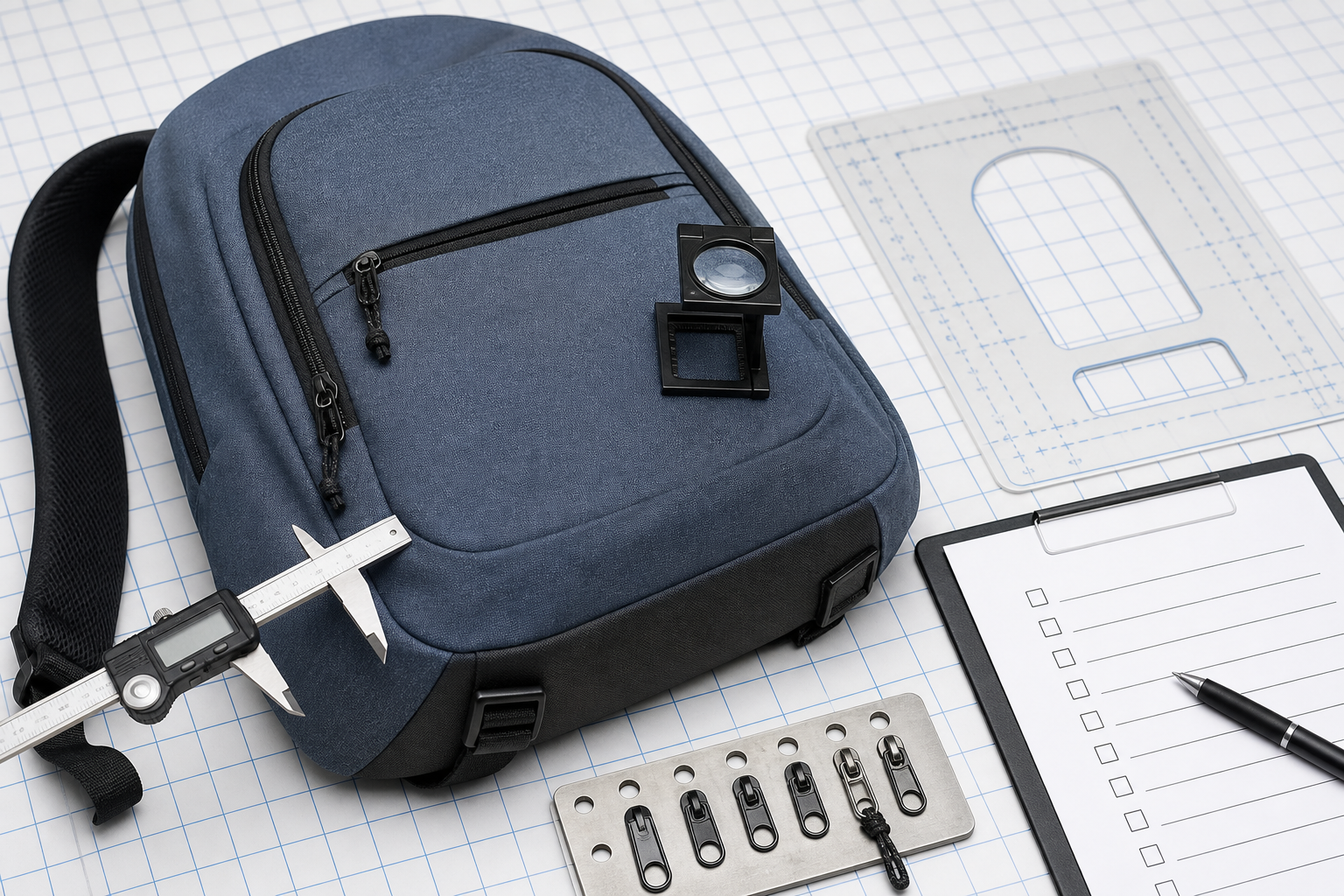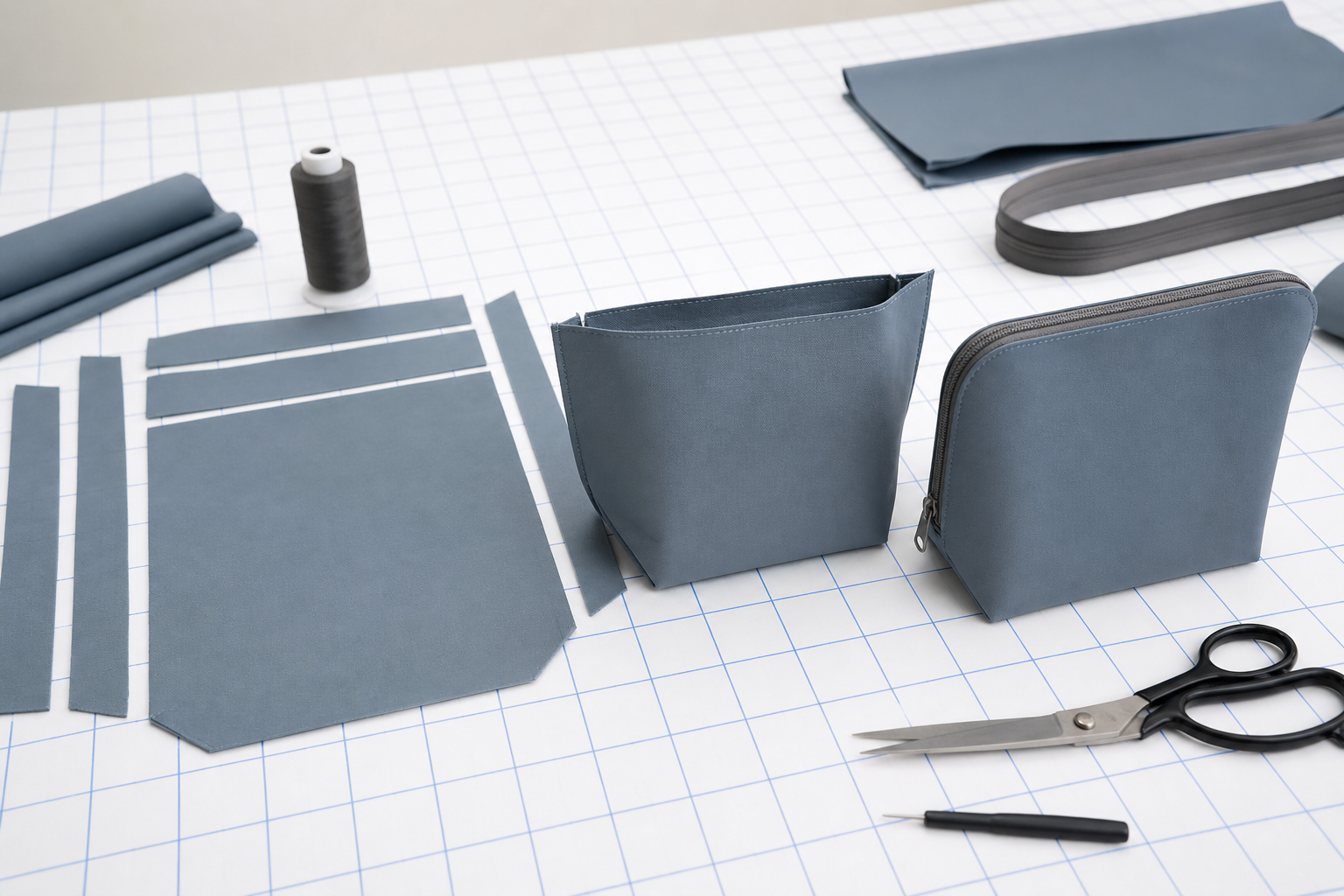
Carton Drop Test for Bag Orders: Match the Report to the Packing
A carton drop test report is useful only when its packed sample matches the proposed bag order. Record folding, accessories, unit protection and carton details before agreeing evidence.
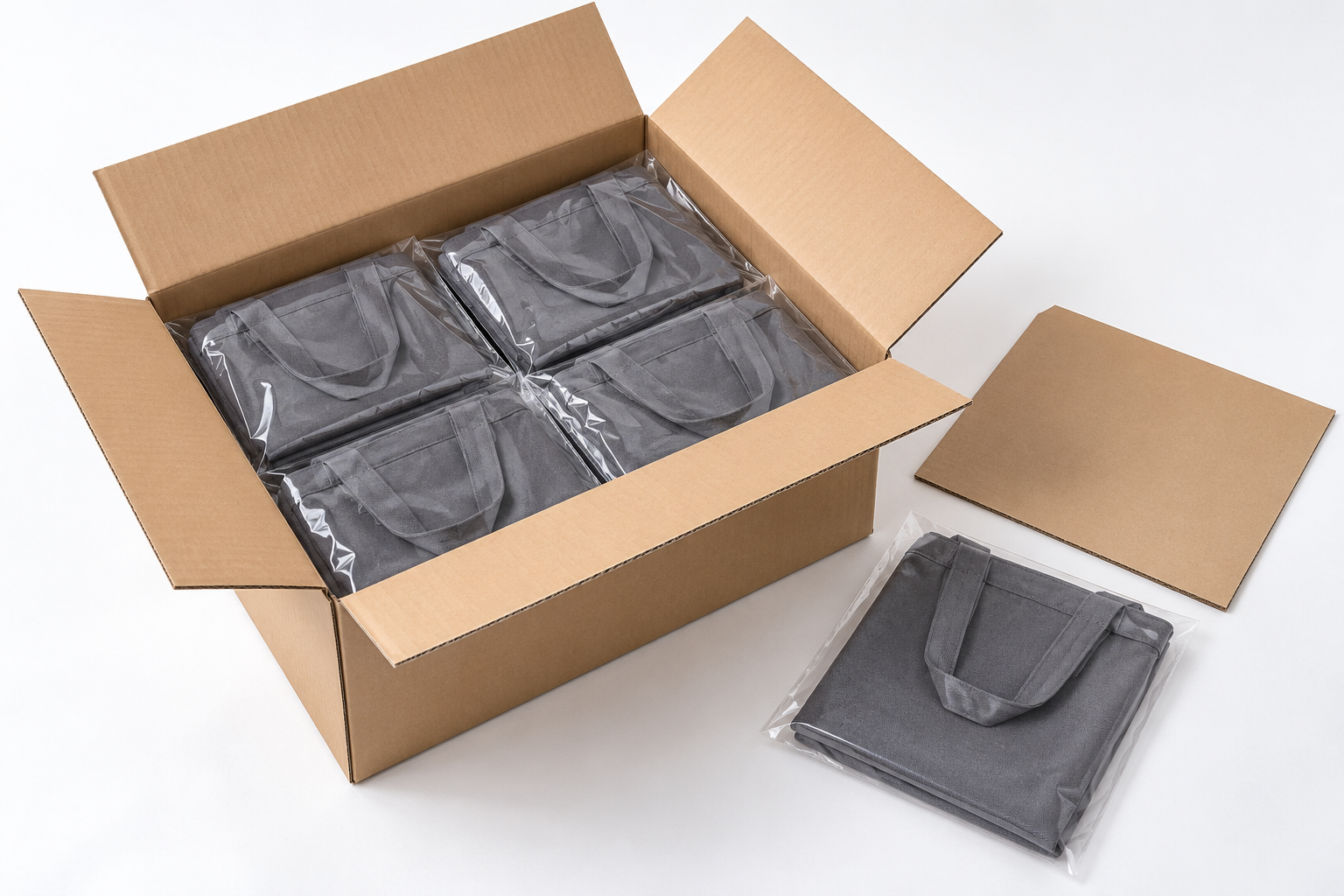
Adding a removable strap, changing the fold or placing more bags in each carton can leave an earlier “pass” report covering a different pack. Before using that report to approve the revised packing, identify exactly what was tested and compare it with the proposed shipment configuration.
For a made-to-order bag project, a carton drop test should be tied to a controlled packed sample and an agreed evaluation. The report needs to describe the bags, their arrangement, unit protection, accessories, carton and closure. It cannot establish protection for a packing revision it does not represent. Start by making that configuration reproducible, then agree the test scope with the responsible buyer and testing party.
Freeze one complete packing configuration
Give the packing specification a revision identifier. Record the bag style and product revision, the quantity and variants in the carton, and what travels with each unit. A detached strap, label, insert or other accessory belongs in the record when it forms part of the shipment.
Show the packing sequence from the individual bag to the closed carton. Photograph or draw the fold, the positions of handles and straps, any unit protection, the arrangement of layers and the placement of accessories. Record the final carton specification, dimensions, gross weight and closure details for the submitted configuration. “Standard export carton” leaves too much unidentified.
For a soft textile bag, the fold itself deserves attention. Identify which panels touch, where hardware sits and whether the agreed unpacked appearance is judged immediately or after a defined recovery period. These are questions to settle for the actual product; this guide does not prescribe a fold, protective material or recovery time.
Use the following fields as a packed-sample record. They identify the submission; they do not set carton capacity or test requirements.
| Record field | Information to retain | Check against the final order |
|---|---|---|
| Product identity | Style, size, material/construction revision and variant | Are these the bags that will be shipped? |
| Complete unit | Bag, accessories, labels and agreed unit protection | Is anything added, removed or repositioned? |
| Arrangement | Fold, orientation, layer pattern and quantity | Can the proposed packing be reproduced from the record? |
| Outer package | Carton reference, dimensions, gross weight and closure | Do the materials and packed dimensions match? |
| Sample identity | Submission code, packing revision and photographs | Can the report be linked to this exact configuration? |
Keep quantity and variant reconciliation in the carton assortment instructions. Correct counts and transport protection are separate decisions: a carton can contain the right assortment while its protection remains unverified.
Ask what the chosen evaluation covers
Give the testing party the expected distribution route and handling arrangement. State whether the cartons are intended to remain on a pallet or be handled individually, and identify any receiving requirements already supplied by the buyer. Ask which current method or test plan fits that situation and what question it will answer.
ISTA's design and testing guidance links protocol selection to knowledge of the distribution environment and distinguishes screening from prediction. It also calls for representative product/package samples and criteria agreed before testing. A method name in an email is therefore insufficient: request the protocol, edition, configuration covered and evaluation purpose.
Agree the planned sample selection, preparation or conditioning, test levels and sequence, reporting and responsibility with the appointed testing party. A carton drop test may be one element of a wider plan. A drop-only result should not be read as evidence for stacking, vibration, moisture exposure or every other condition in the route.
Do not borrow a height table or drop count from a general article and apply it to every bag order. Nor should an on-site check be presented as completion of an entire named laboratory protocol. Ask for any deviation or omitted stage to be recorded, and limit the approval to the work actually performed. This article is a buyer's briefing and report-review guide, not instructions for conducting a test.
Define damage before the result arrives
Separate the condition of the outer carton, the unit protection and the bag itself. Decide which changes are acceptable for each, who makes that decision and how the condition will be assessed. Avoid leaving “no significant damage” unexplained until a marked carton is on the table.
For a bag order, the buyer may need to resolve questions about lasting creases, surface marks, decoration, shape, displaced hardware or closure operation after unpacking. Select only the checks relevant to the project and define how they will be observed. These are proposed criteria topics, not defects reported from a Truedrape test.
Keep an approved appearance reference where visual judgments matter. If the bag is deliberately folded for shipment, distinguish the accepted fold appearance from an unacceptable change. If unpacking time or a recovery condition matters to that decision, agree it in advance rather than changing the criterion after viewing the sample.
Ask how the initial condition will be documented and how the final evaluation will be recorded under the selected plan. Coordinate any opening of the carton with the testing party; inspecting inside at an arbitrary stage may conflict with the procedure. Request photographs linked to the sample identifier and specific observations, rather than relying on a picture of an intact closed carton.
Reconcile the report before approving the packing
Read the sample description first. Match its packing revision, contents, quantity, weight and carton reference to the packed-sample record. Then check the method and edition, work performed, conditions, reported observations, agreed criteria and qualifications. Where a field is missing, ask for clarification before interpreting the conclusion.
A short video can help identify a submitted configuration or illustrate a recorded event. It cannot, on its own, establish the entire procedure, initial condition or final condition of every unit. Retain the written scope and report with the visual records.
If damage is reported, connect it to a location and unit: which bag, which surface, which accessory and where it sat in the carton. Ask for the packaging and product observations before deciding the cause. A proposed change to the fold, protection or carton should have its own revision and a defined follow-up evaluation; an extra layer of material is not proof that the issue is resolved.
Record the buyer's decision against the report and packing revision. Name the person responsible for closing a qualification or arranging further work. Keep that decision separate from general shipment release, which may still depend on quantity, workmanship, documents and other order requirements.
Reopen the record when packing changes
Before finalizing the instruction, compare it with the evaluated configuration. Review changes to bag dimensions or structure, fold, accessories, unit protection, quantity per carton, carton materials, dimensions and closure. Flag a change even if the external carton still looks similar.
ISTA's guidance calls for retesting when the product, package or process changes, including when the performance effect is uncertain. If an earlier ISTA result is being relied on, bring the proposed change to the testing party and apply the relevant protocol's requirements. For any other agreed evaluation, document how the revised configuration will be assessed instead of silently carrying forward the old conclusion.
Keep the accepted packing record with the sample approval and the references for pre-shipment inspection. That lets the inspection team compare the packing offered for the order with a specific accepted revision. A report on development samples does not establish that every shipment carton was packed identically.
When sending packing requirements to Truedrape, include the bag specification, accessories, proposed configuration, destination instructions, available reports and required decision date. Testing scope, responsibility, timing and final packing need project confirmation before the evidence can support an order decision.